Math is Math, Right? Why Multiple Methods Build Mathematical Understanding
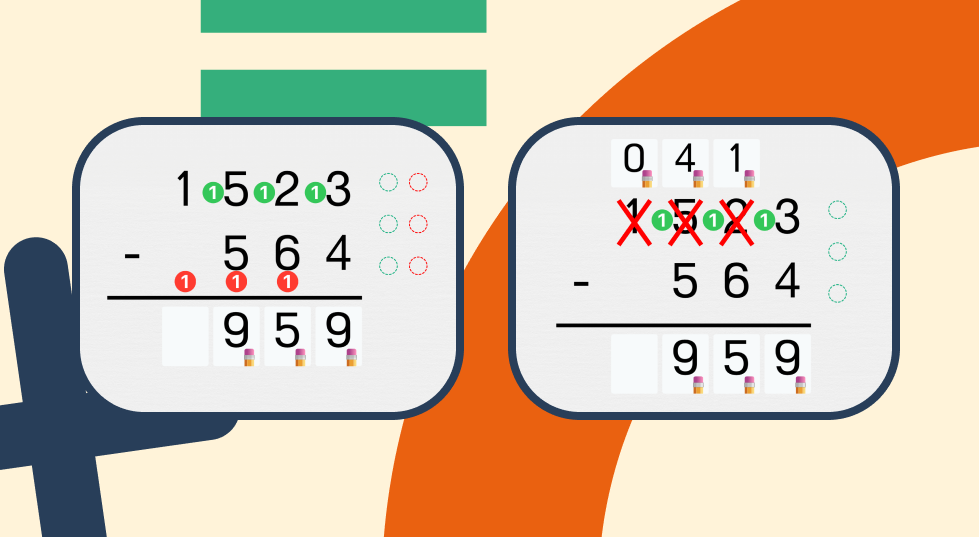
Every mathematics teacher has lived this moment, usually during parent-teacher conferences or in response to homework that comes home looking unfamiliar. A parent looks at their child's work, furrows their brow, and says some version of the same thing: "Why are they teaching it this way? This seems so complicated.
I just learned to carry the one. Math is math. Why can't they just teach it the normal way?" The frustration is genuine and understandable. Parents want to help their children with homework, and when the methods look completely foreign, that becomes difficult. They learned mathematics one way, it worked for them, and now their child is coming home with area models or number line strategies that seem unnecessarily complex compared to the algorithm they remember. And here's the thing about that statement, "math is math." They're both right and completely missing the point. Yes, seven times eight will always equal fifty-six, whether you calculate it in ancient Rome or modern Singapore. The mathematical truth doesn't change based on methodology.
But how do we get there? That's where everything interesting happens. That's where understanding develops. That's where mathematical thinking, as opposed to mathematical calculation, actually occurs.
Modern mathematics education emphasizes multiple strategies for three critical reasons: exposure to different methods builds deep, flexible understanding that procedural memorization alone cannot create, student ownership of diverse methods develops mathematical confidence and genuine thinking rather than rote compliance, and understanding why various approaches work prepares students for real mathematical literacy beyond memorizing arbitrary rules.
Why Multiple Methods Reveal Mathematical Structure
Multiple methods for solving the same problem aren't pedagogical trends designed to complicate mathematics, they reveal different aspects of mathematical structure that single procedures obscure. Consider multiplication of two-digit numbers, something like twenty-three times fifteen.
The traditional algorithm works efficiently: stack the numbers, multiply five times three to get fifteen, carry the one, multiply five times two and add the carry to get twelve, write down one-two-five, then shift and multiply one times twenty-three to get twenty-three, write that as two-three-zero, add the partial products to get three hundred forty-five.
It produces the correct answer when executed properly. But what's actually happening mathematically? Why do we shift the second partial product? What do those partial products represent? The procedure obscures the mathematics rather than revealing it.
Now consider the area model approach. Draw a rectangle and divide it into four sections representing twenty times ten, twenty times five, three times ten, and three times five. Calculate each area: two hundred, one hundred, thirty, fifteen. Add them together: three hundred forty-five. Same answer, different process, but crucially, this method makes visible what multiplication actually means. When you multiply twenty-three by fifteen, you're finding the area of a rectangle with those dimensions.
Breaking it into smaller rectangles shows why the distributive property works and reveals the place value reasoning that the traditional algorithm relies on but doesn't explicitly show. Or try decomposition based on friendly numbers: twenty times fifteen is three hundred, three times fifteen is forty-five, add them for three hundred forty-five. This reinforces that multiplication distributes over addition and builds number sense about how factors combine.
Each method reveals different aspects of what multiplication means and how numbers relate to each other. Students who see multiple approaches develop richer understanding than students who only learn one procedure, because they see the same mathematical truth from multiple perspectives.
This foundation of flexible understanding transforms how students engage with increasingly complex mathematics, preparing them to think rather than simply calculate.
Student Ownership Develops Mathematical Thinking
When students move from "follow the teacher's steps" to "choose a strategy that makes sense to me," their mathematical confidence and capability undergo a remarkable transformation. Confidence changes fundamentally.
Students who feel ownership over their methods are less anxious about mathematics because they're not constantly worried about forgetting a step or doing it the wrong way. They have multiple tools available, so if one approach isn't working, they can try another.
Error detection improves dramatically. When you've memorized a procedure without understanding, mistakes are invisible, you follow the steps as best you remember and trust that the answer must be right because you did what you were supposed to do. But when you understand multiple methods and can check one against another, errors become noticeable.
If your answer using the area model disagrees with your answer using the traditional algorithm, you know something went wrong and can investigate. Transfer increases substantially. Students who understand why methods work can adapt them to new situations. They can invent hybrid approaches, modify strategies for particular number combinations, and apply similar reasoning to unfamiliar problem types. Mathematical thinking becomes generative rather than purely receptive.
Number sense develops in ways that procedural training alone doesn't support. Students who regularly decompose numbers, recompose them, think about their relationships, develop intuition about magnitudes and reasonableness. They notice when an answer can't possibly be right because it doesn't fit with their sense of how numbers behave.
Real mathematicians don't solve problems by looking up the right algorithm in a textbook, they explore, experiment, try different approaches, hit dead ends, backtrack, and combine ideas in novel ways. When elementary students learn multiple methods for multiplication, they're learning that there are many paths to truth, that different approaches reveal different insights, that you can invent your own methods as long as they're mathematically valid. This shift from procedural compliance to creative mathematical thinking is what prepares students not just for the next level of mathematics but for genuine quantitative reasoning in the real world.
Moving Beyond "The Way I Learned It"
Parent resistance to new methods, while understandable, creates significant barriers to student mathematical development that can be addressed through reframing the home mathematics experience. The insistence on "the way I learned it" as the only acceptable method creates several serious problems.
It sends a message that mathematics is about compliance rather than understanding, the child learns that there's a right way and a wrong way, determined by authority rather than by whether the reasoning is mathematically sound. This undermines the development of mathematical confidence and creativity. It creates unnecessary conflict between school and home. When parents correct their children's methods or insist they should be taught differently, children get confused about what's expected.
Teachers are asking them to think flexibly, parents are asking them to follow a specific procedure, and the child is caught in the middle. Most significantly, it limits what students can achieve mathematically. Students who only know one method are equipped for routine problems but struggle when they encounter something unfamiliar. Mathematical power comes from flexible thinking, and that requires exposure to multiple approaches.
For parents wondering how to help when the methods look unfamiliar, the answer isn't to insist on the old ways but to engage differently. Ask your child to explain their thinking, not "show me how you got the answer" but "help me understand your method." Children who can articulate their mathematical reasoning are developing real understanding, regardless of whether their approach matches how you learned.
Learn the new methods alongside your child. Area models and number lines aren't actually complicated once you see how they work, and many adults report that seeing alternative methods helps them understand mathematics they've been using mechanically for years. Focus on whether the reasoning makes sense, not whether it matches a particular procedure.
If your child can explain why their method works, that's mathematical thinking. If they can check their answer using a different approach and verify that it's correct, that's strong mathematical practice. Trust that multiple methods build understanding in ways that single methods don't, the variety isn't making things complicated, it's making things clearer by showing the same mathematical truth from multiple perspectives.
So, Math is Math, Right?
When a parent says "math is math," they're right in the most fundamental sense, mathematical truths don't change based on methodology, and seven times eight equals fifty-six whether calculated in ancient Egypt or modern Japan, by hand or computer, using any valid method.
But how we learn mathematics, how we develop understanding, how we build the kind of flexible thinking that allows us to apply mathematics in novel situations, that depends enormously on whether we're encouraged to explore multiple methods or forced into a single procedure.
The diversity of mathematical approaches isn't a bug, it's a feature. Different methods illuminate different aspects of mathematical structure, and exposure to variety builds understanding that single methods cannot. When we insist there's only one correct method, usually the one we learned decades ago, we strip away what makes mathematics powerful, reducing it from a creative, exploratory discipline to a set of rules to memorize.
The goal isn't uniformity but understanding so deep that students can choose their own paths, invent their own methods, recognize when different approaches are useful, explain their reasoning, and learn from how others reason. Math is math, and the mathematical truths remain constant.
But the path to understanding? That's where real mathematics lives, not in arbitrary procedures to memorize, but in a powerful language for describing patterns, solving problems, and making sense of quantity and structure in the world.