
Subtraction-with-regrouping exercises to help your child progress
A subtraction requires regrouping when the top digit is smaller than the one below. For example, in 42 − 17, the 2 is too small to subtract 7. So we borrow a ten from the 4, turn the 2 into 12, then continue the calculation normally.
Understand subtraction with regrouping before starting the exercises
Before you start using printable math exercises or download our math app, it's important to review the mechanics of subtraction together. Many children succeed in mental calculations, but get stuck as soon as regrouping appears.
We often observe this difficulty in children. It occurs when the top number is smaller than the one below. Your child then needs to “borrow” from the next column.
Simple reminder of the regrouping rule
When setting up a subtraction, we start with the units. If the top digit is smaller than the bottom one, we use what teachers often call the breaking method. We “break” a ten to get ten units. Children then learn that breaking a number doesn't mean losing it, but simply decomposing it differently.
This rule also works for hundreds and thousands. Once regrouping is understood with two-digit numbers, children generalize it very well to larger numbers.
Why regrouping is often difficult for children
This step requires combining several skills at once: reading numbers, understanding place value, handling regrouping, and thinking about the calculation that follows. It’s a complex mental action. If your child feels lost, that's completely normal.
In class, we often take time to use visual material or manipulatives.
At home, you can reproduce this using straws, counters, or even drawings. The idea is to help the child visualize the borrowing and understand that everything remains consistent in the calculation.
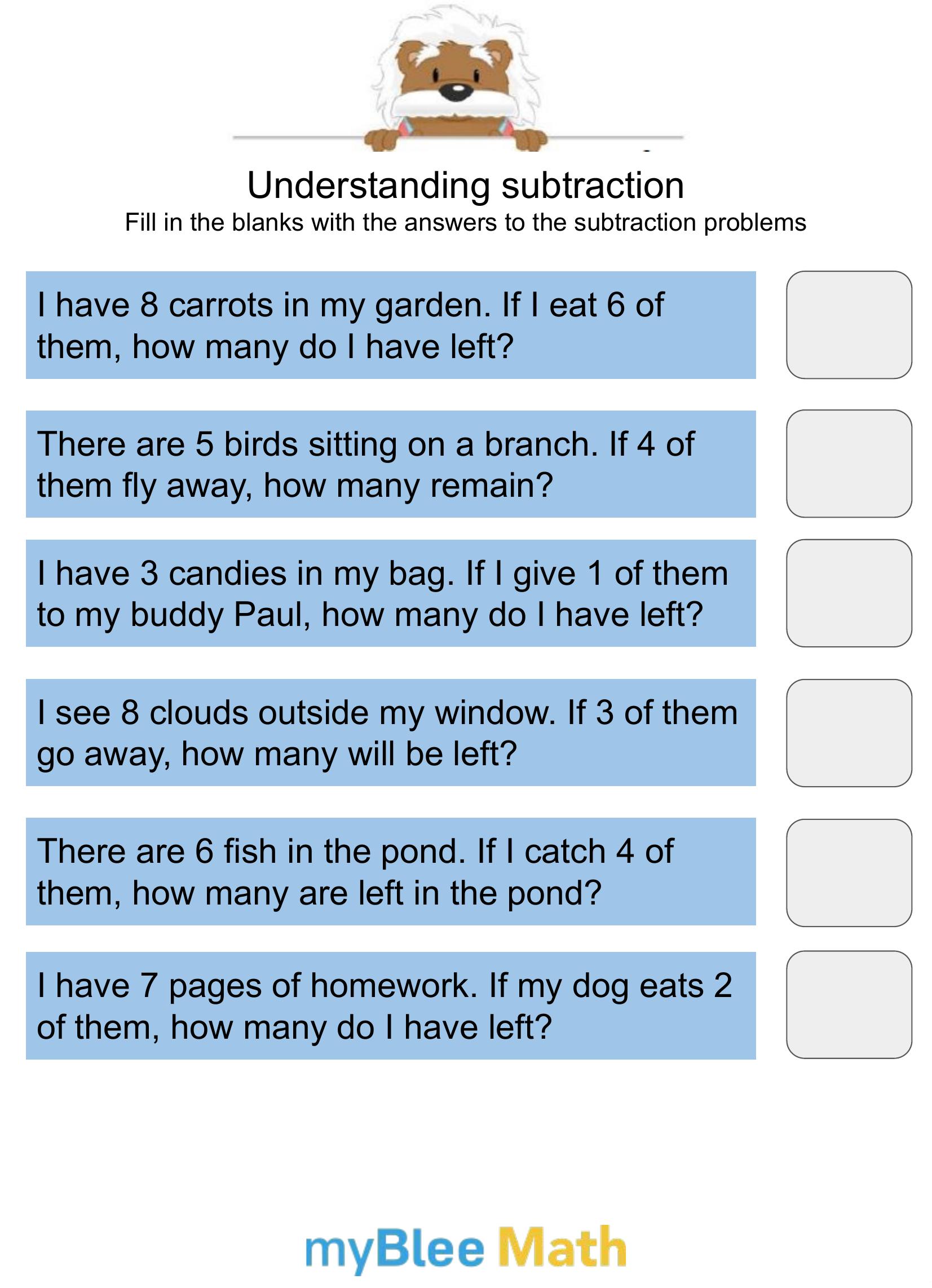
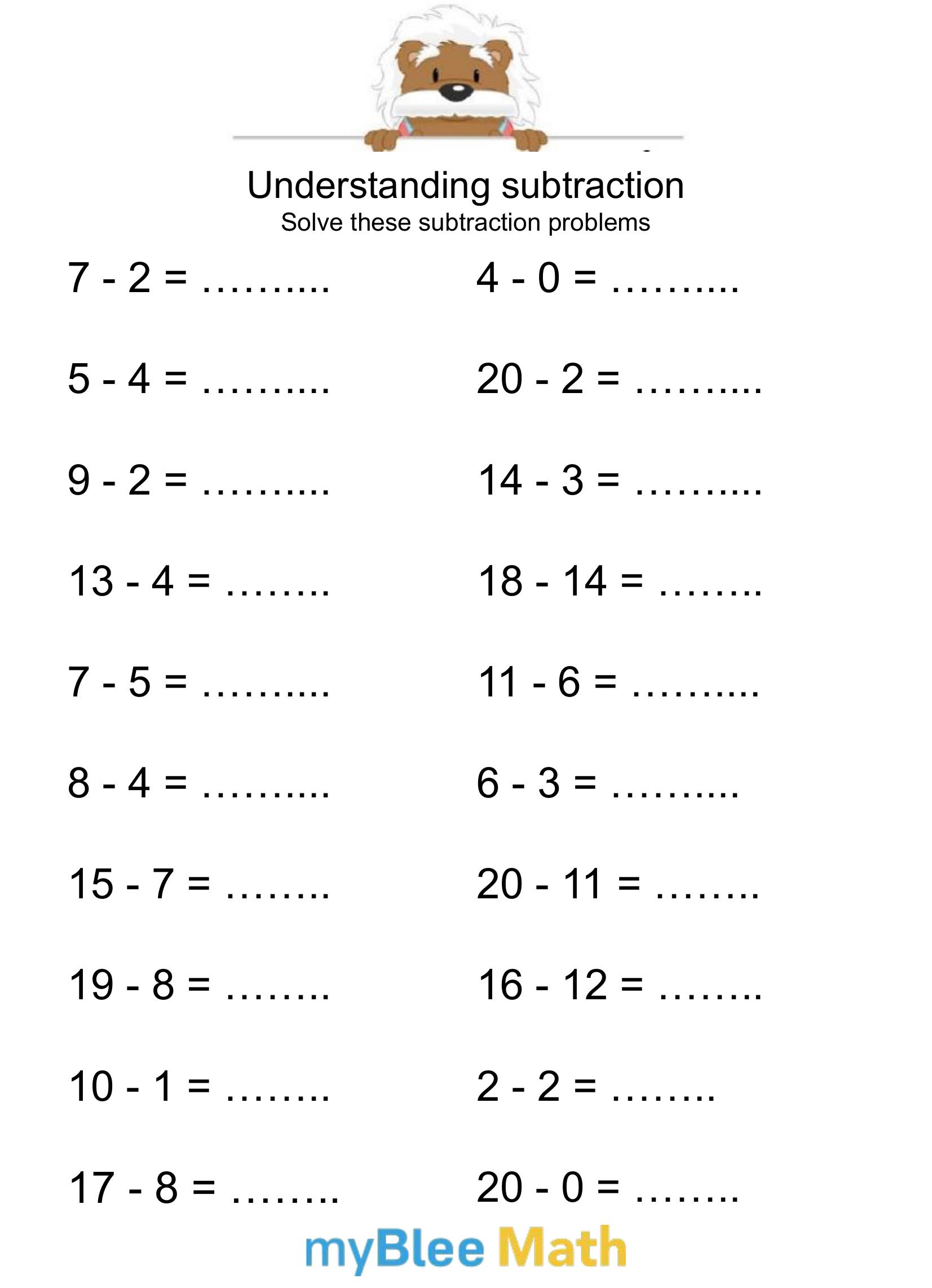
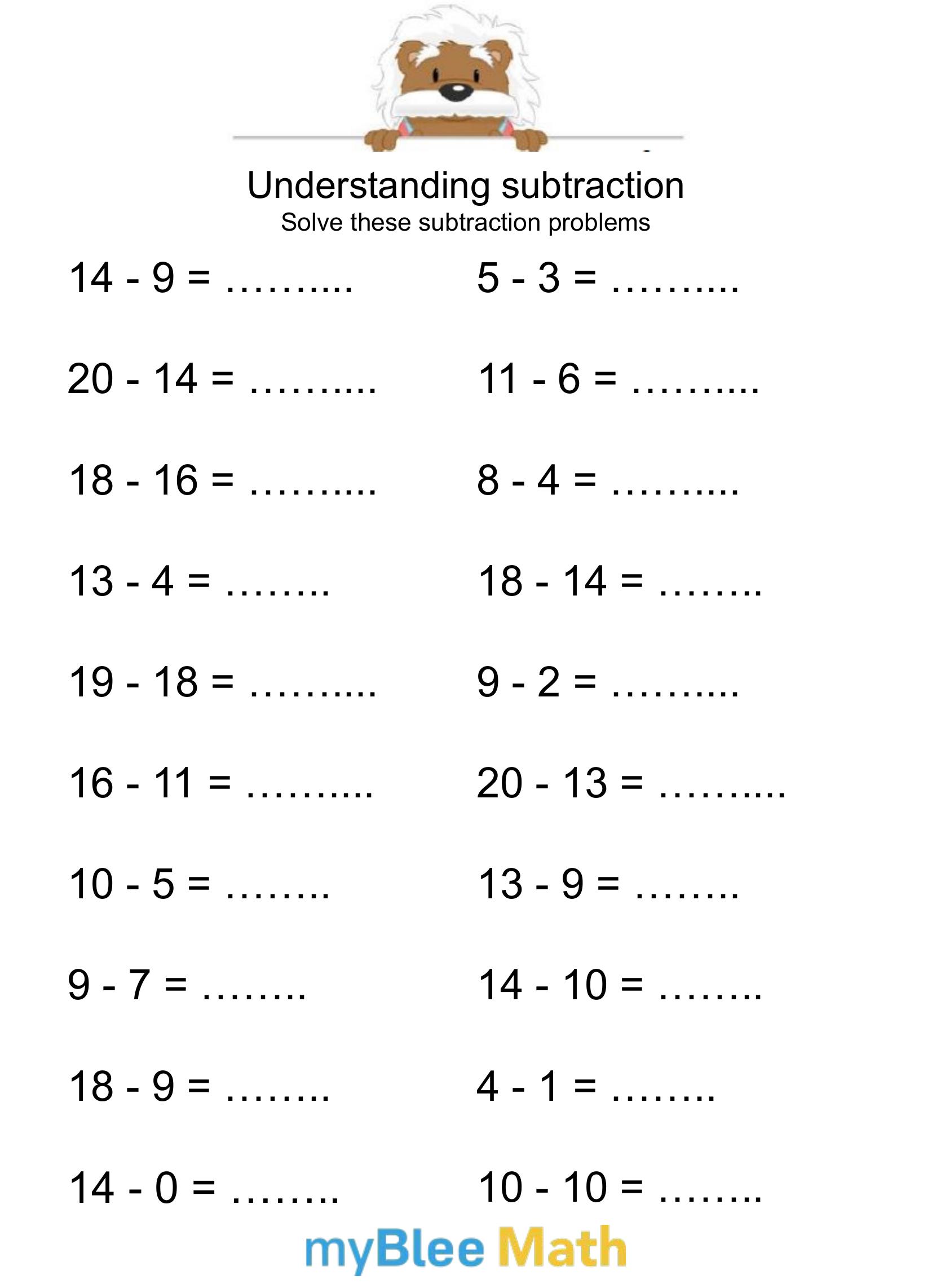
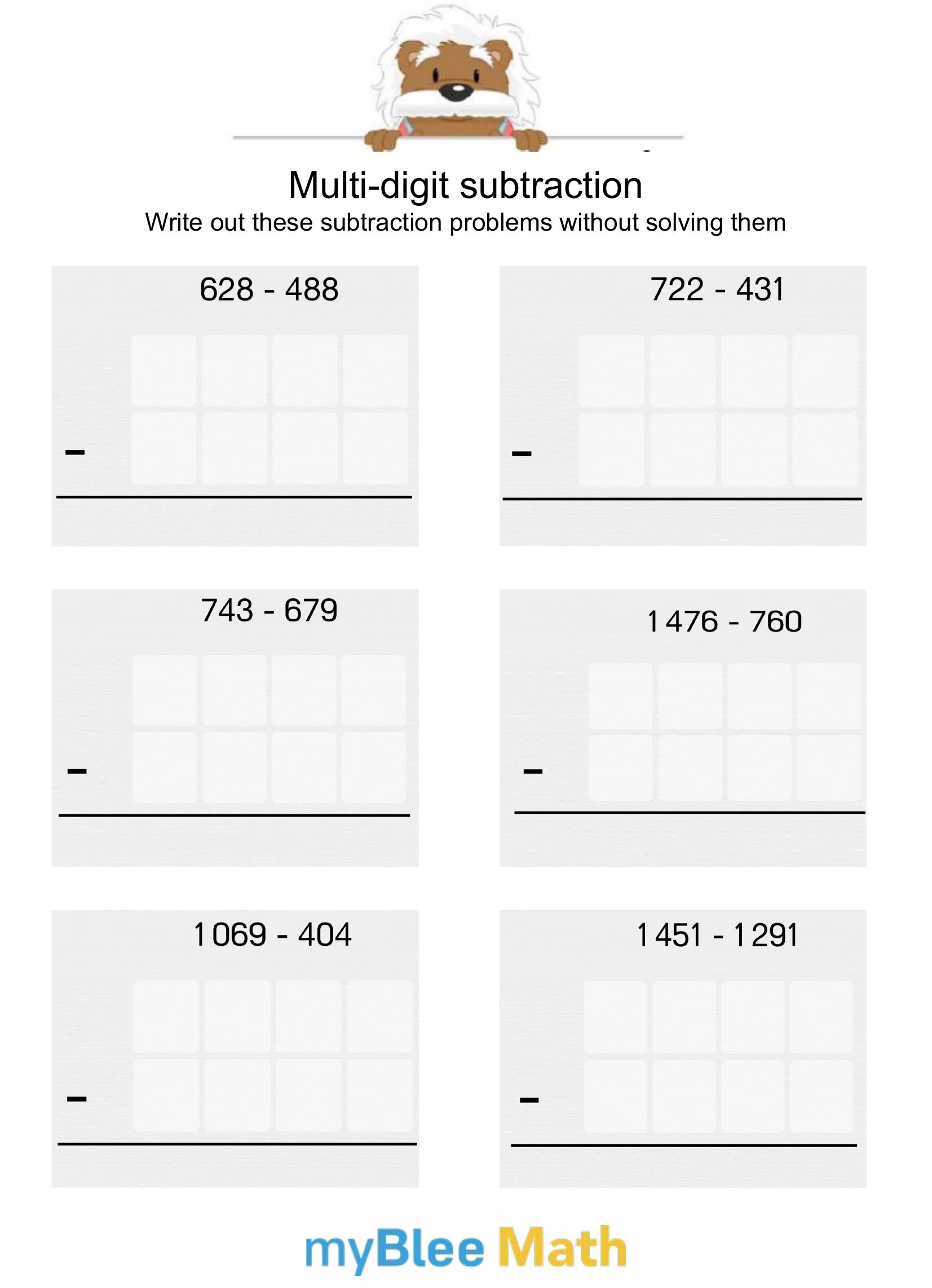
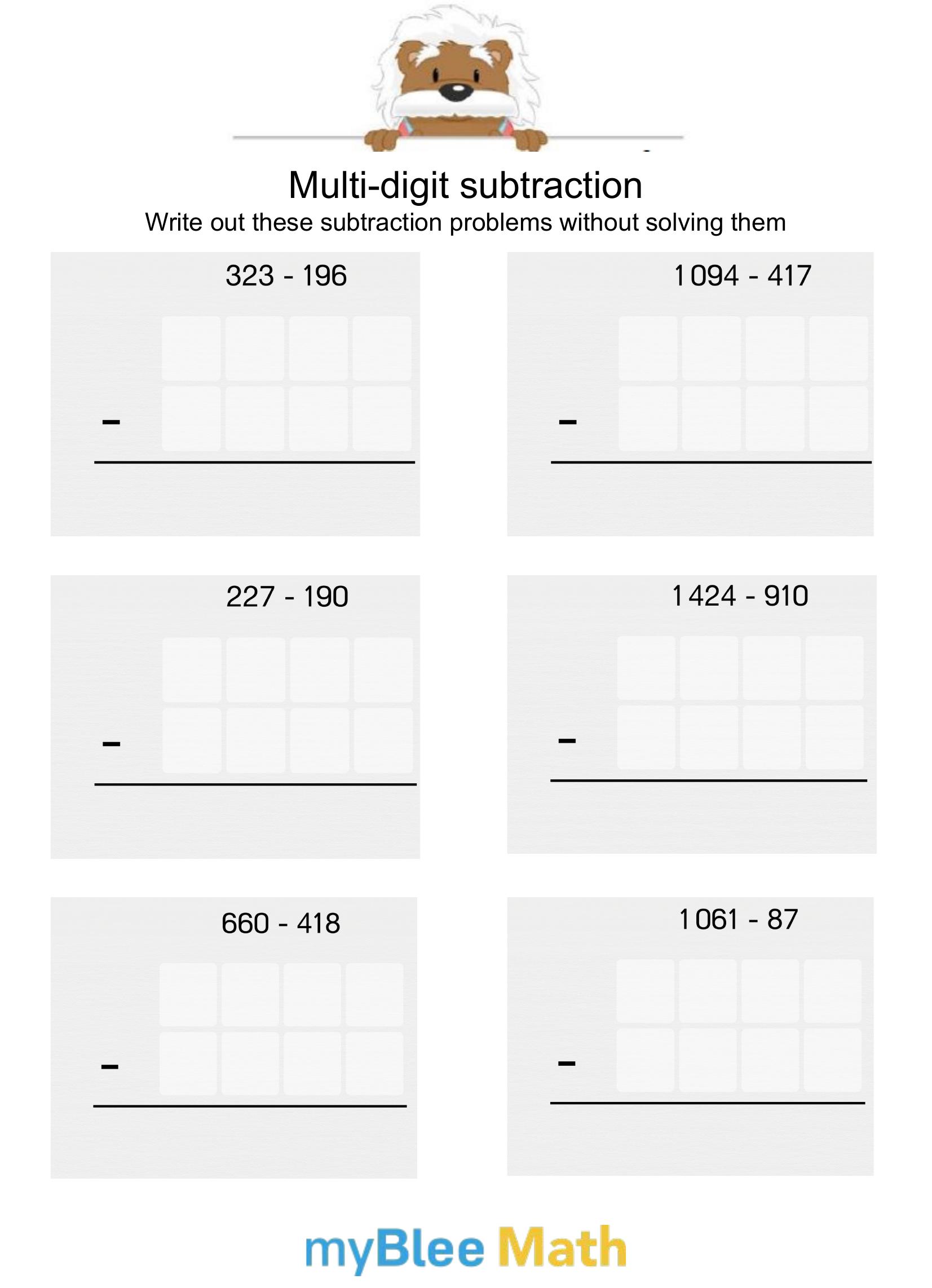
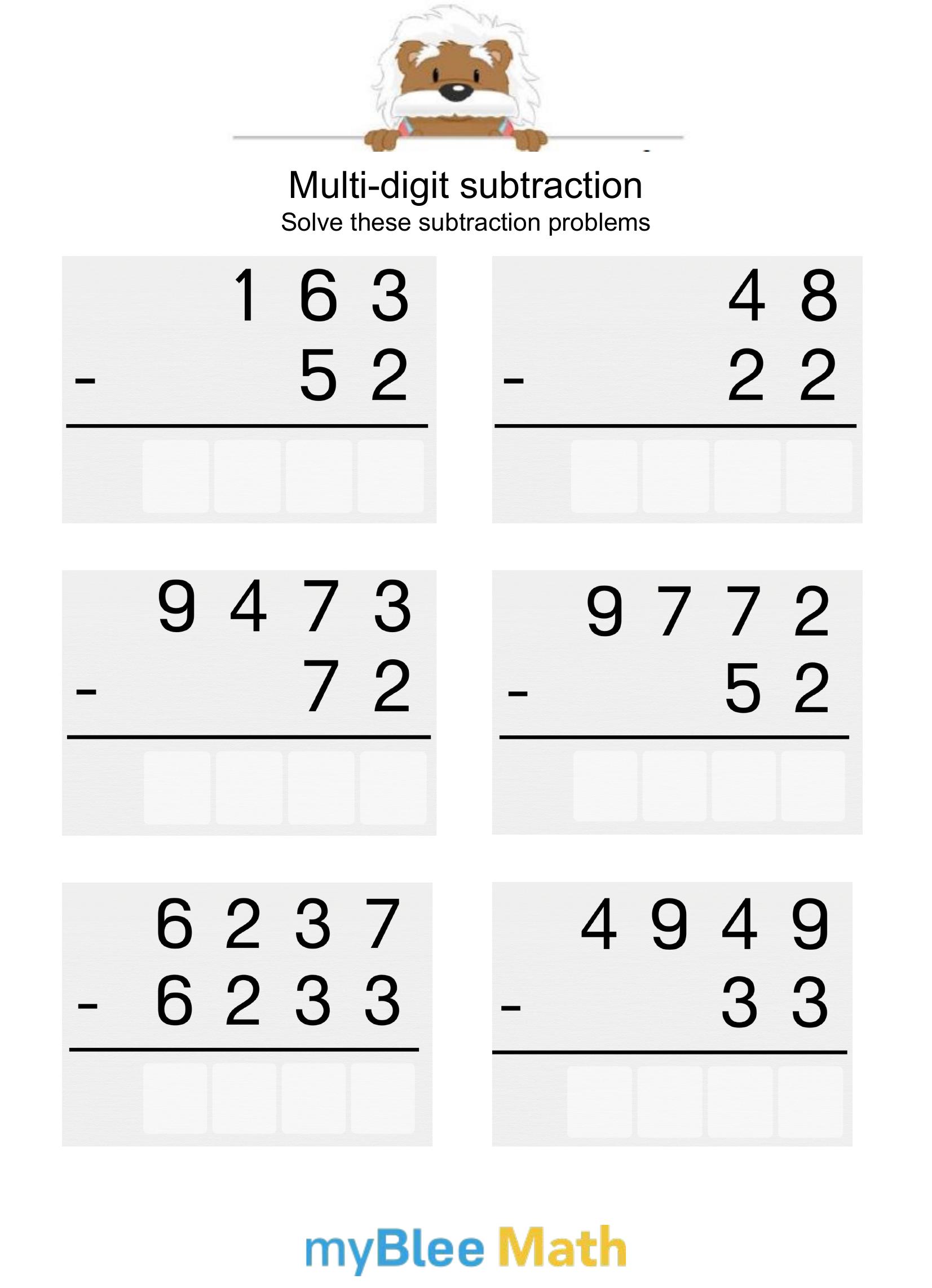
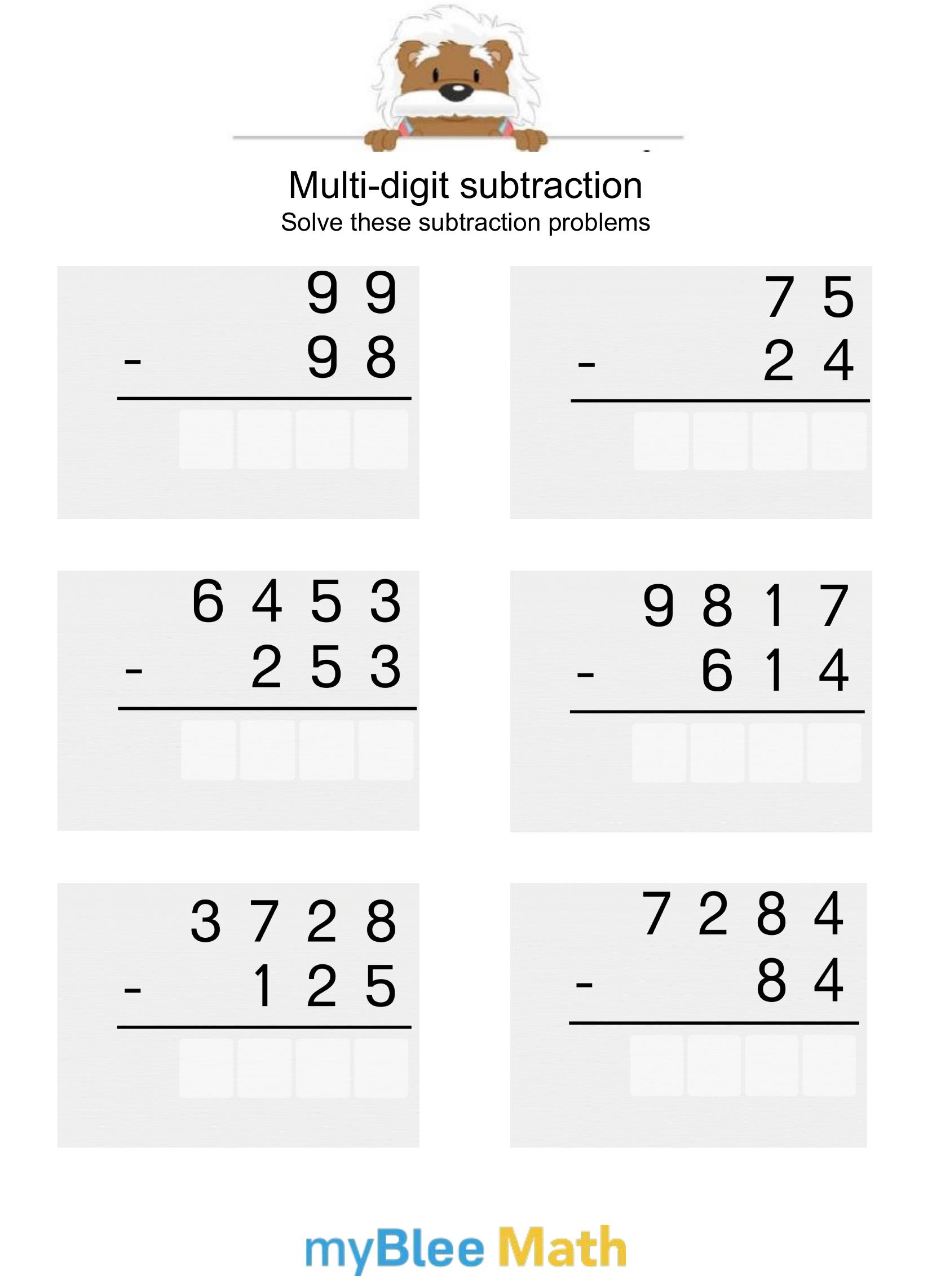
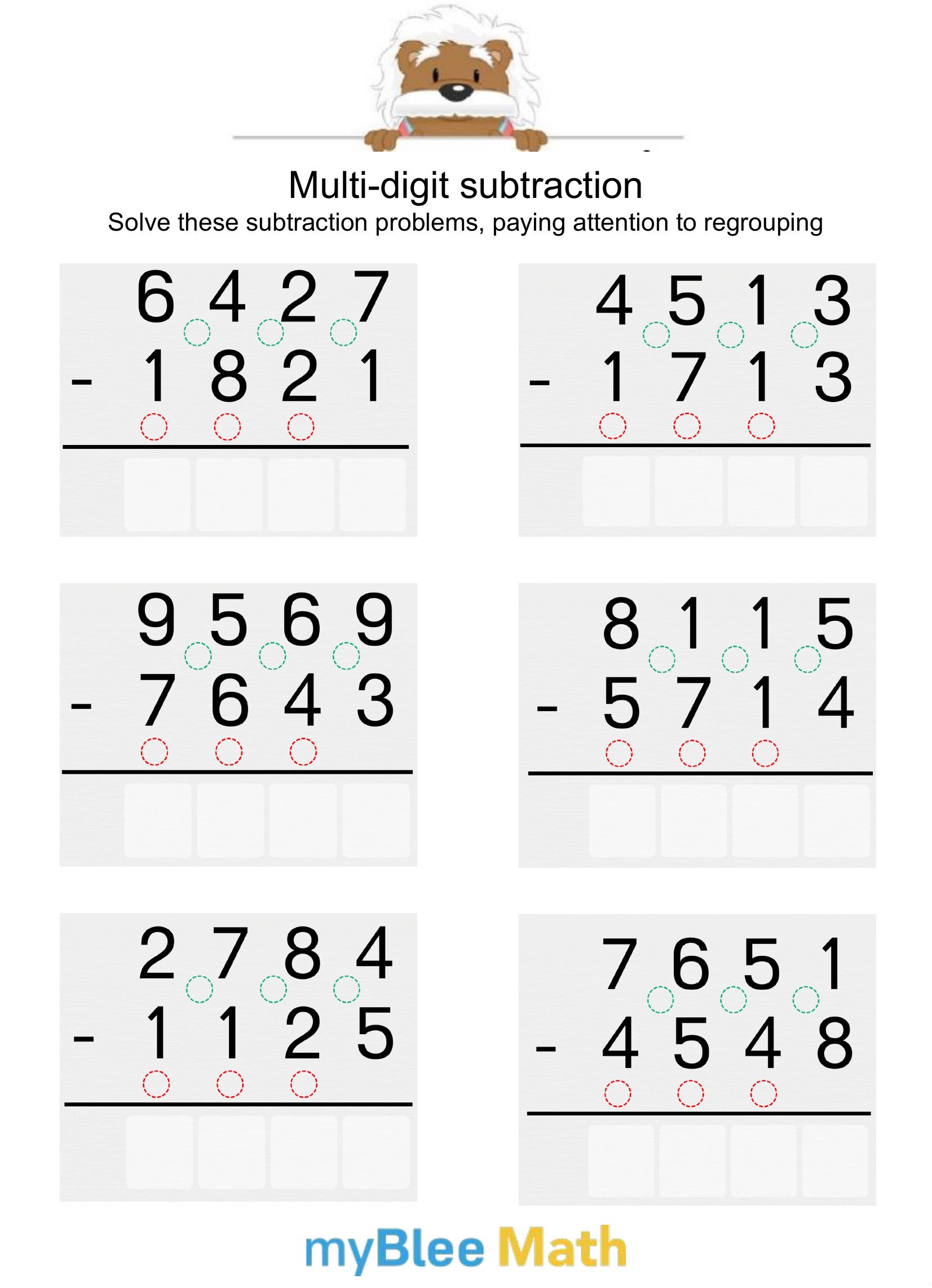


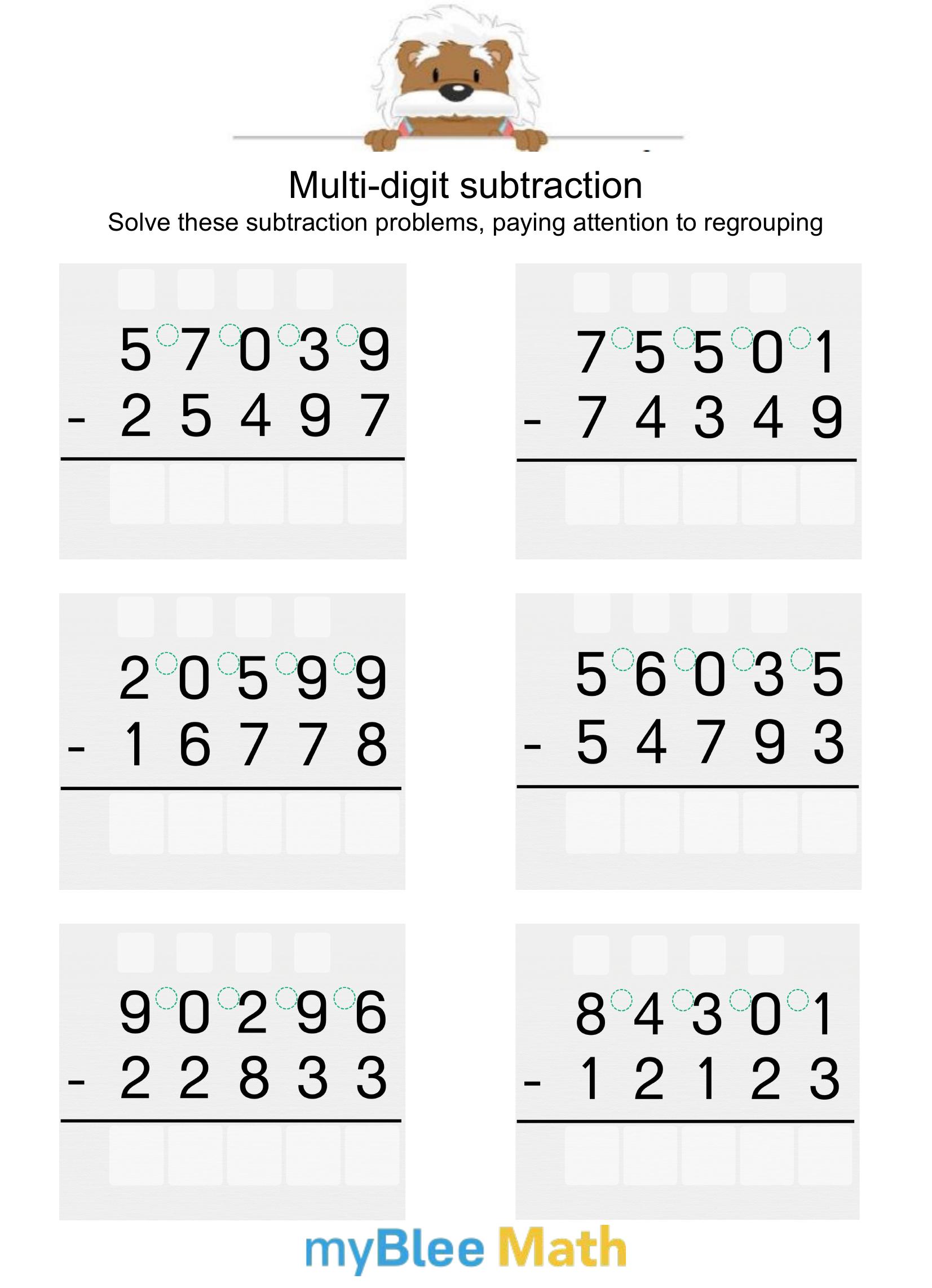
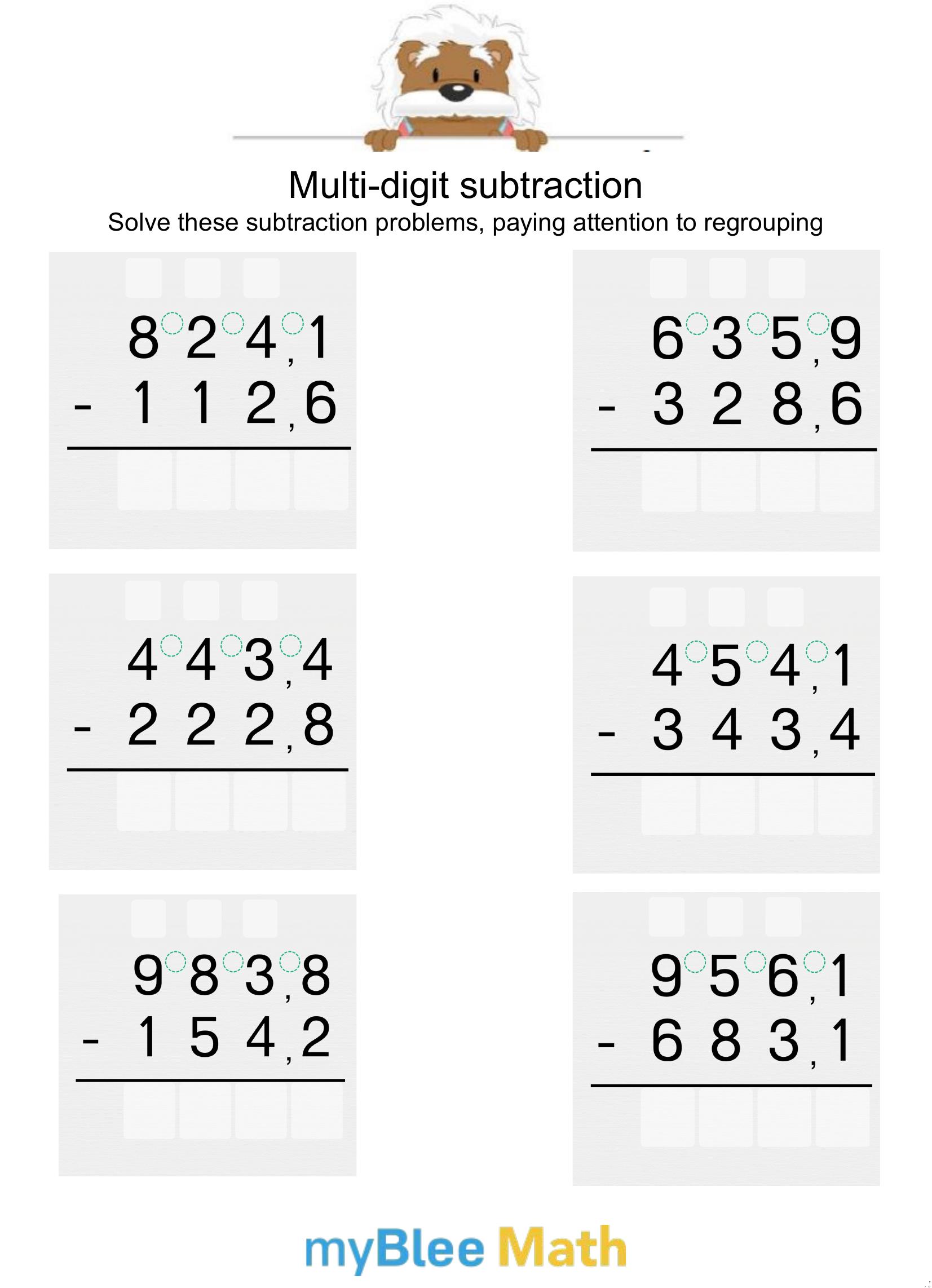
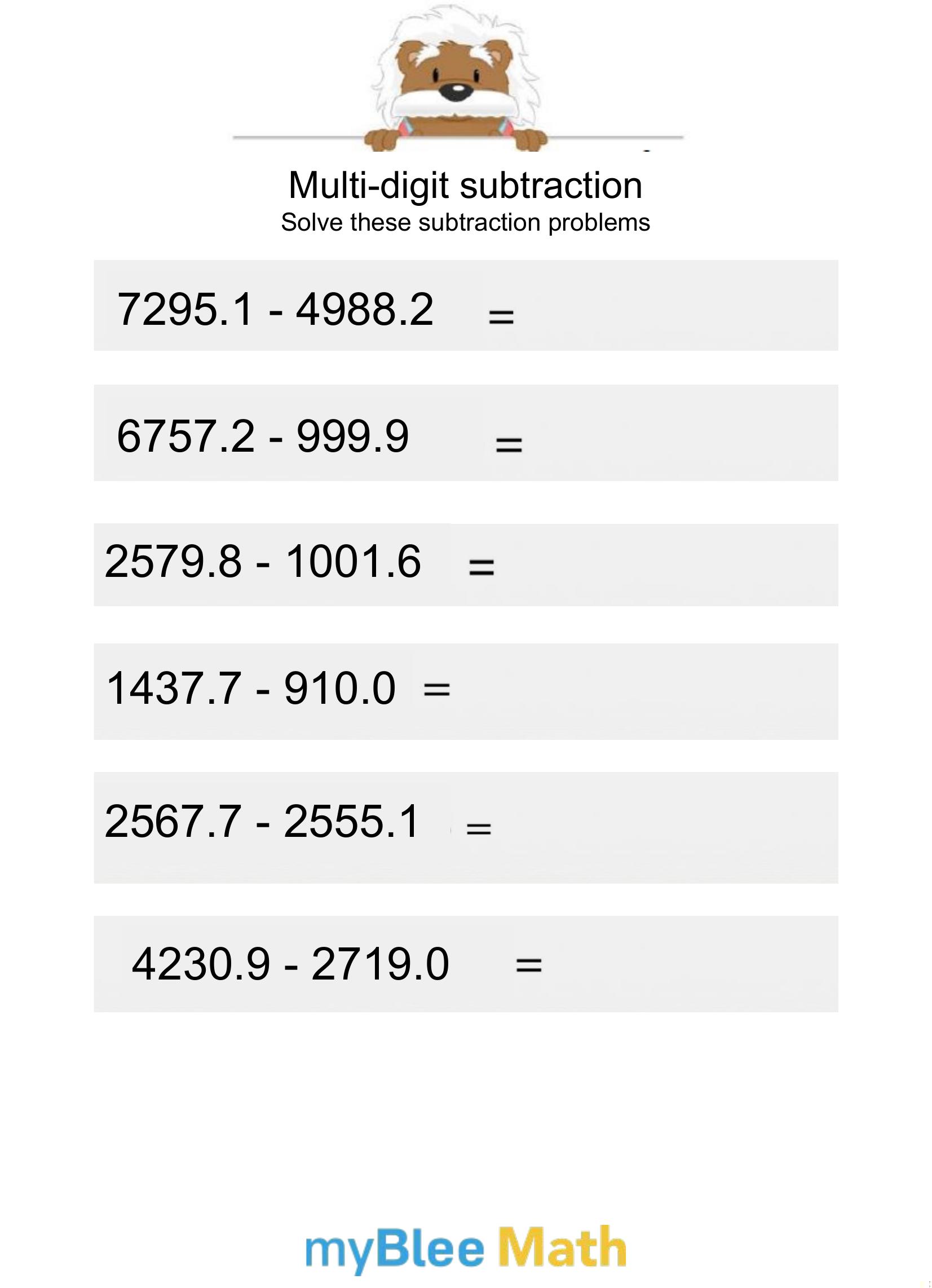
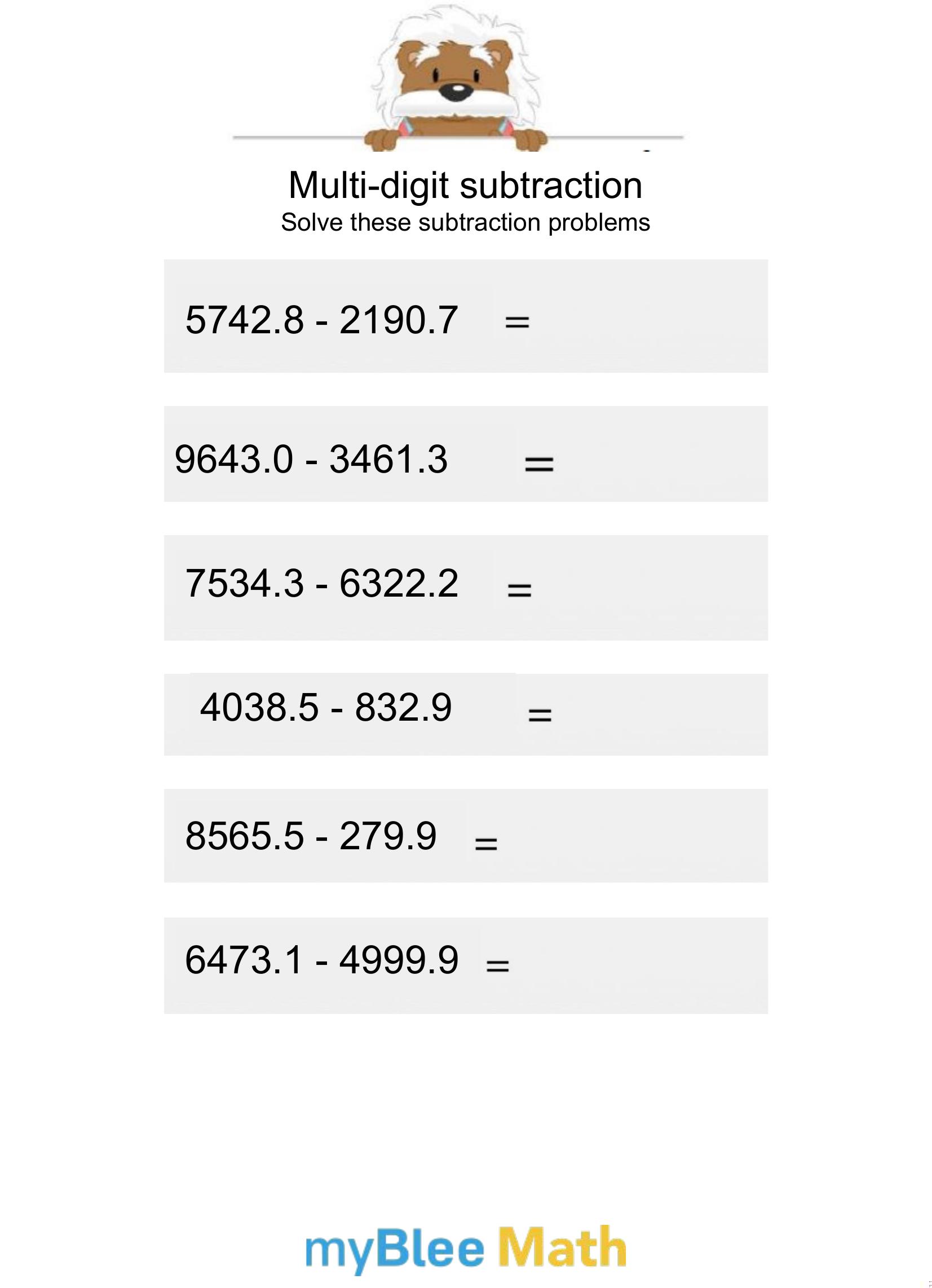
Subtraction-with-regrouping exercises: progressive levels
The exercises you can print or offer your child allow for step-by-step practice. This is essential for building confidence and moving at their own pace. A child who succeeds in one exercise is often more motivated to try the next.
Feel free to vary the exercise types to avoid boredom and encourage consistency.

Simple exercises: single-regrouping subtraction
Start with short subtractions. Operations with tens such as 42 − 17 allow children to practice regrouping without adding difficulty. These are perfect exercises for children discovering the concept. They help establish essential automatic skills.
Intermediate exercises: multiple regroupings across columns
Once your child succeeds with the first regroupings, you can introduce calculations where several columns require transformation, such as 503 − 276. These exercises require more attention but help consolidate the technique.
You can occasionally add a small table for your child to write down the regroupings; this greatly helps with organization.
Advanced exercises: subtraction with large numbers
To go further, offer multi-digit subtractions. They are perfect for math exercises for 4th grade or 5th grade students. They strengthen methodology, endurance, and precision. Children often love these exercises because they feel they’re accomplishing something “bigger.”
Missing-number subtraction with regrouping
Missing-number subtractions attract children's attention because they feel like a little investigation. The goal is to find the missing digit, which requires analyzing the operation differently. It’s an effective exercise for deepening understanding.
Frequently asked questions about subtraction with regrouping
How do you perform a subtraction with regrouping?
Start with the units. If the top digit is smaller, borrow a ten from the next column. For example, in 52 − 27, turn the 2 into 12, then continue the calculation normally.
How do you solve missing-number subtraction with regrouping?
To solve missing-number subtraction with regrouping, think in the opposite direction of the calculation. Find the number that, once reduced by the other, gives the result. For example, for _ − 18 = 25, compute 25 + 18 to find the missing number.
How to subtract without writing it down?
You can use mental math for simple operations. Break down the numbers. For example, for 63 − 21, do 63 − 20 = 43, then 43 − 1 = 42.