
Math word problems
A fraction, both in and , is used to represent a quantity divided into equal parts. For example, if a pizza is cut into 4 slices and you take 1, you get 1/4. It’s a simple way to show a part of a whole or compare several .
All our math problems to progress at school
math problems allow the use of numbers in real-life situations: comparing, calculating, estimating, organizing data… For example, if three boxes each contain 12 pencils, how many are there in total? This type of situation helps connect operations to real life and give meaning to calculations.
Math problems adapted to each level
math problems require understanding a wording, identifying useful information and choosing the correct operation. To support this progression, we offer problem worksheets adapted to all grade levels.
Each PDF allows practice on various situations: sharing, measurements, conversions, durations or multi-step problems. The math exercises progress step by step in difficulty while remaining accessible.
Designed to strengthen logic and autonomy, these math exercises, combined with our math app, help each student gain confidence and structure their approach.
Discover the app
Method to solve problems with exercises
Solving a problem requires a real method: understanding the wording, spotting useful information, choosing the operation, then checking the result. The exercises offered after this section guide step by step through this approach.
They train students to analyze, structure and solve different types of situations, from simplest to most complex.
Methods for Solving Problems
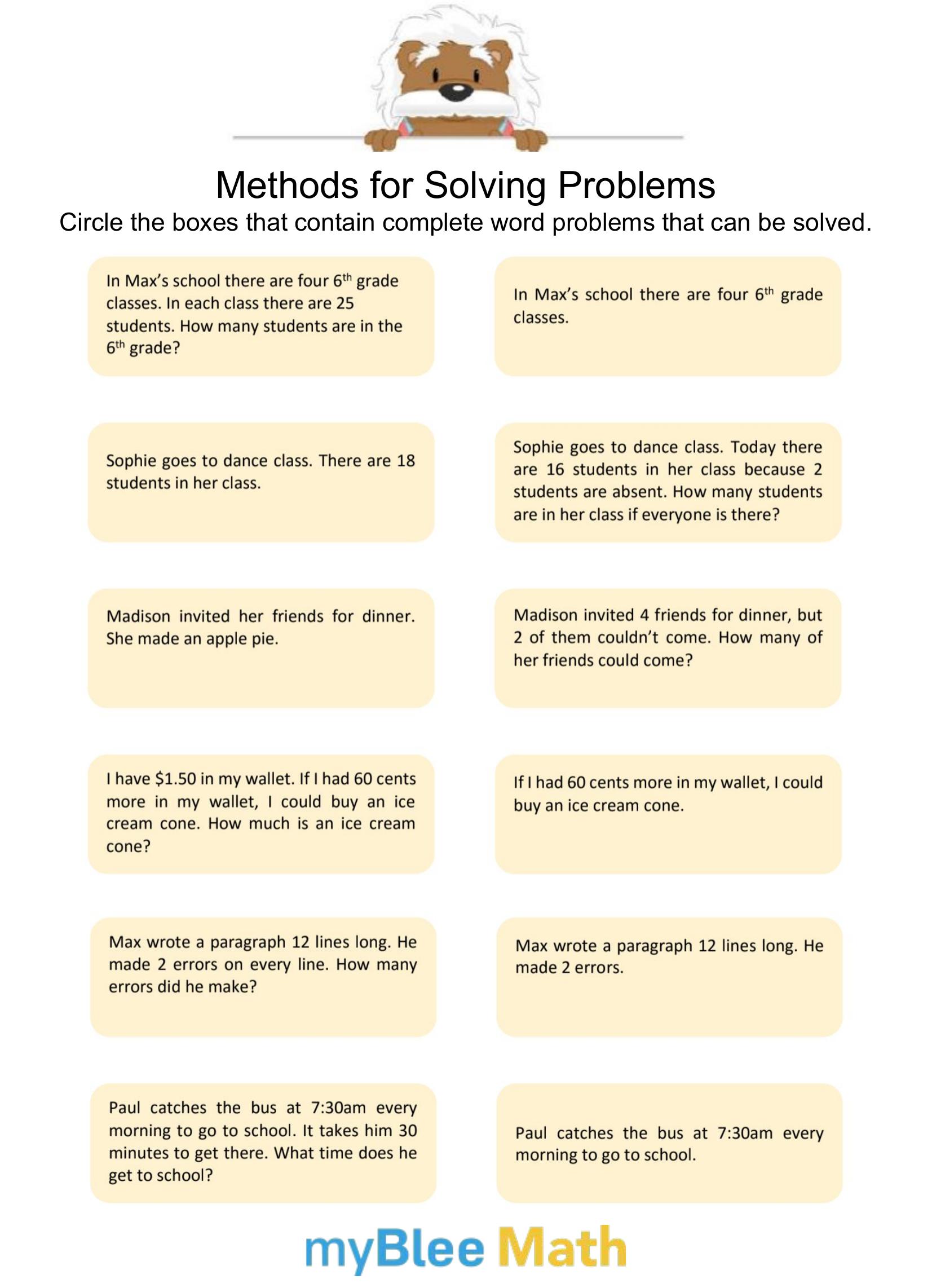
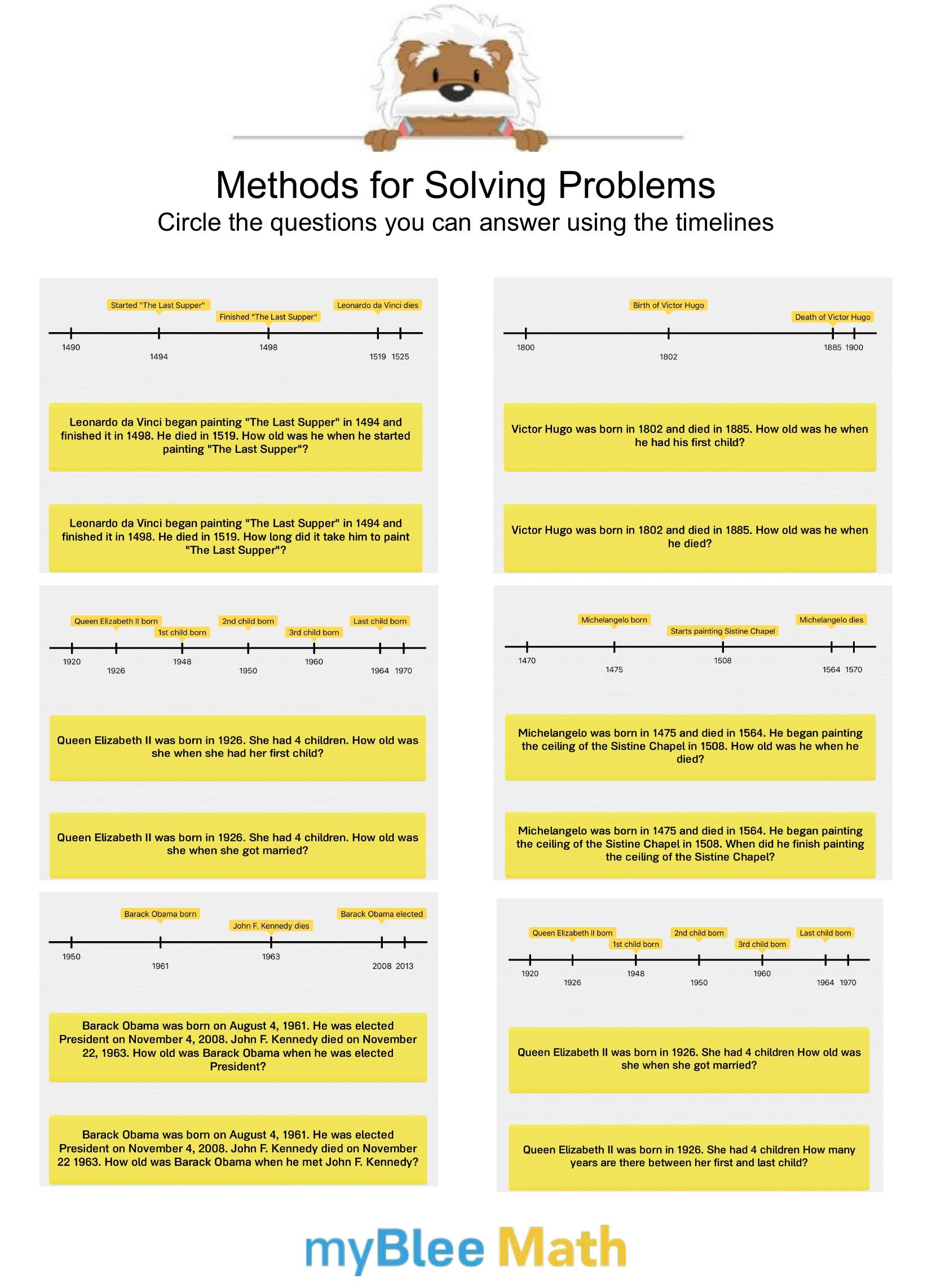
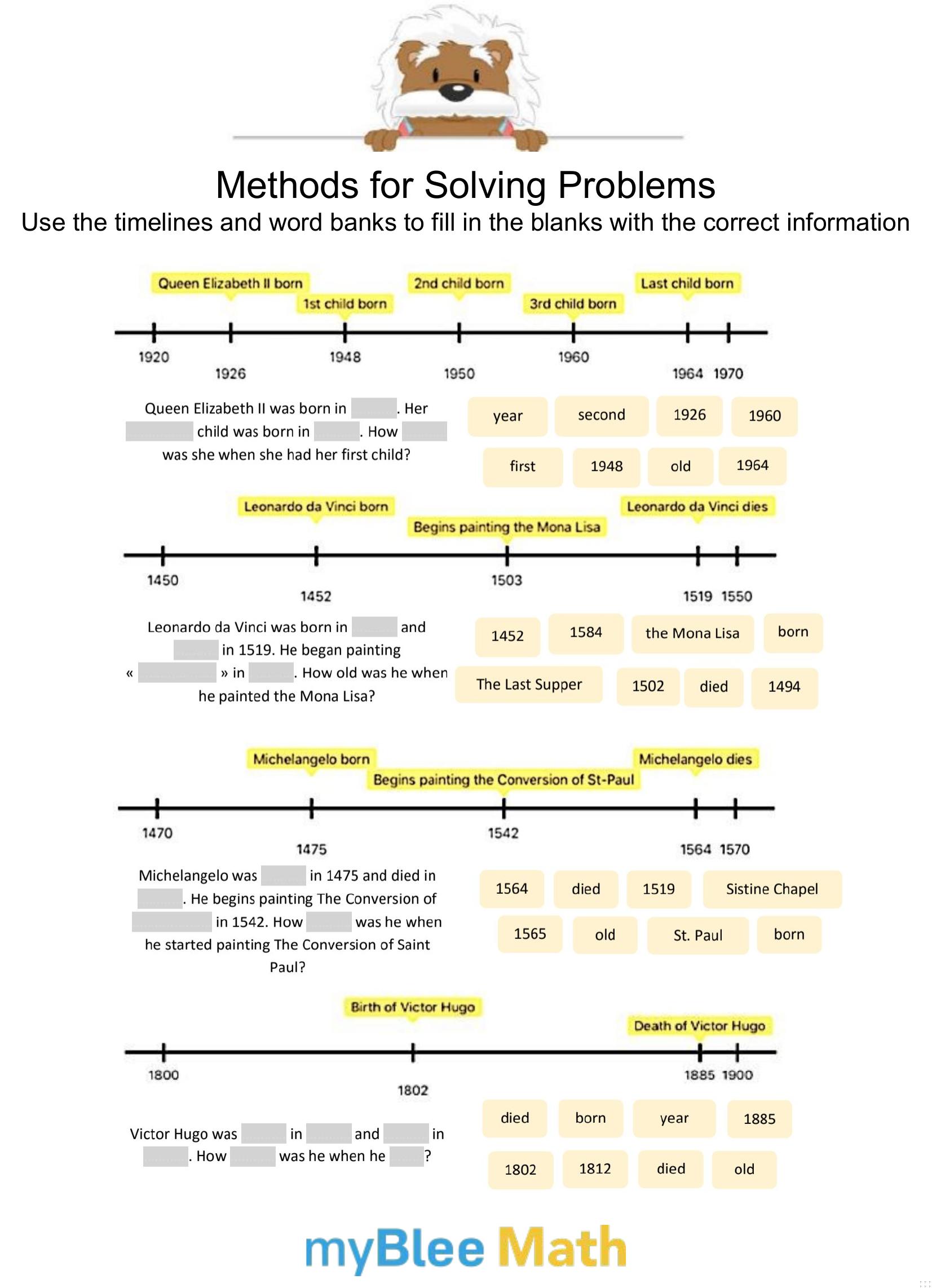
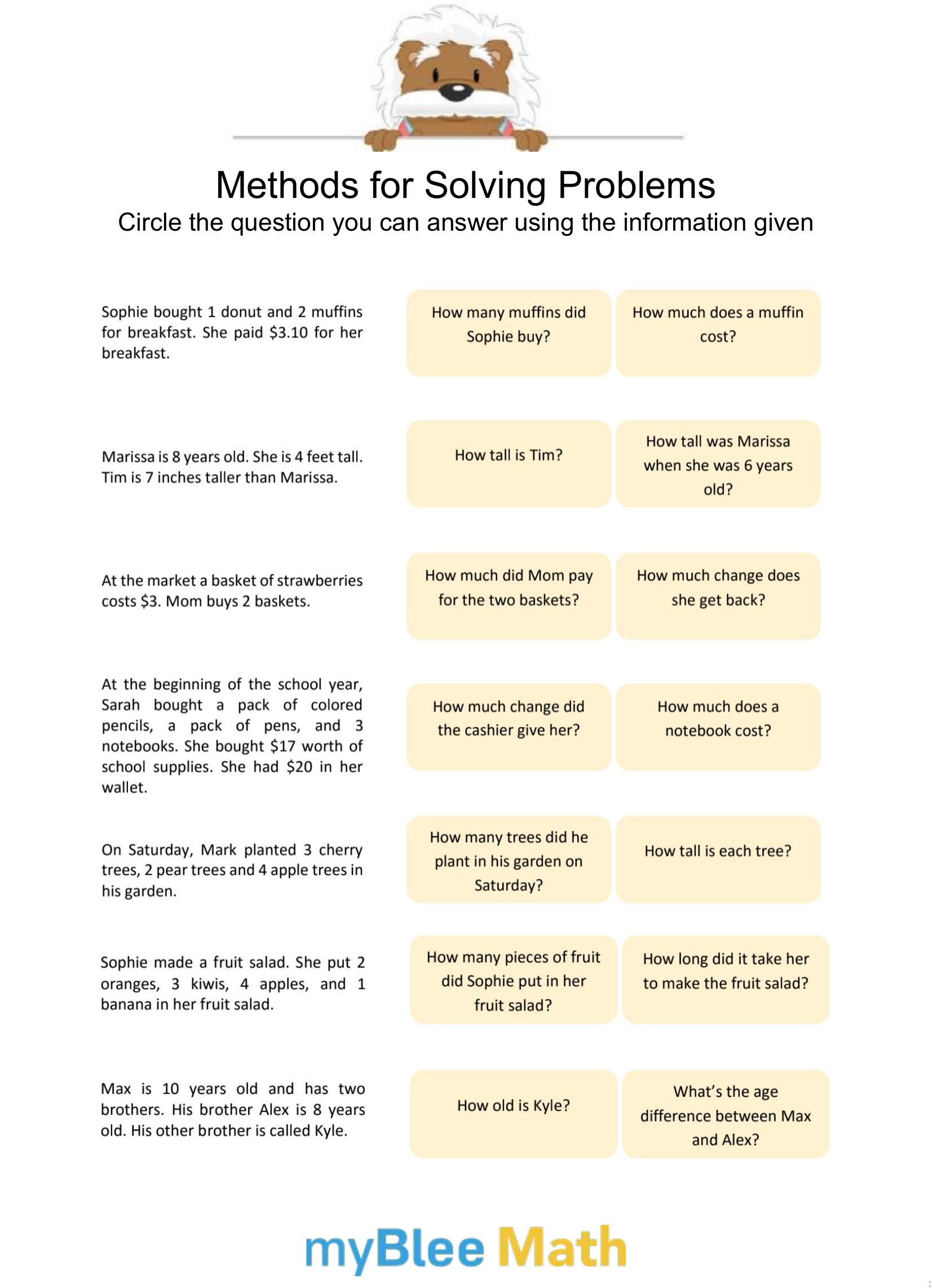
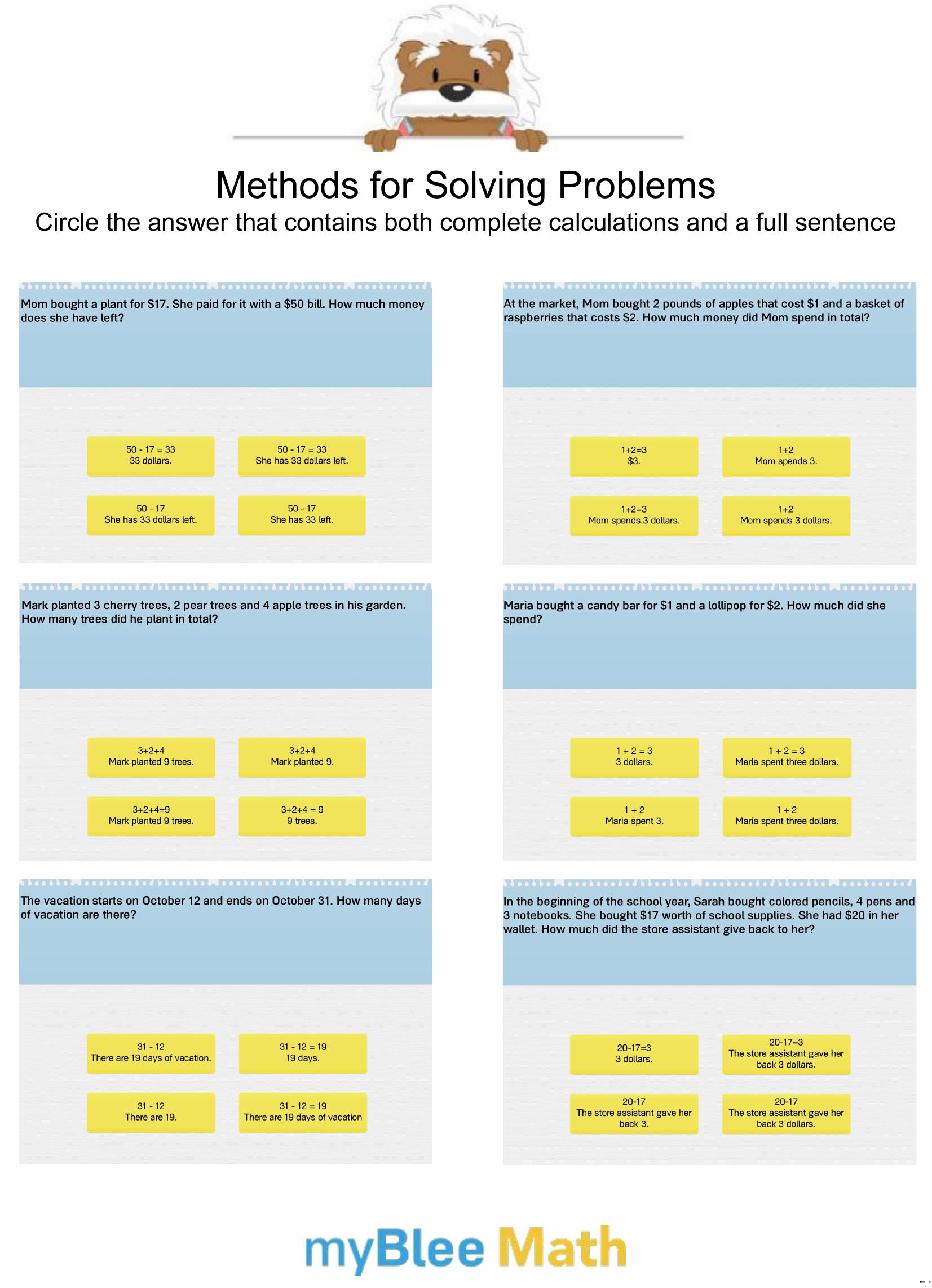
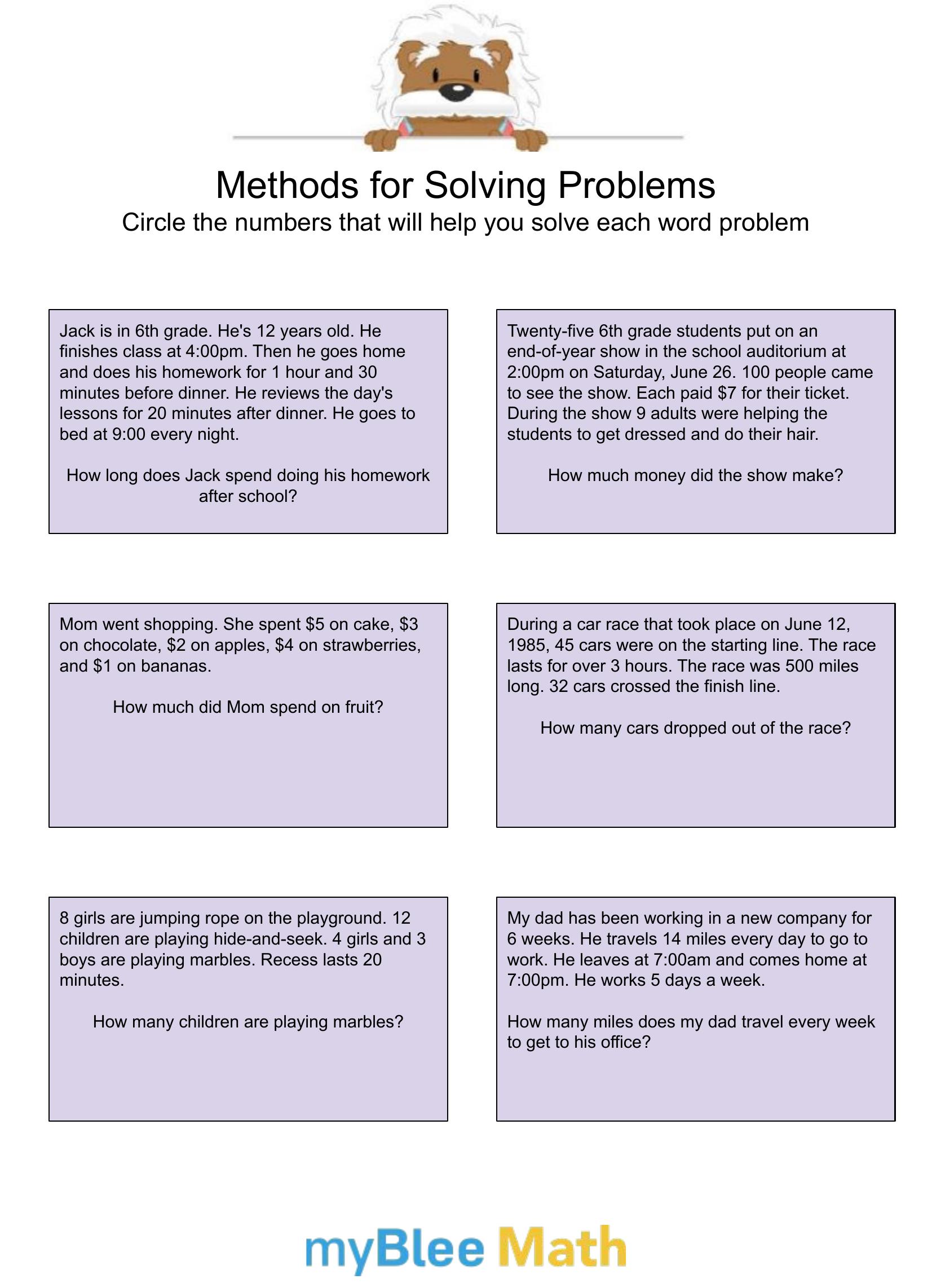
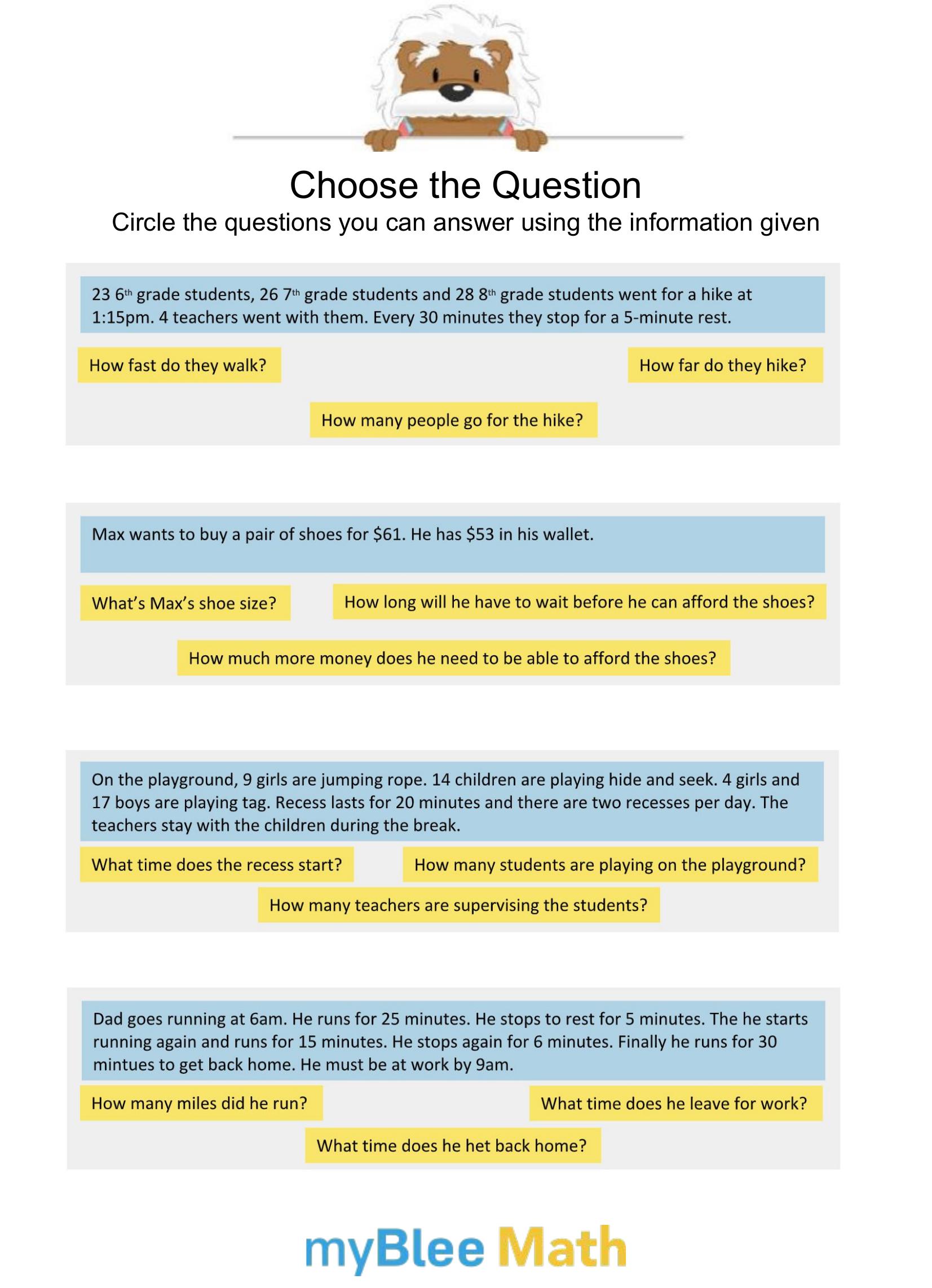
Our exercises for choosing the right question in a problem
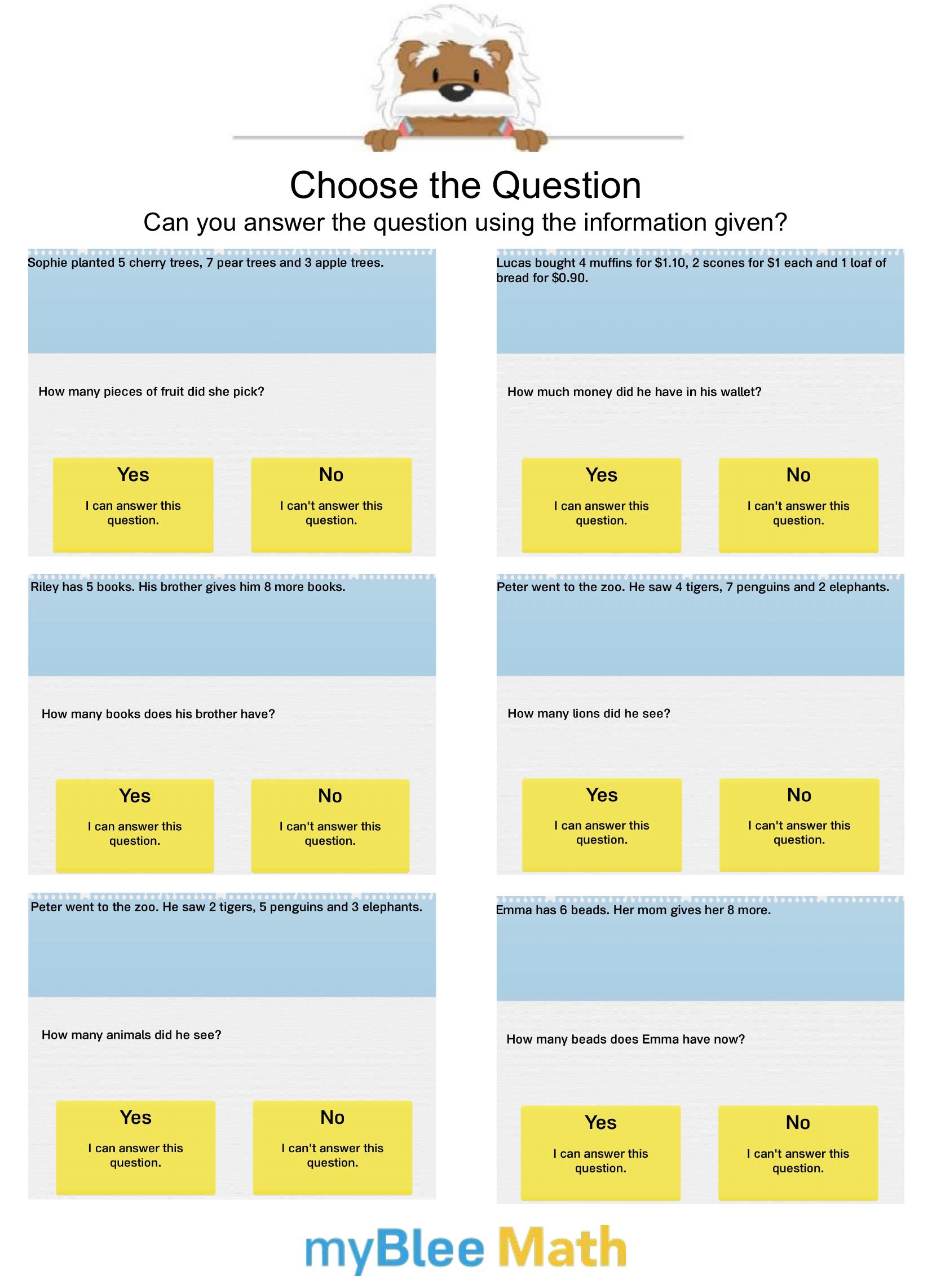
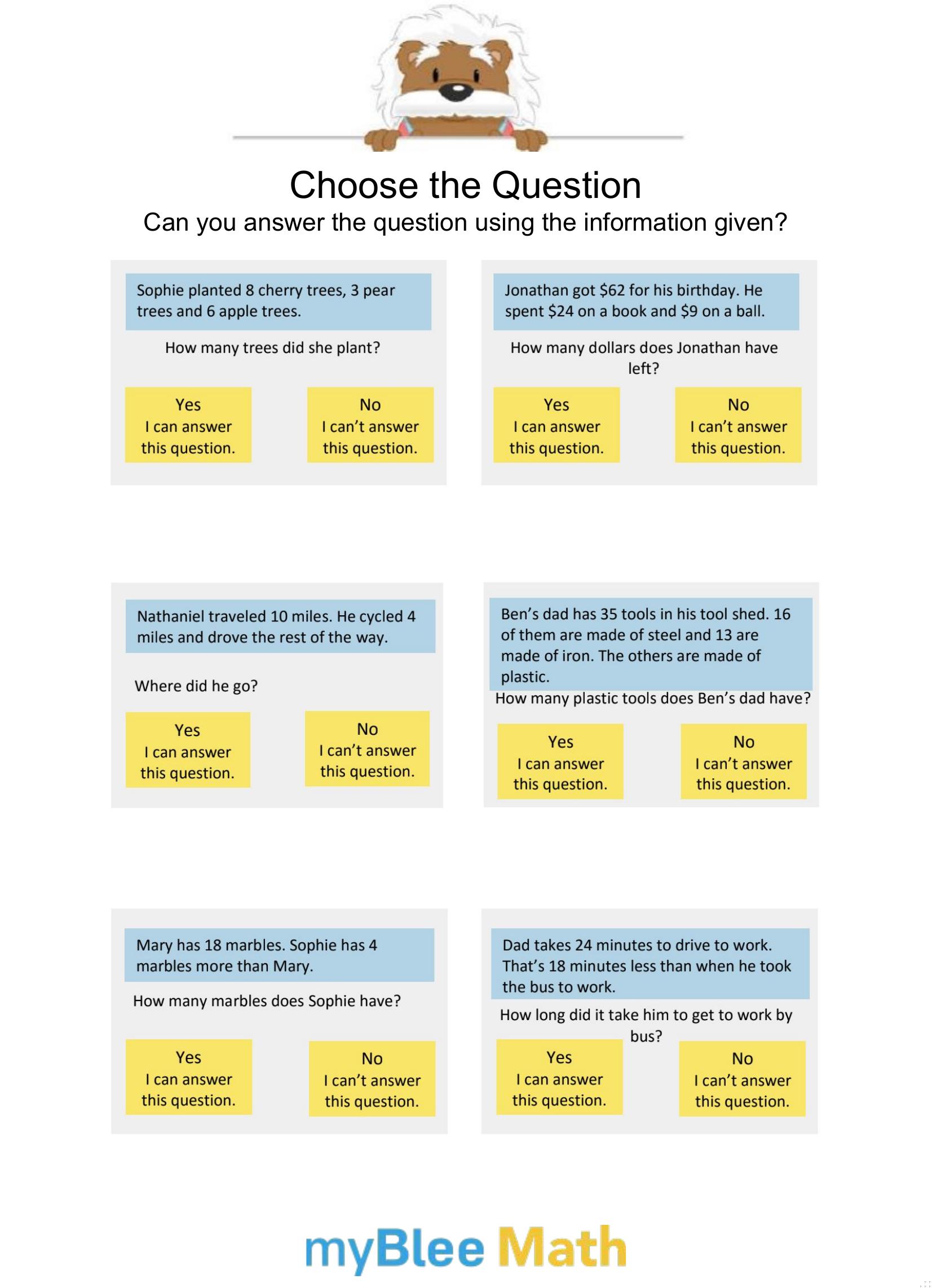
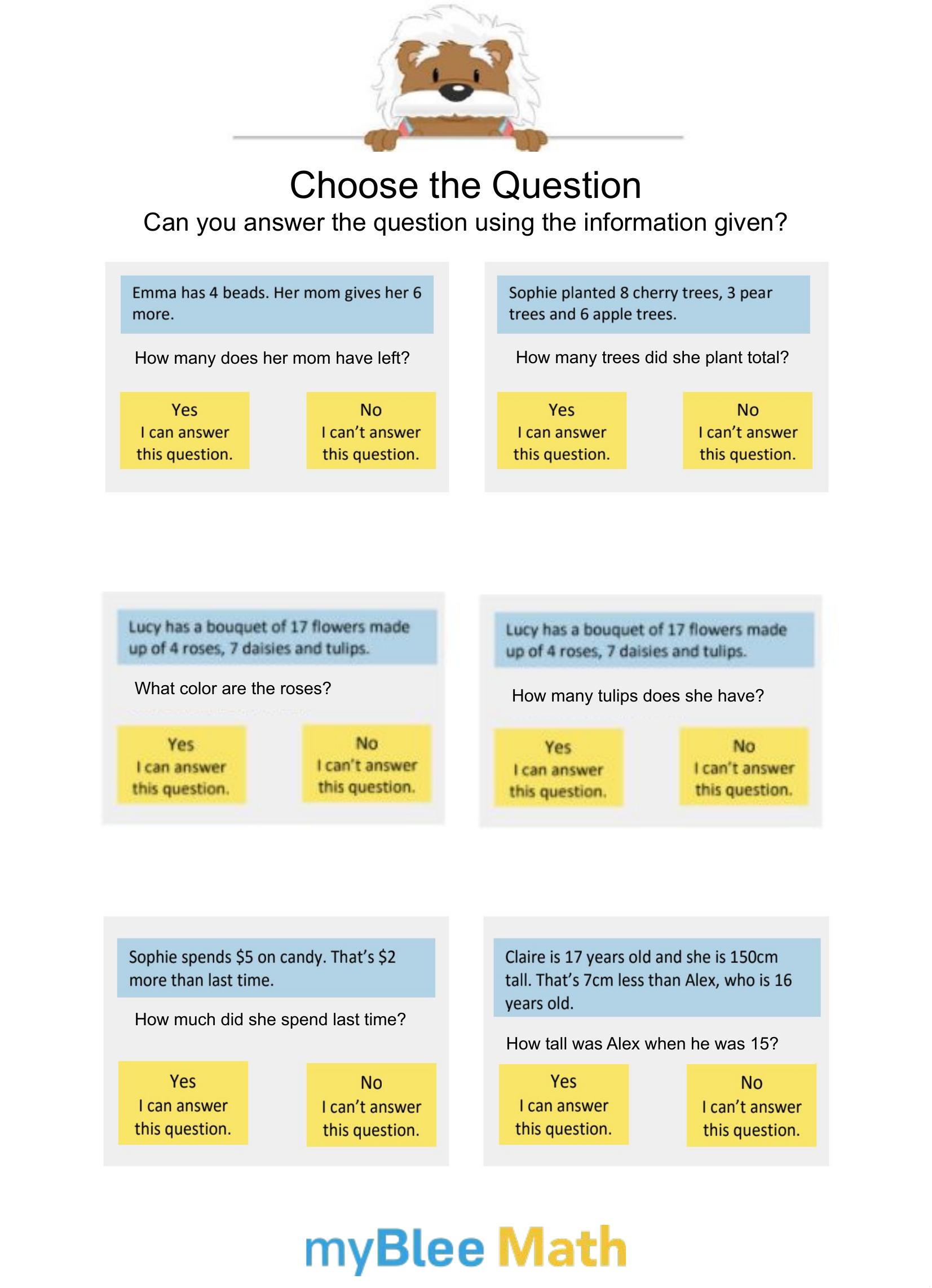
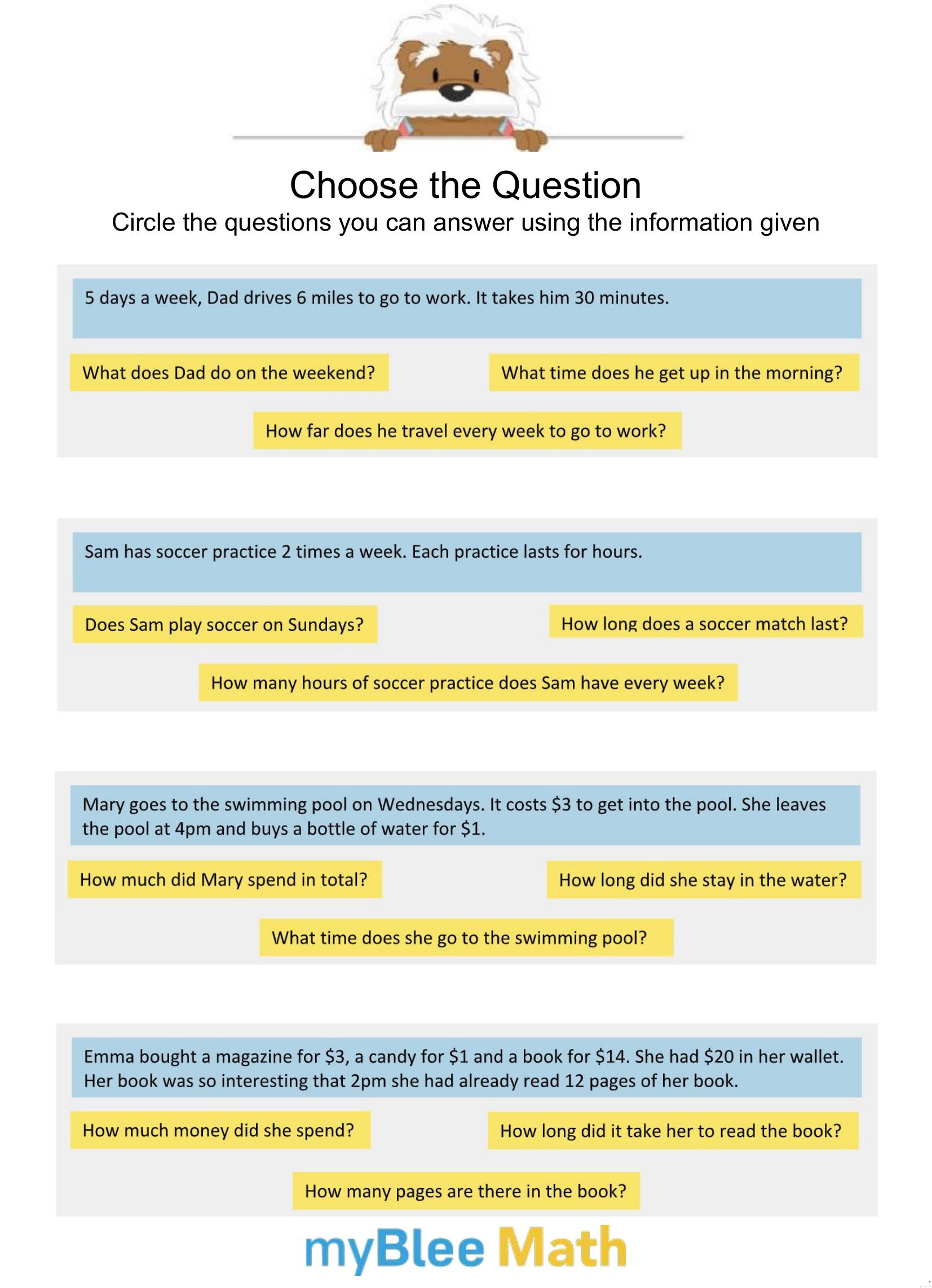
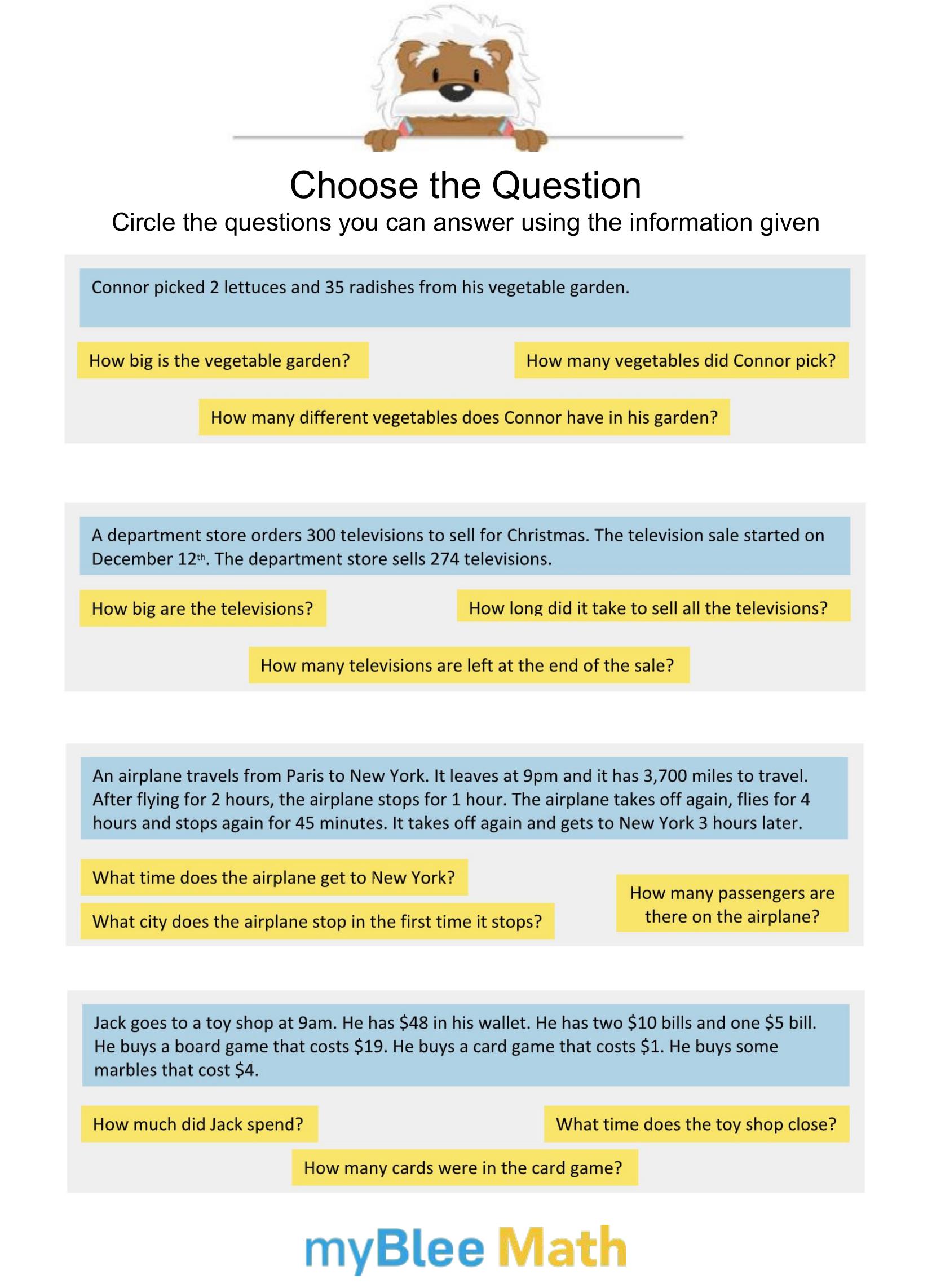
Choosing the right question in a problem is essential to understand what you are really looking for. The following exercises will help identify the objective of a wording, spot implicit questions and word the request correctly.
They help develop precision, logic and reading comprehension.
Choose the Question
Choosing the right operation for a problem
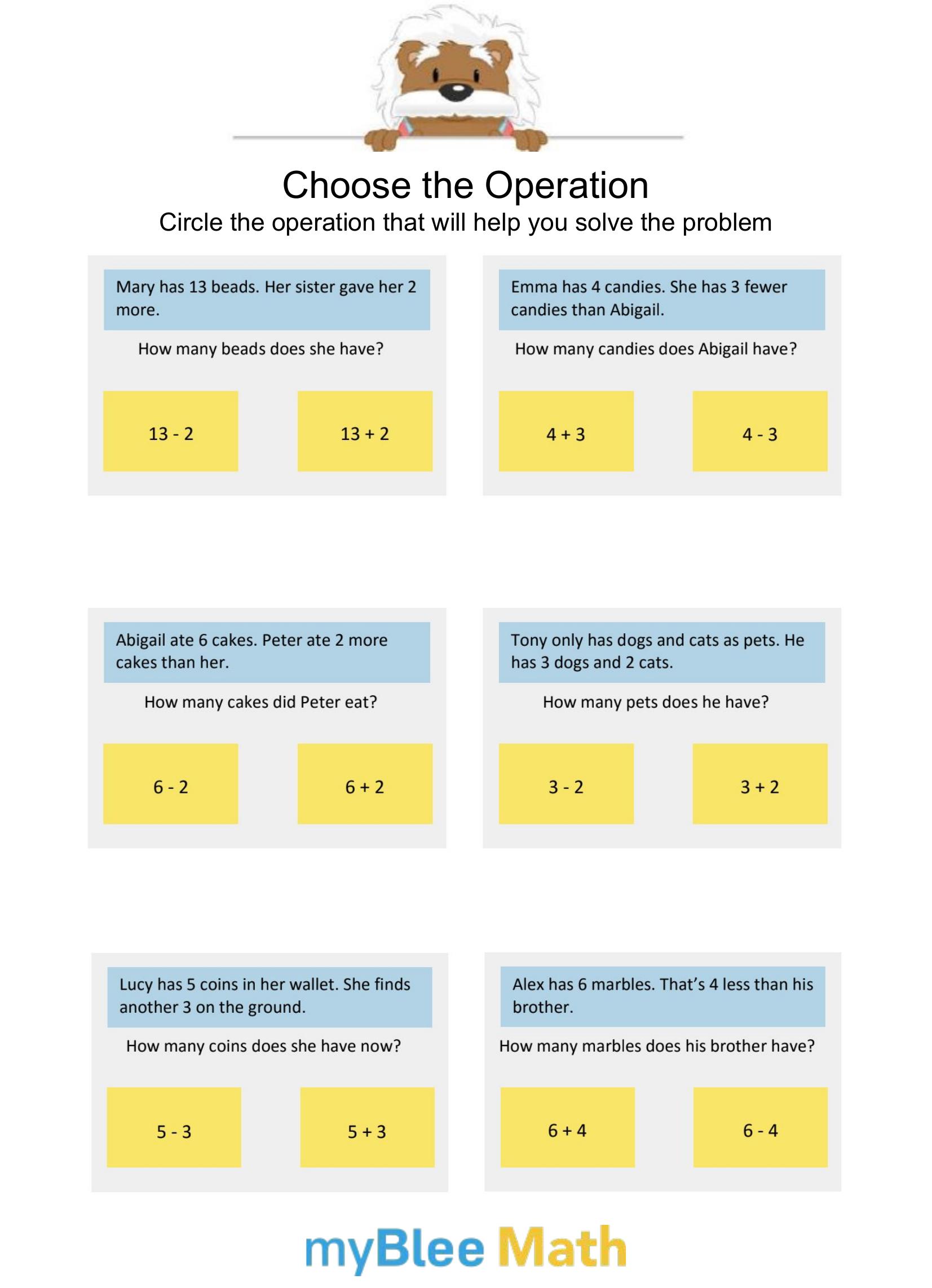
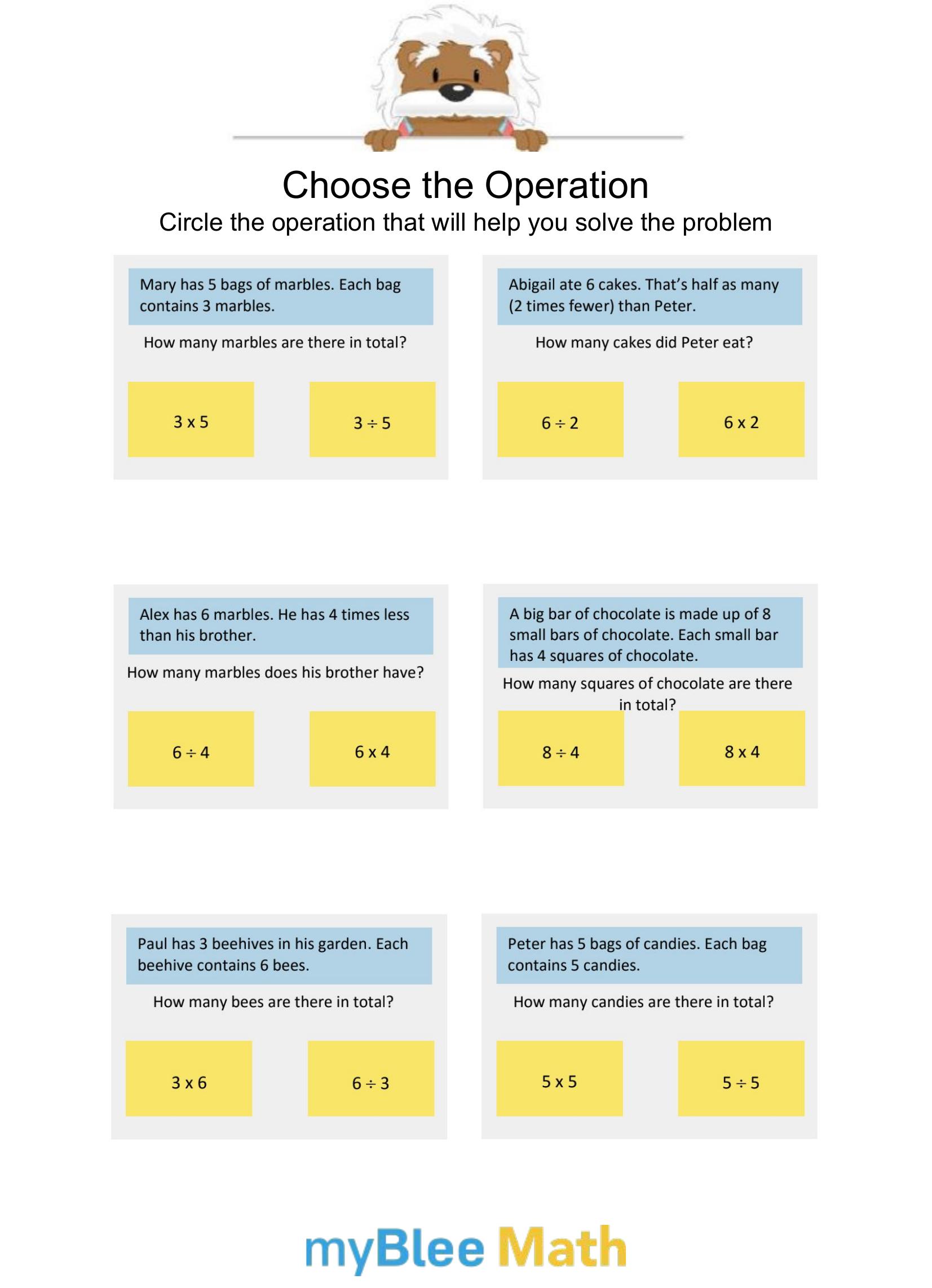
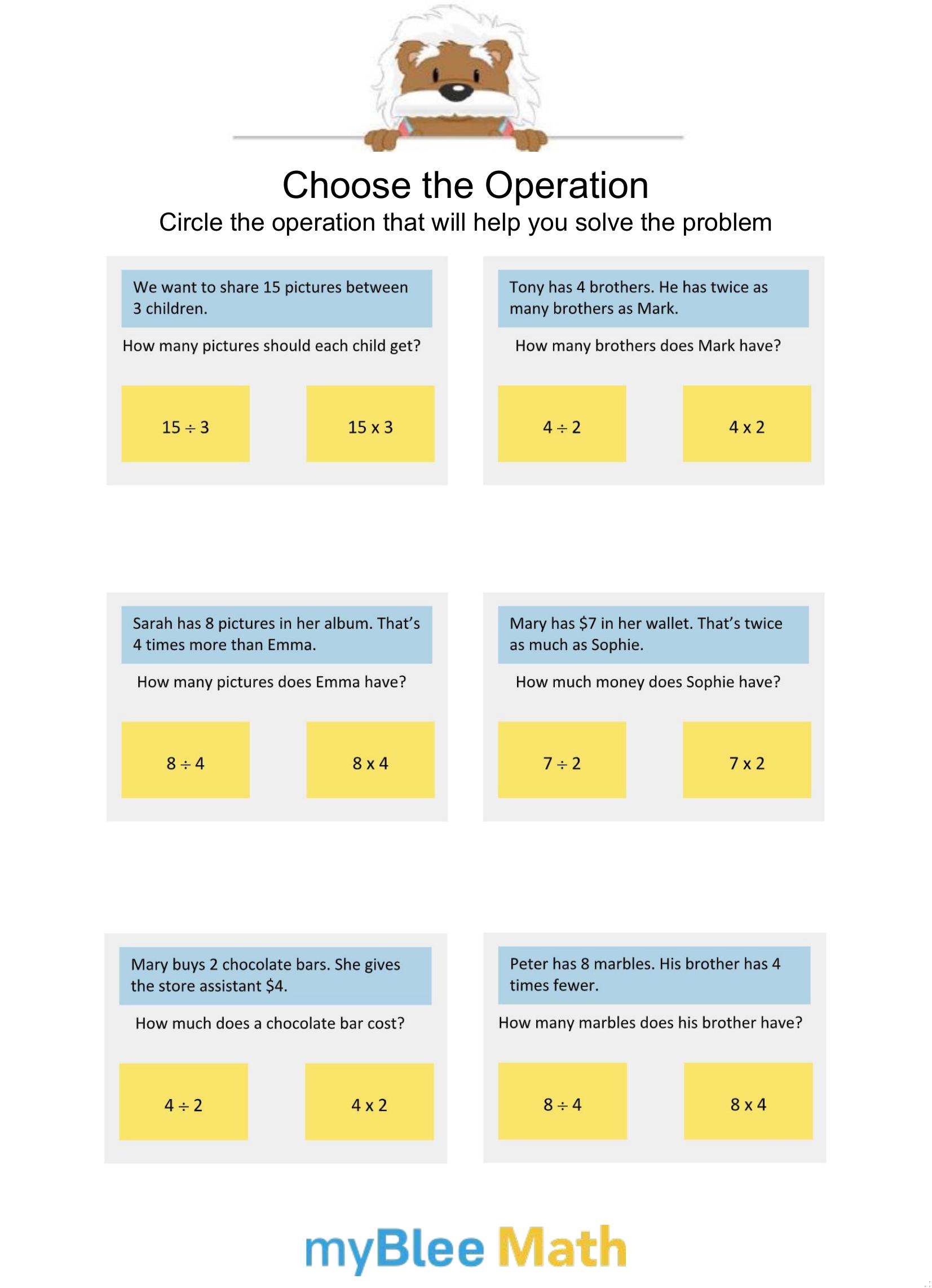
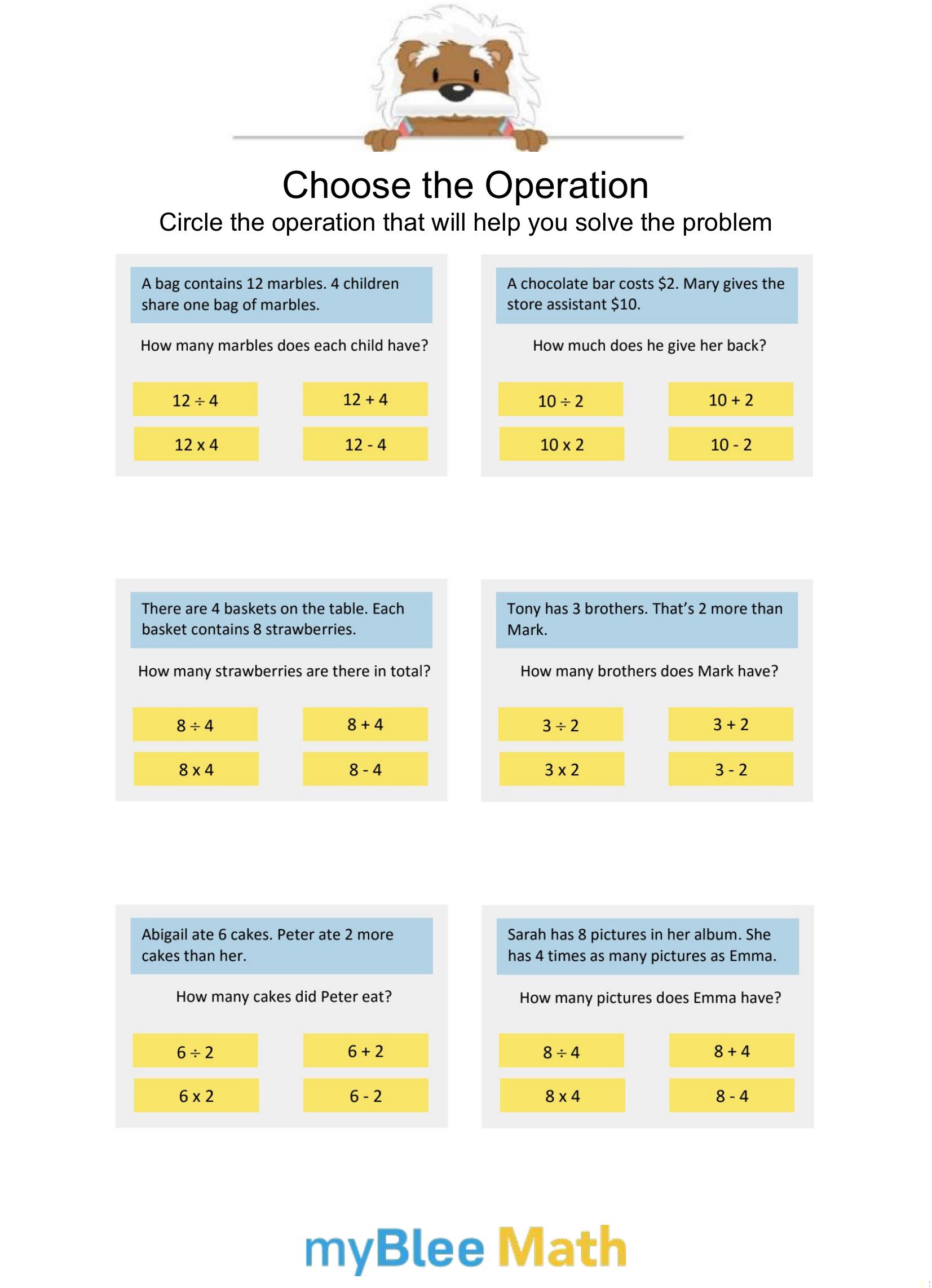
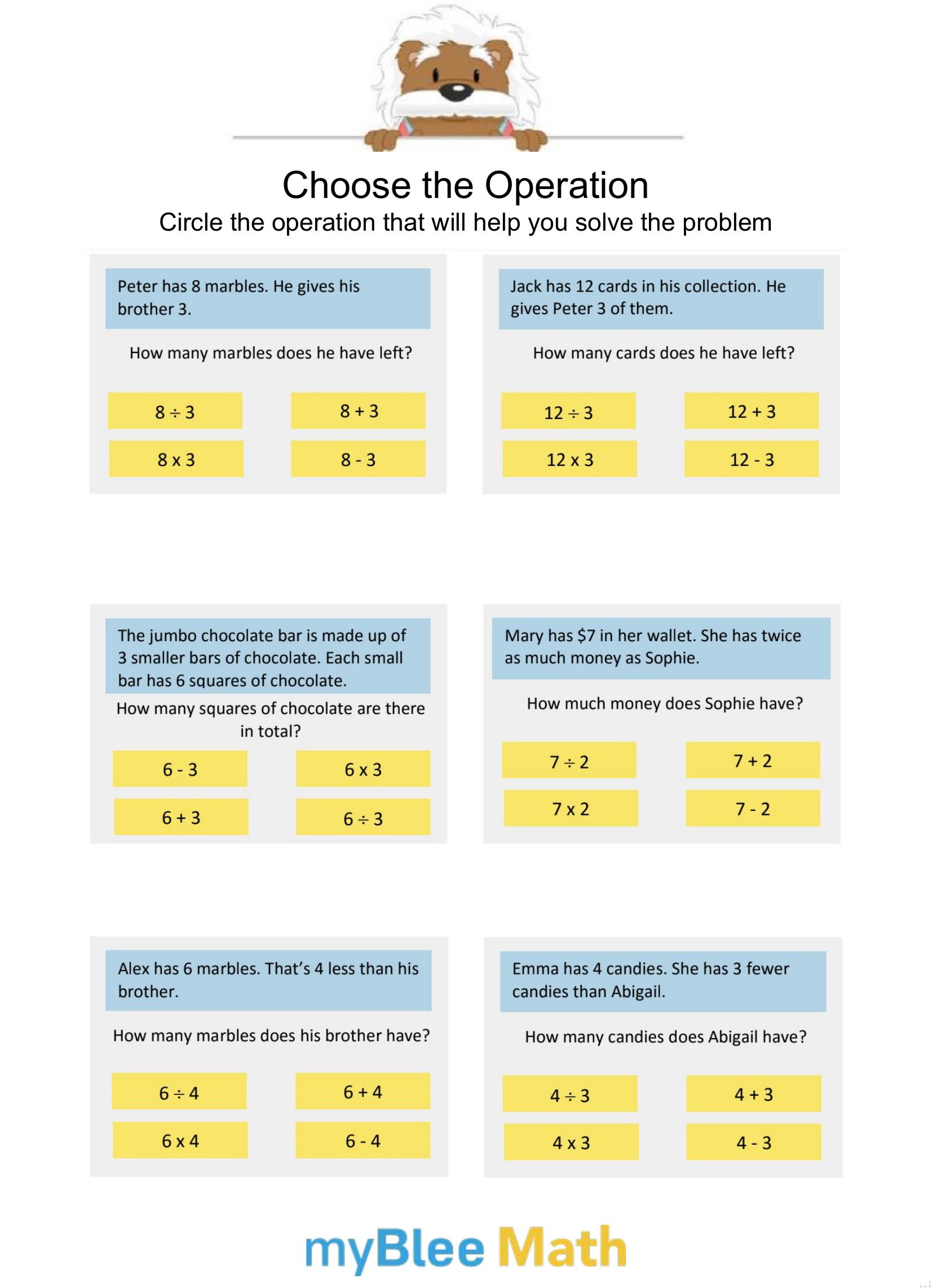
Knowing how to choose the right operation is essential to solve a problem effectively. The following exercises will train students to recognize situations that require adding, subtracting, multiplying or dividing. They help match each type of wording with the right calculation strategy and gain confidence in reasoning.
Choose the Operation

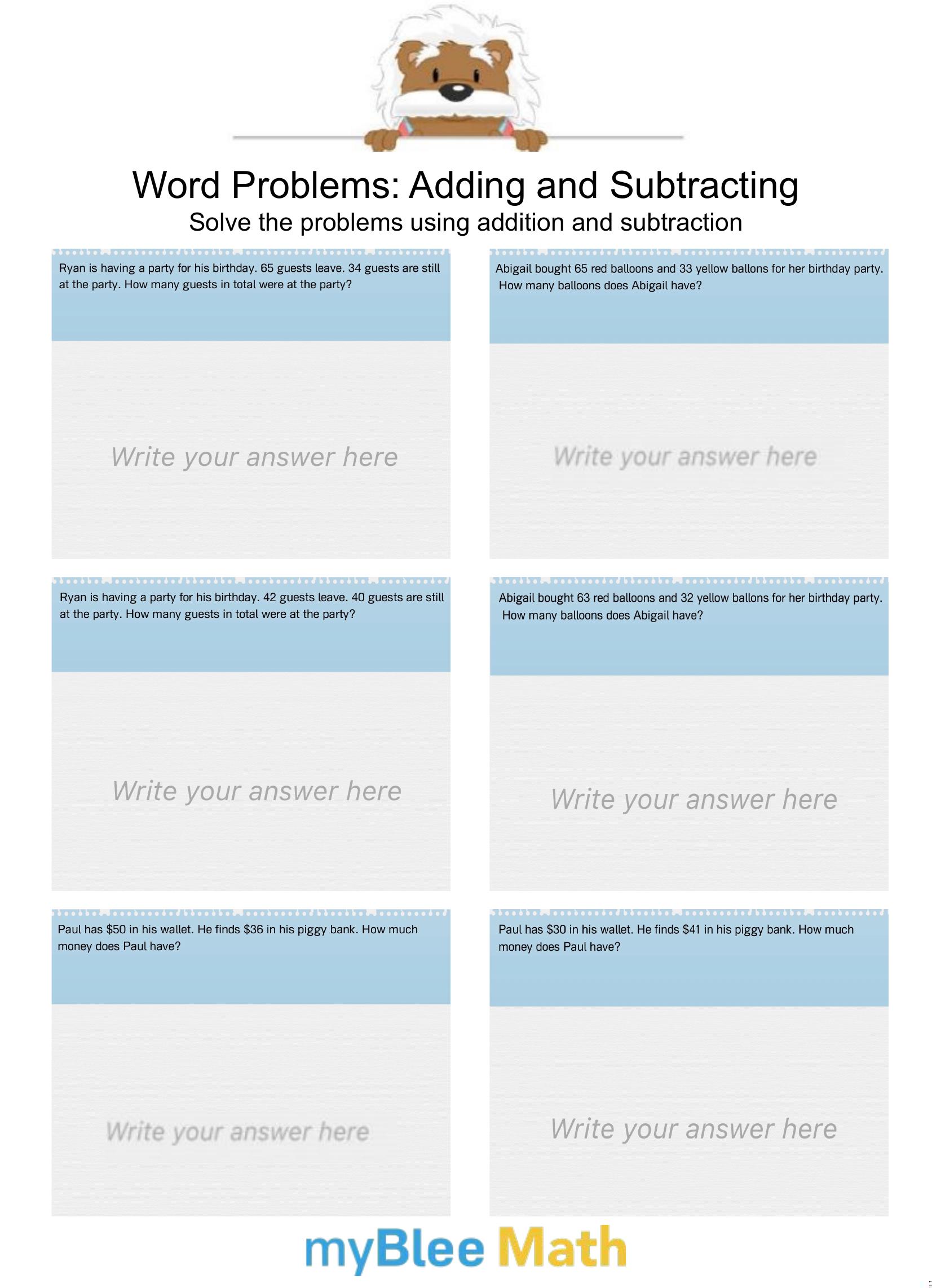
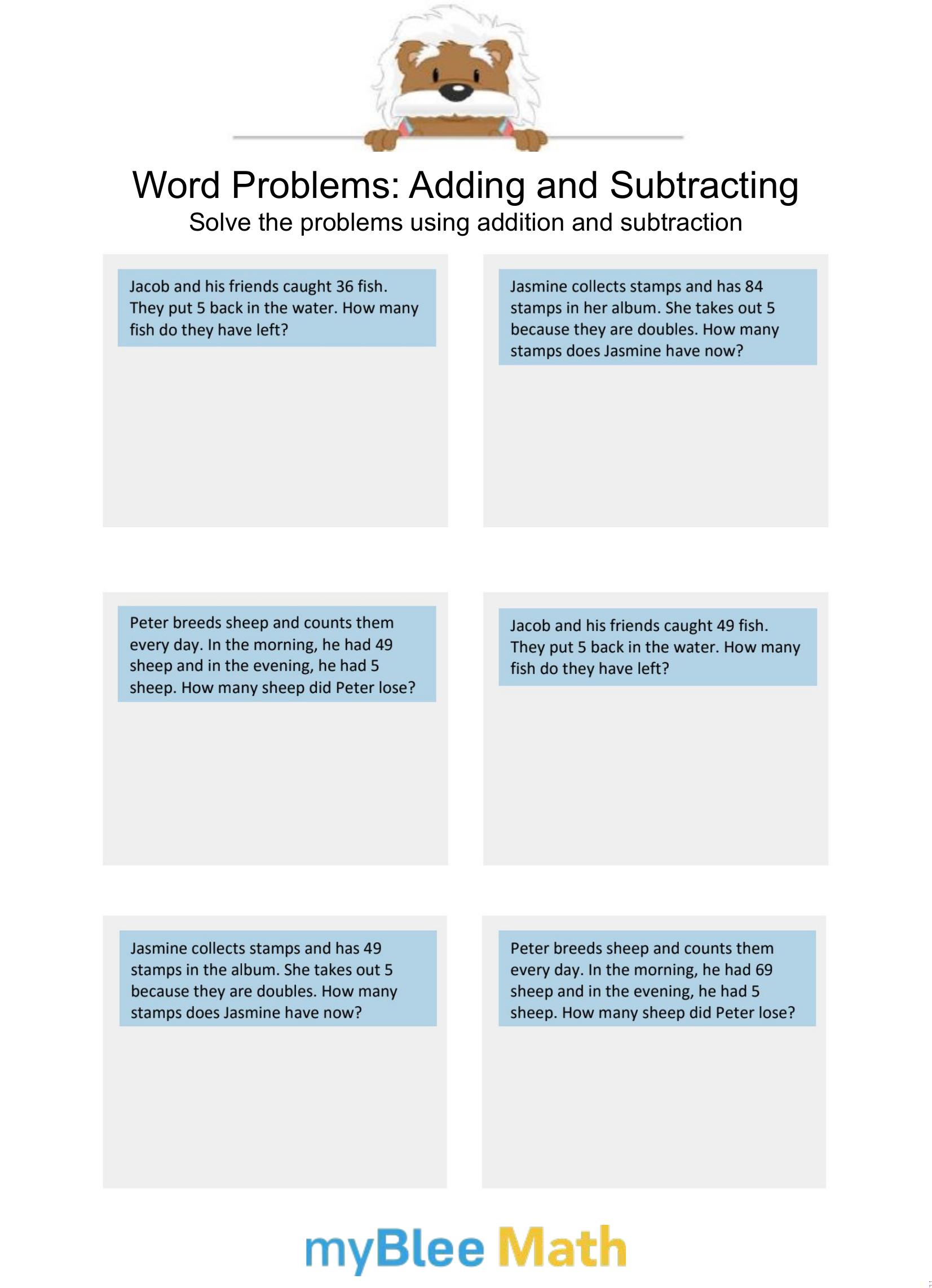
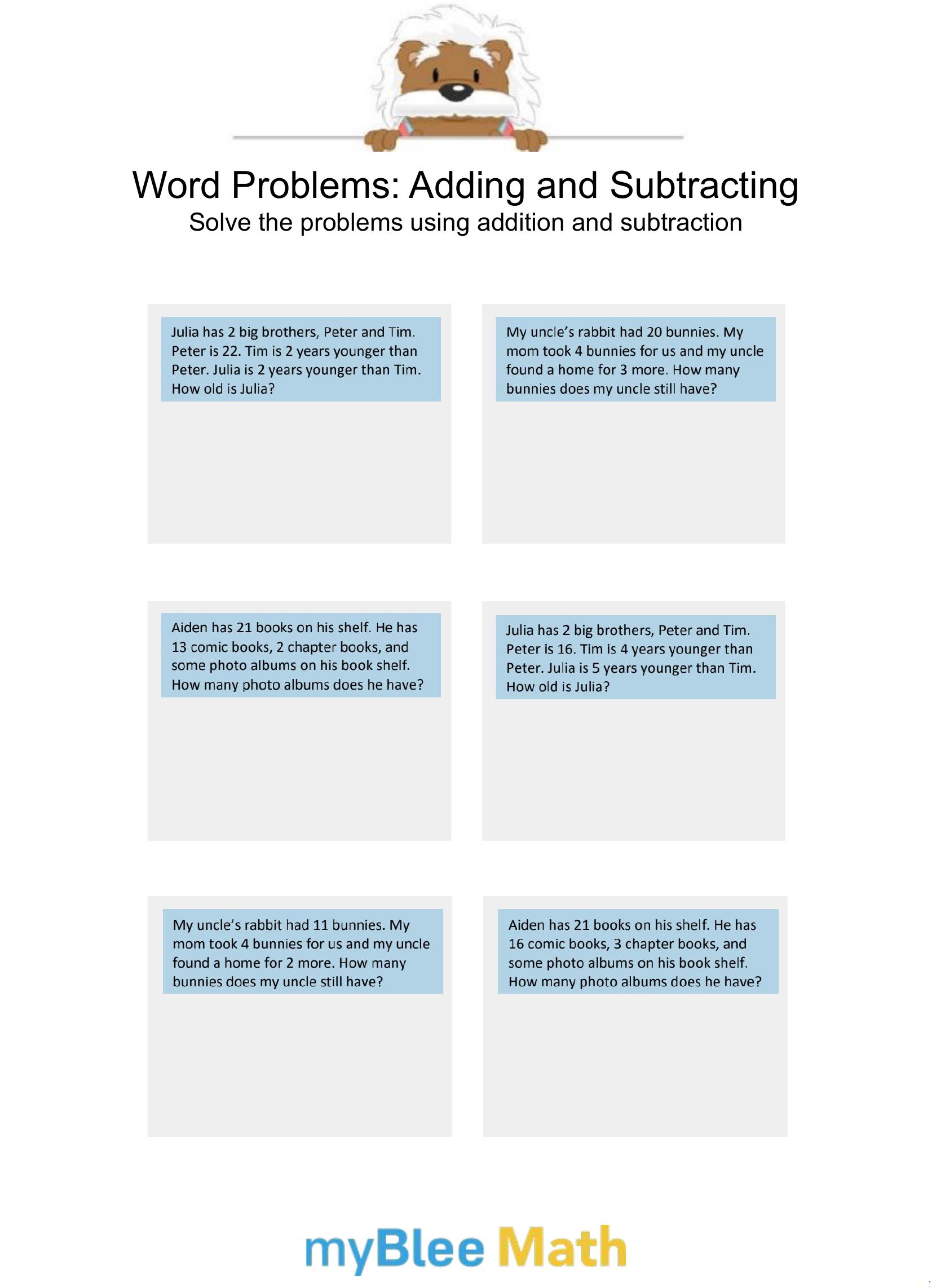
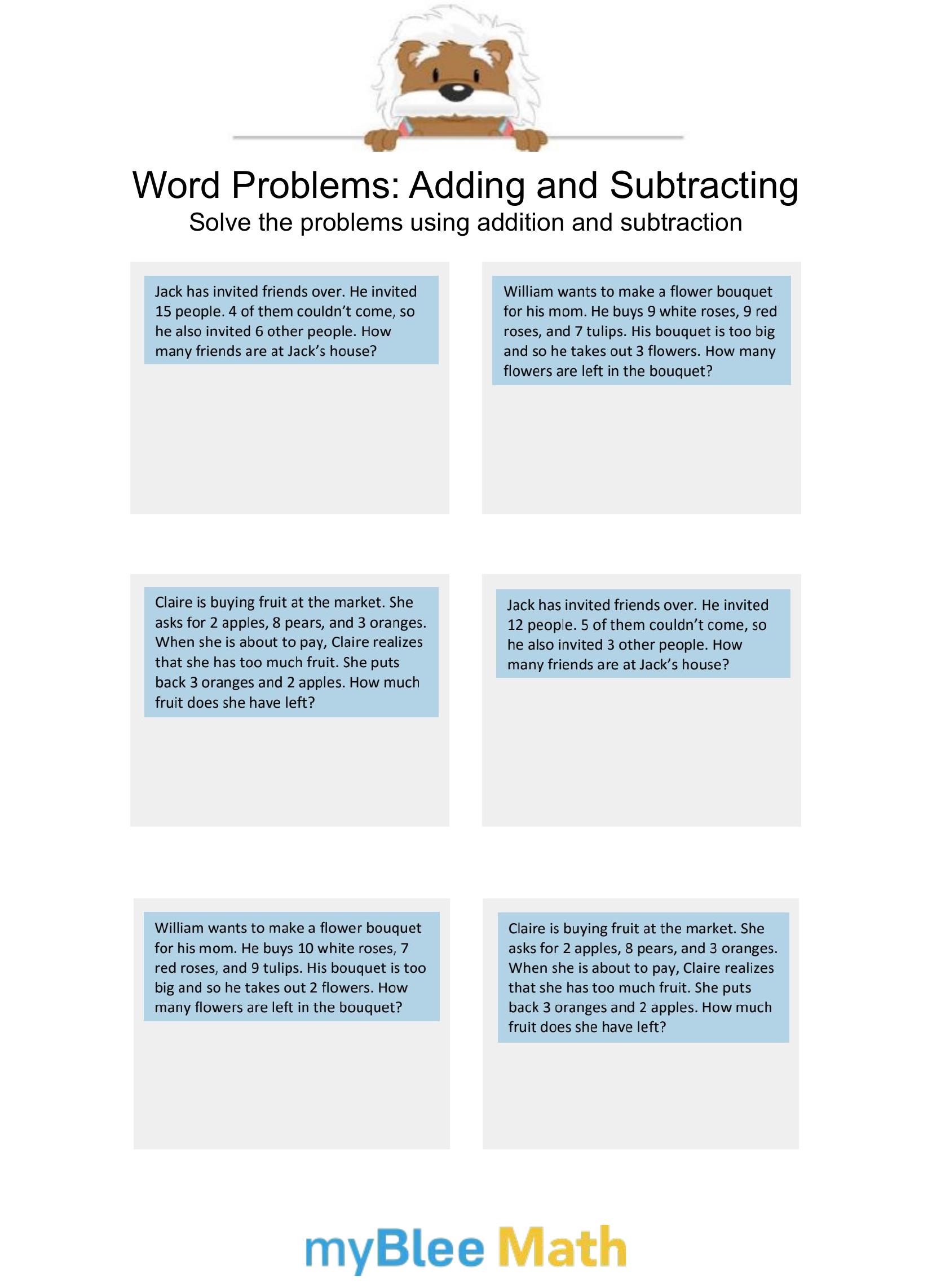
Problems with addition and subtraction
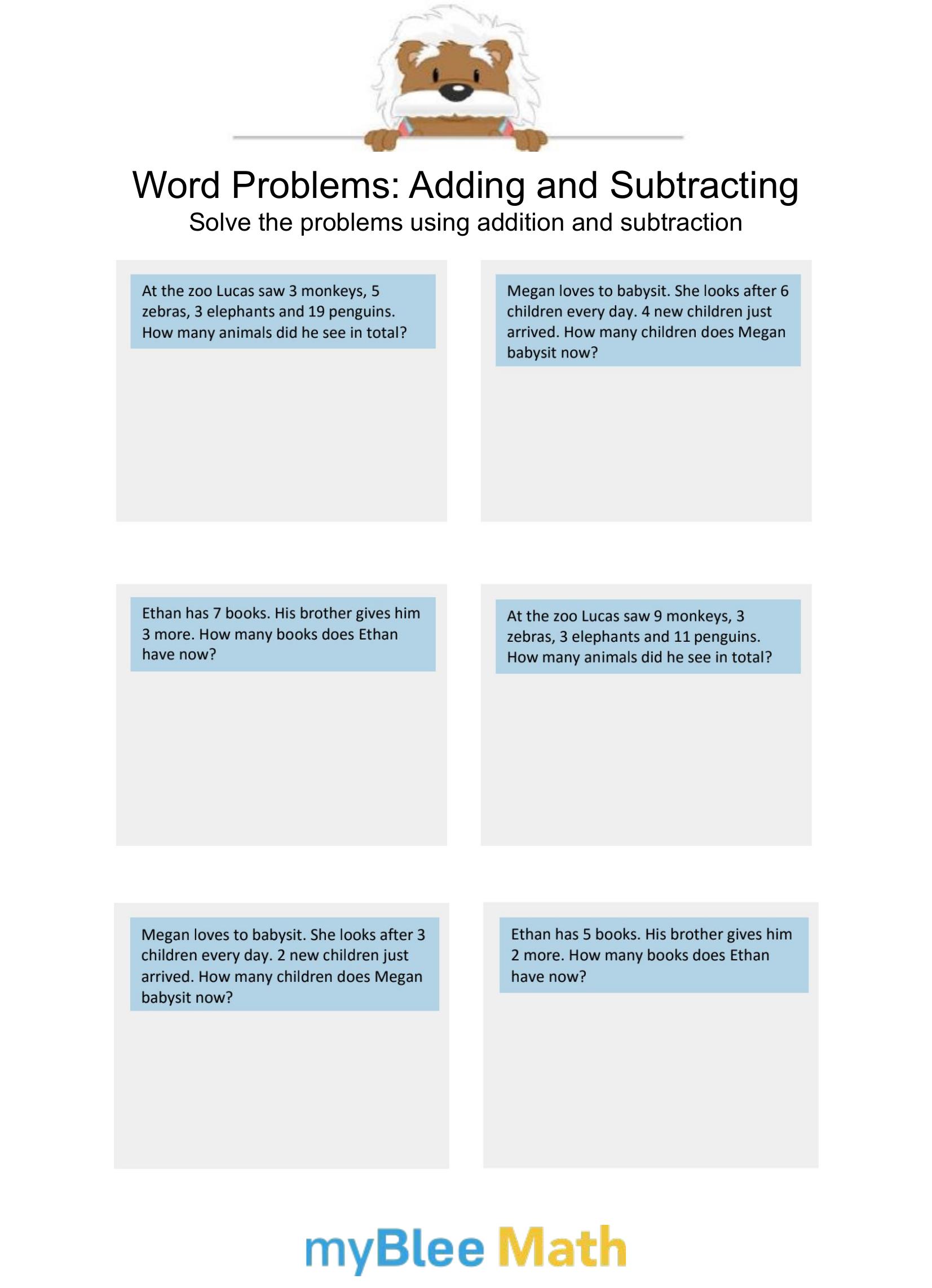
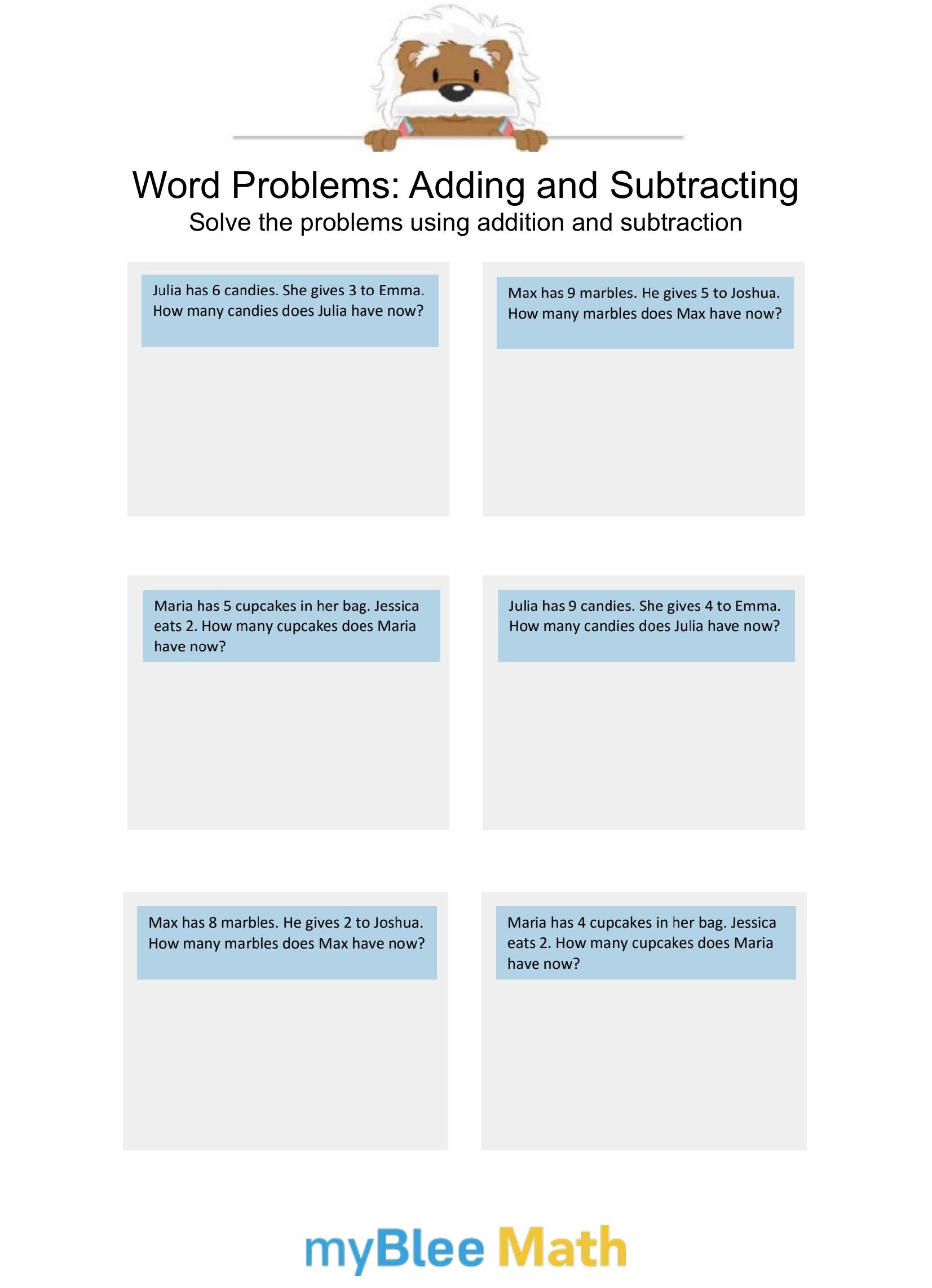
Problems with additions and subtractions are perfect for understanding how to manipulate quantities, compare values or calculate differences. The following exercises will help quickly identify whether to add or remove information.
They strengthen reasoning basics while developing reliable habits to solve real-life situations.
Word Problems: Adding and Subtracting
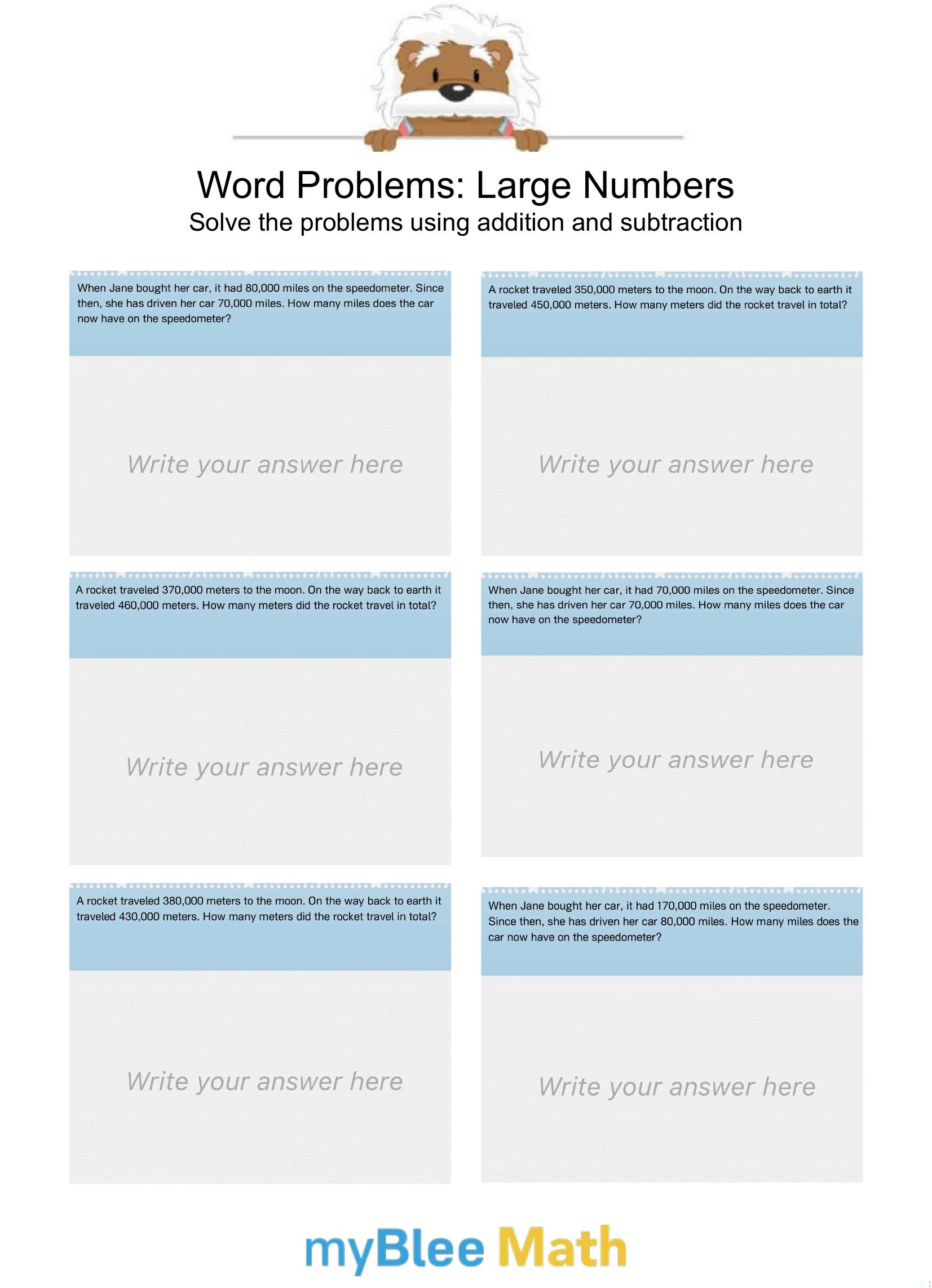
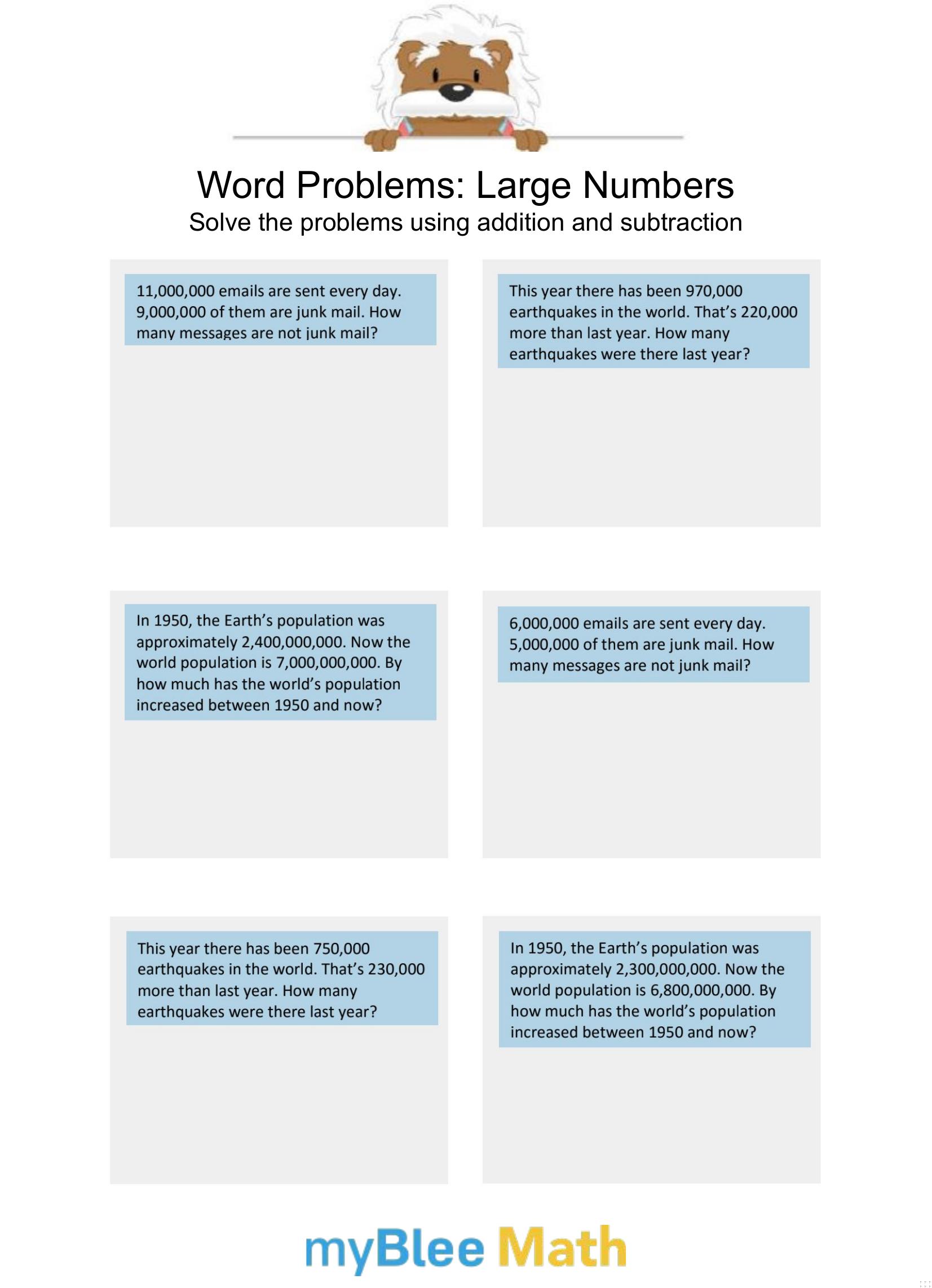
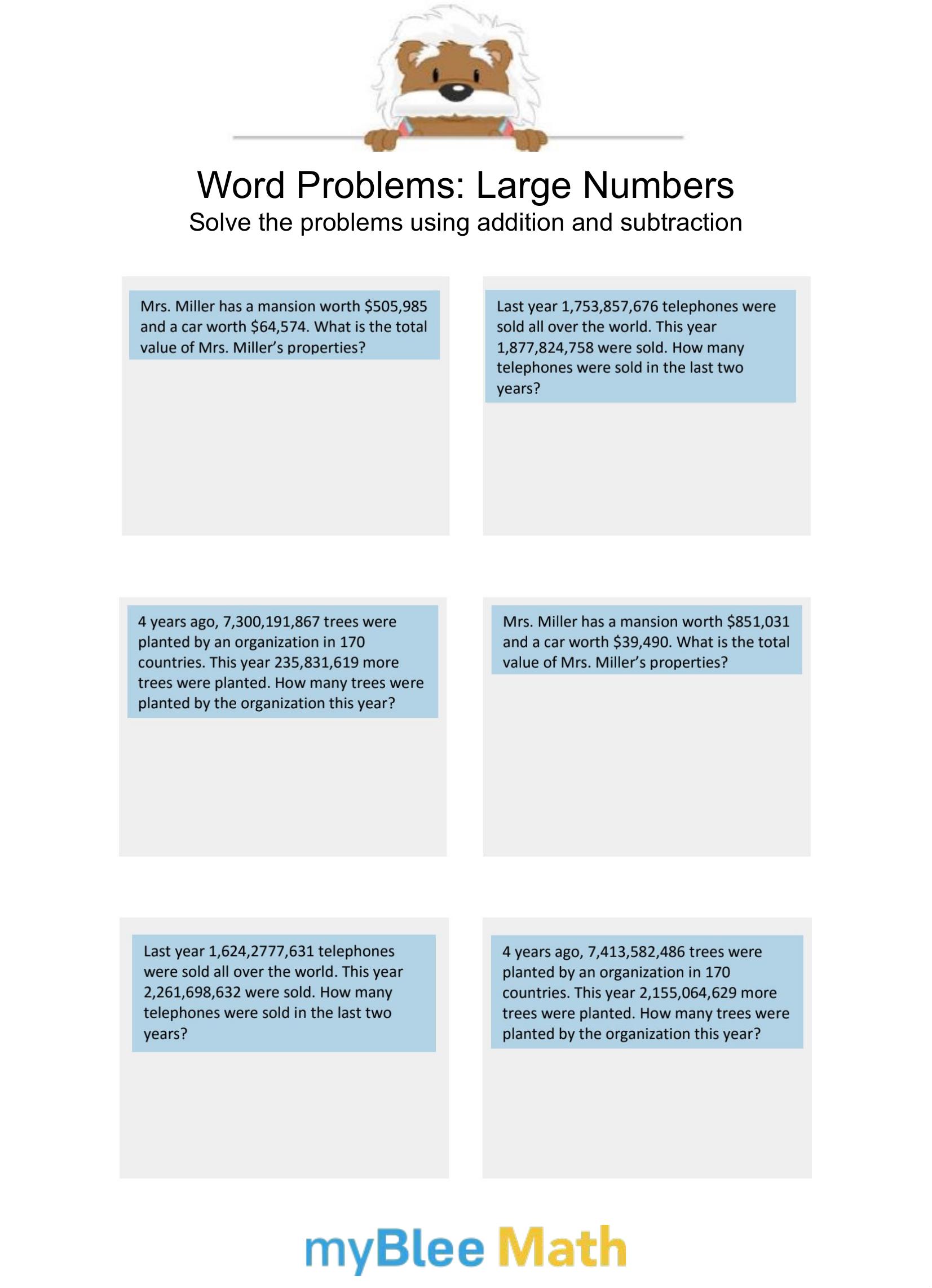
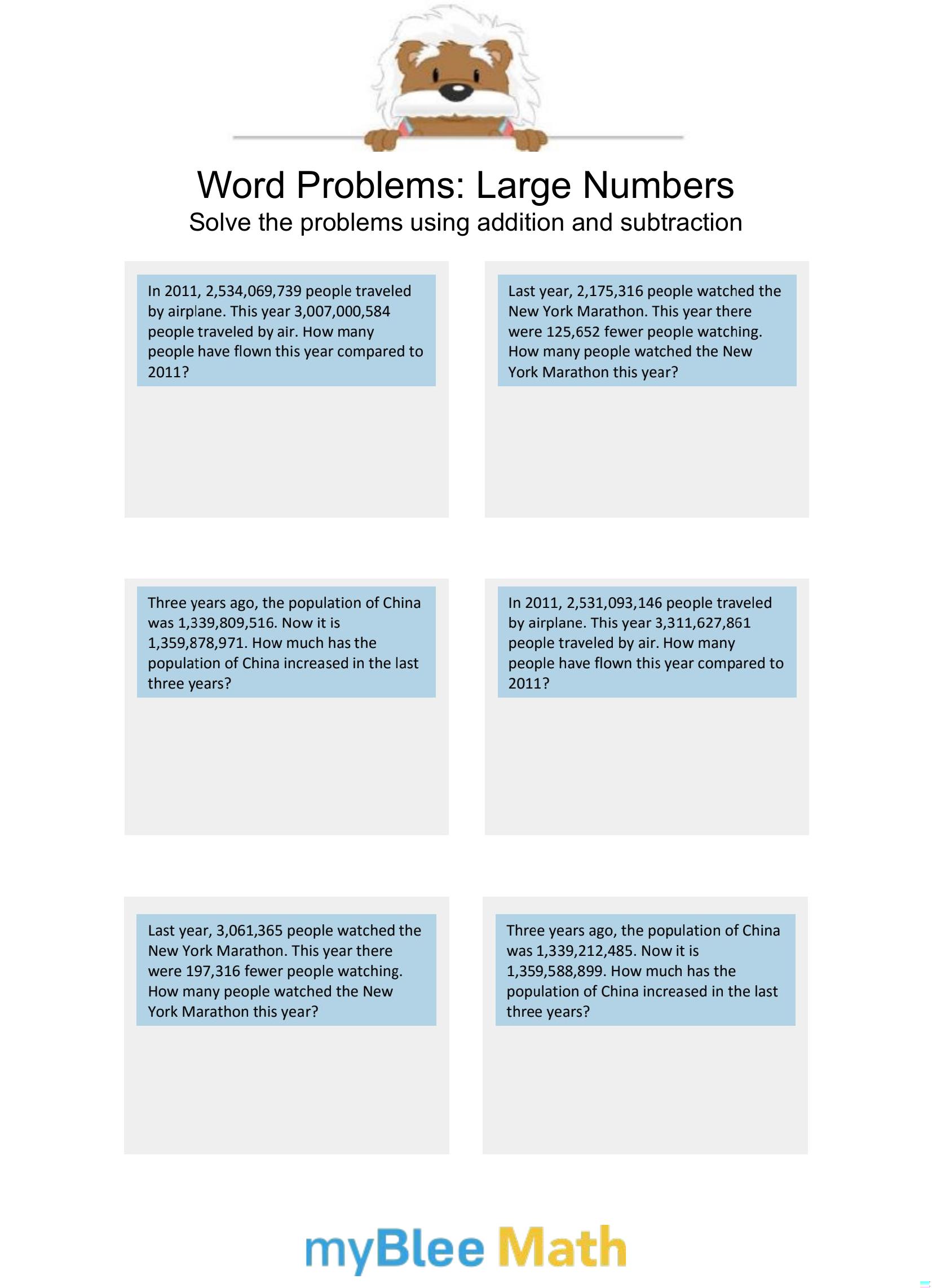
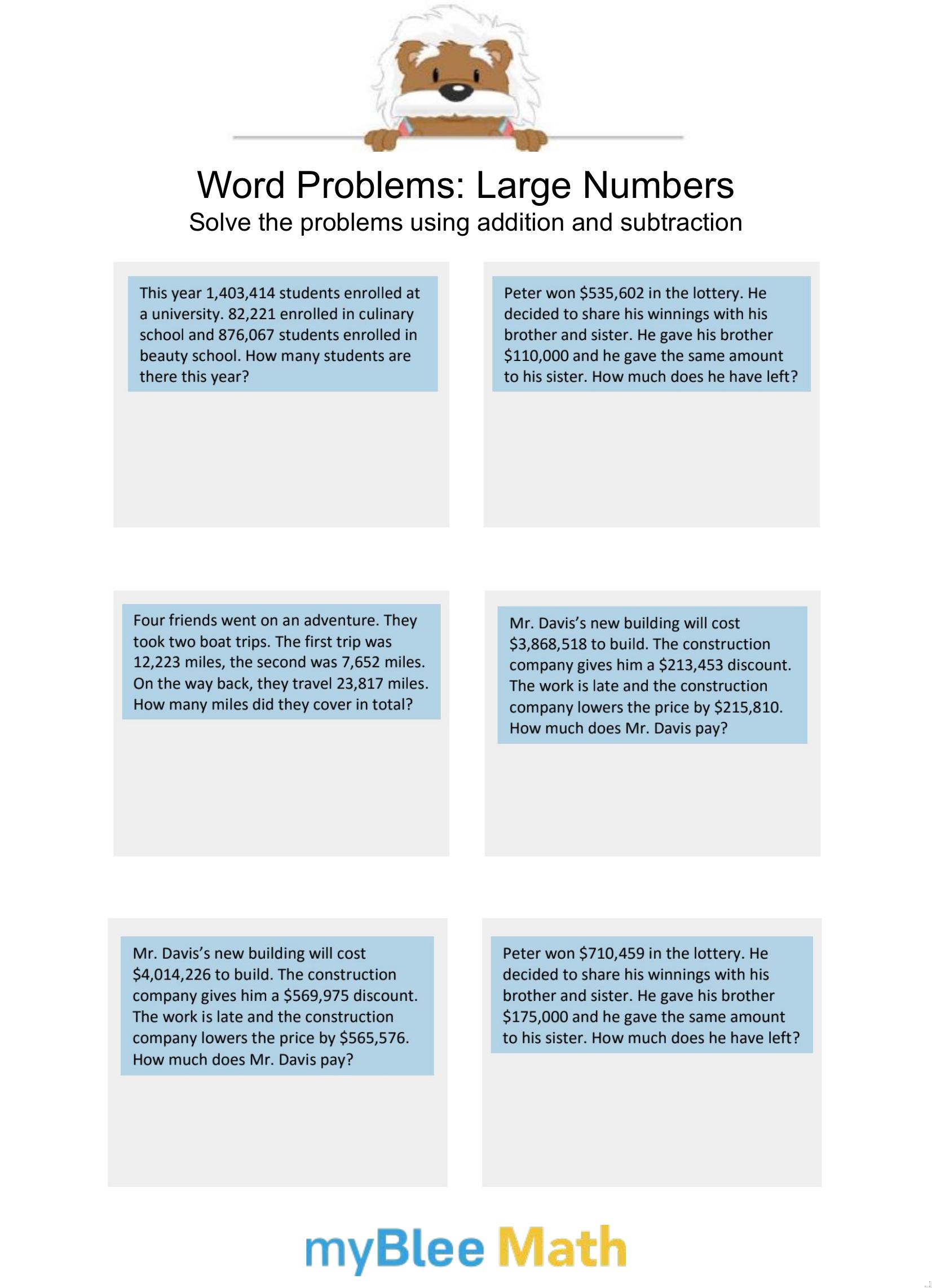
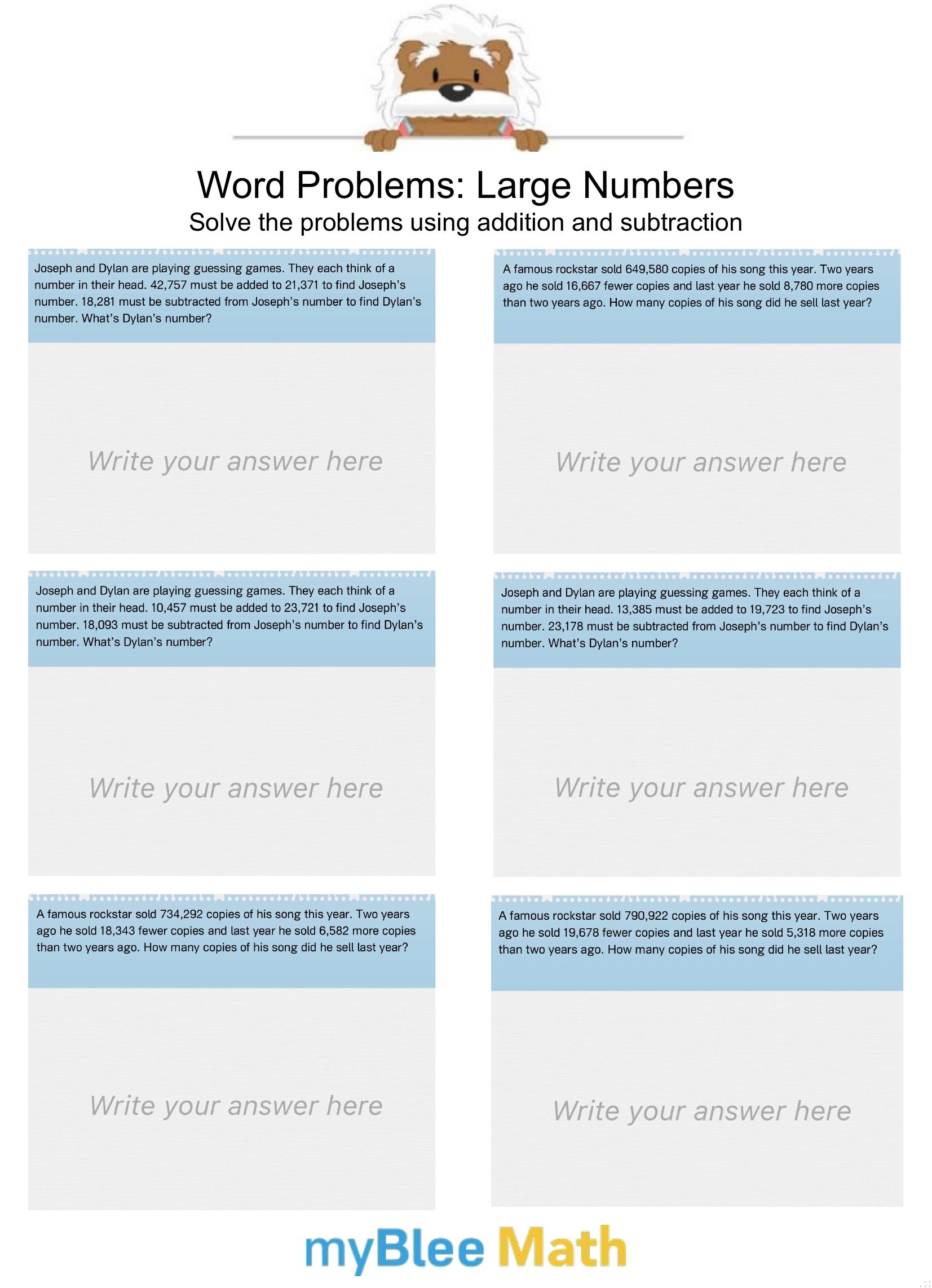
Problems with large numbers
Problems involving large numbers require more rigor and good mastery of calculation steps. The following exercises will help organize information, set up operations correctly and avoid common mistakes. They offer progressive training to develop confidence and accuracy when handling larger quantities.
Word Problems: Large Numbers
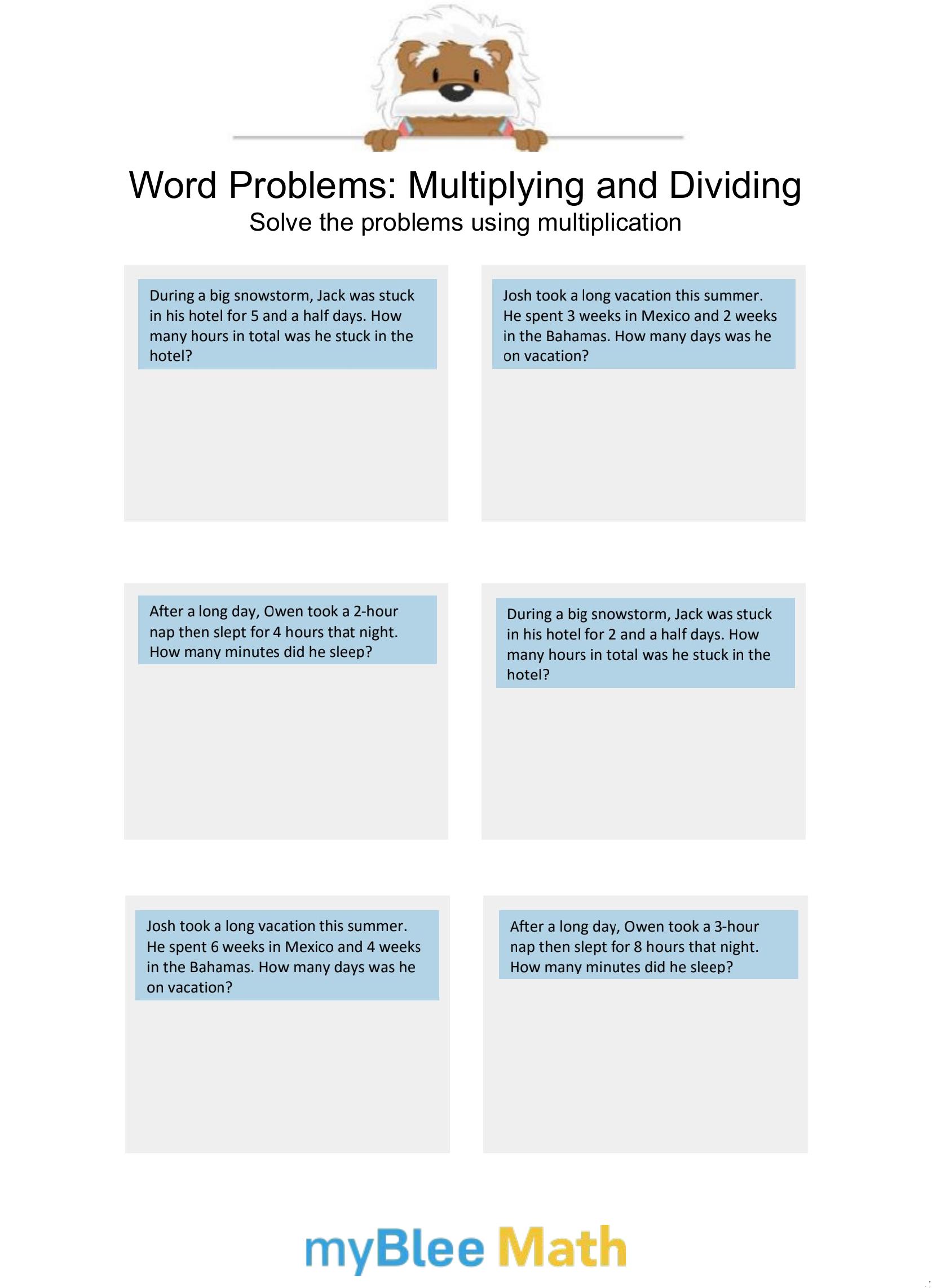
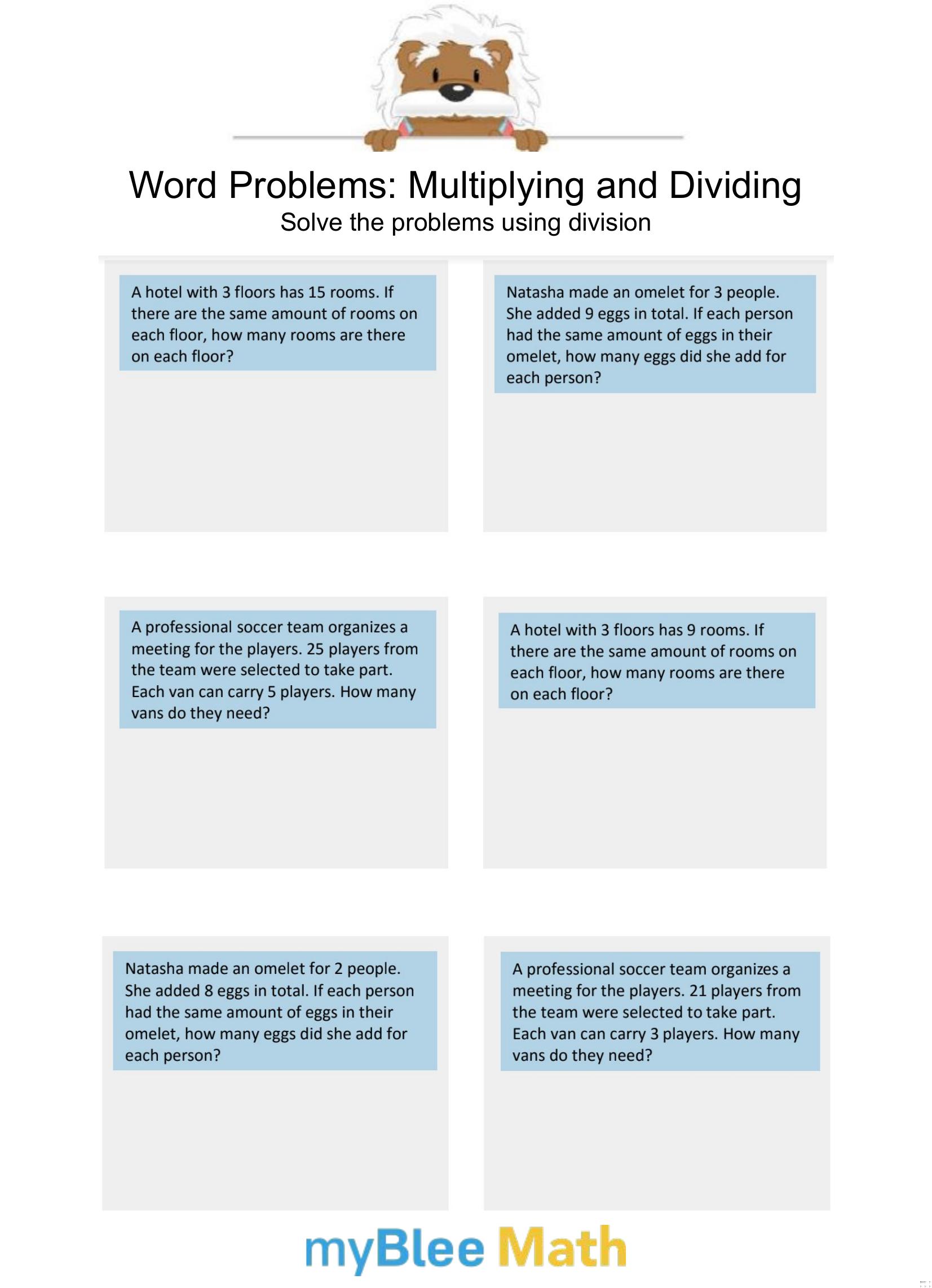
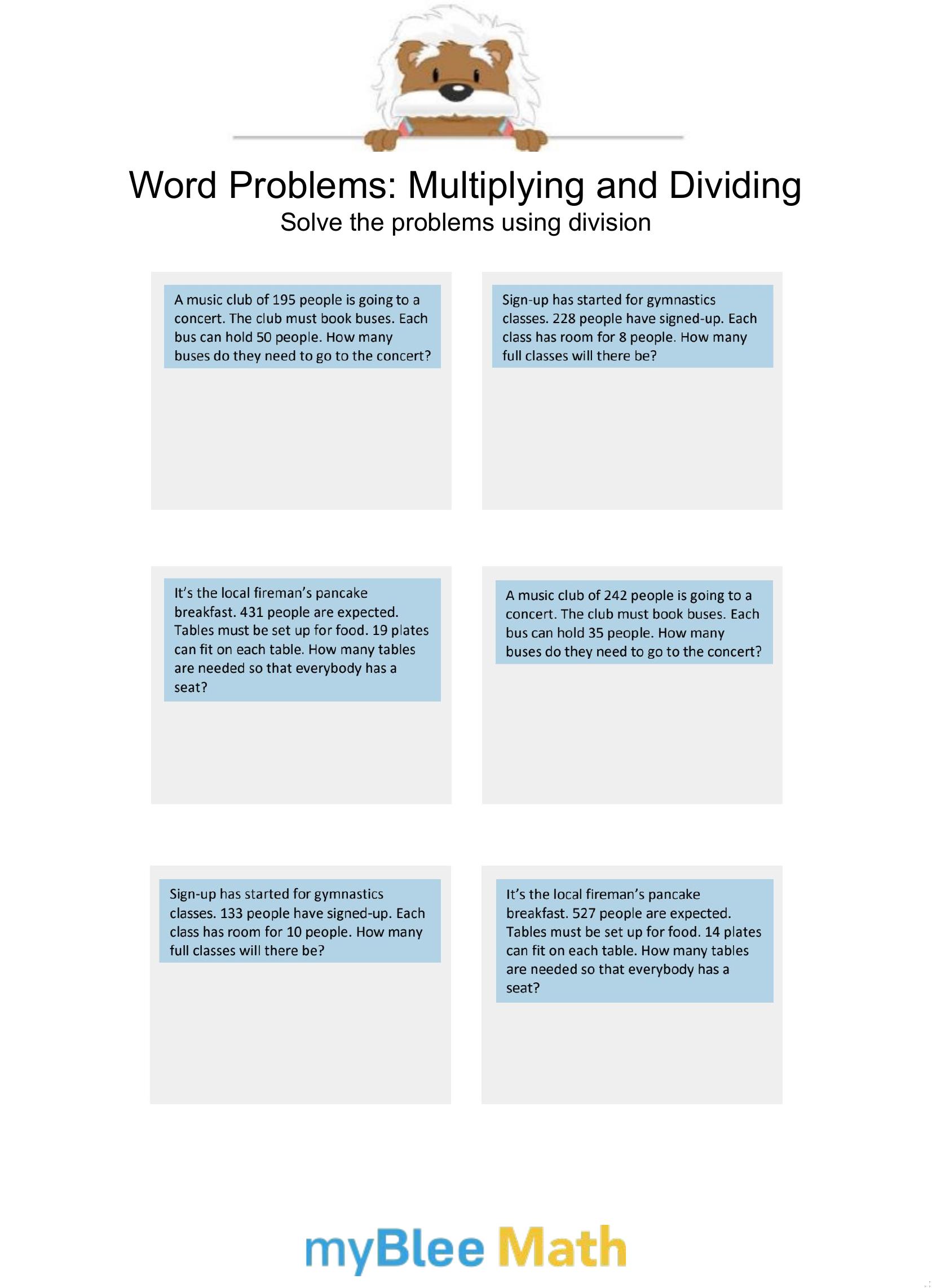
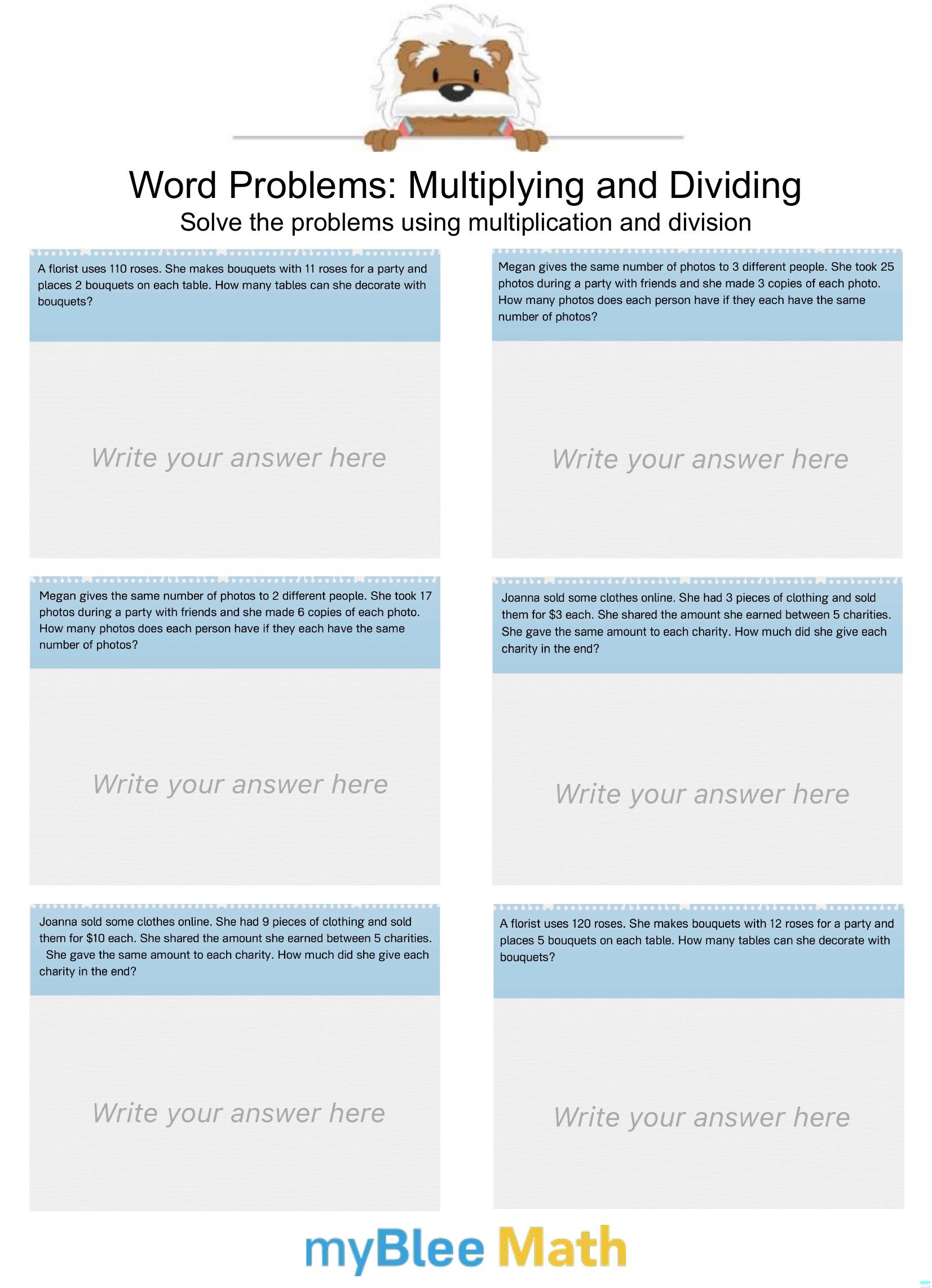
Problems with multiplication and division
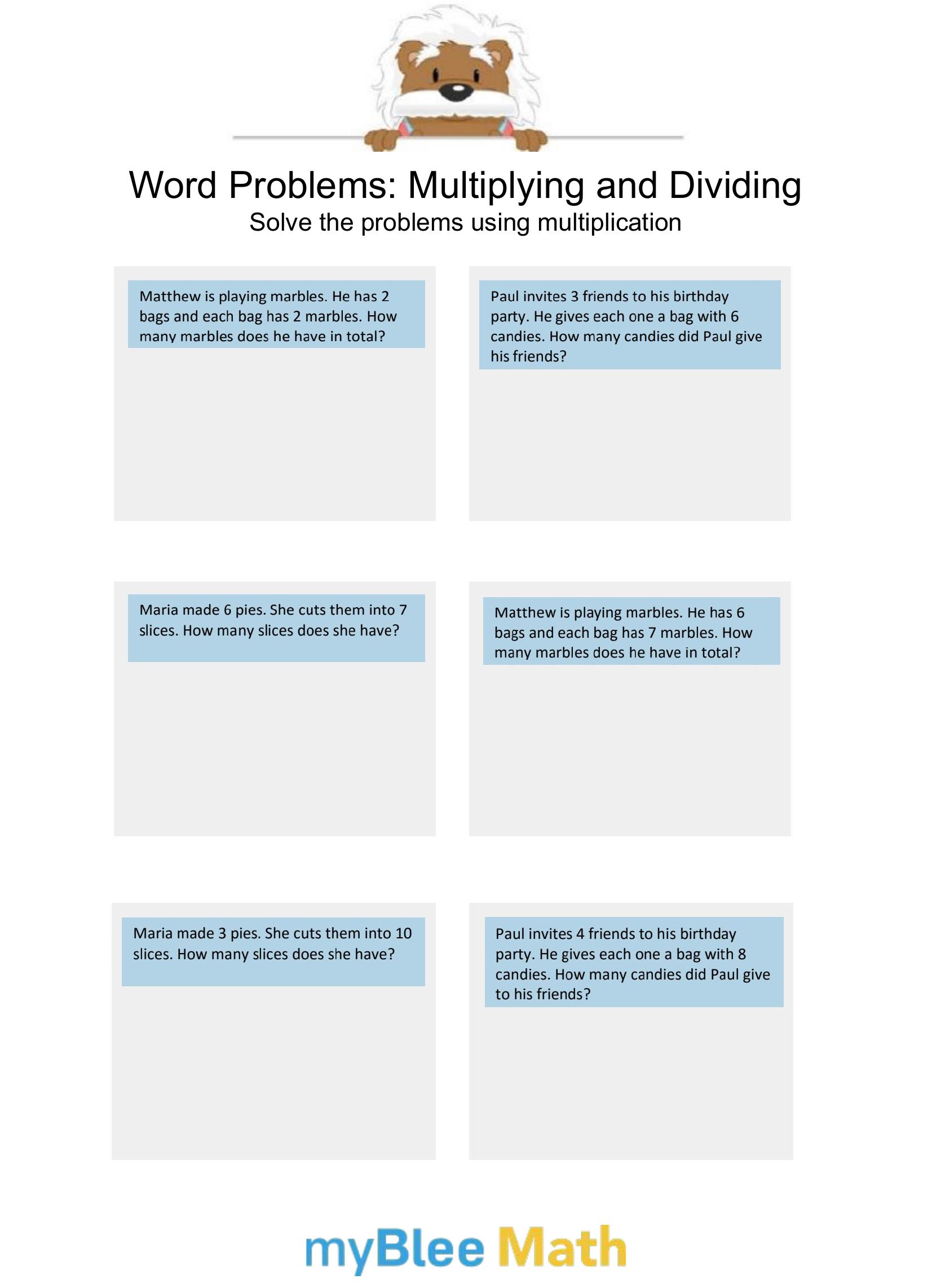
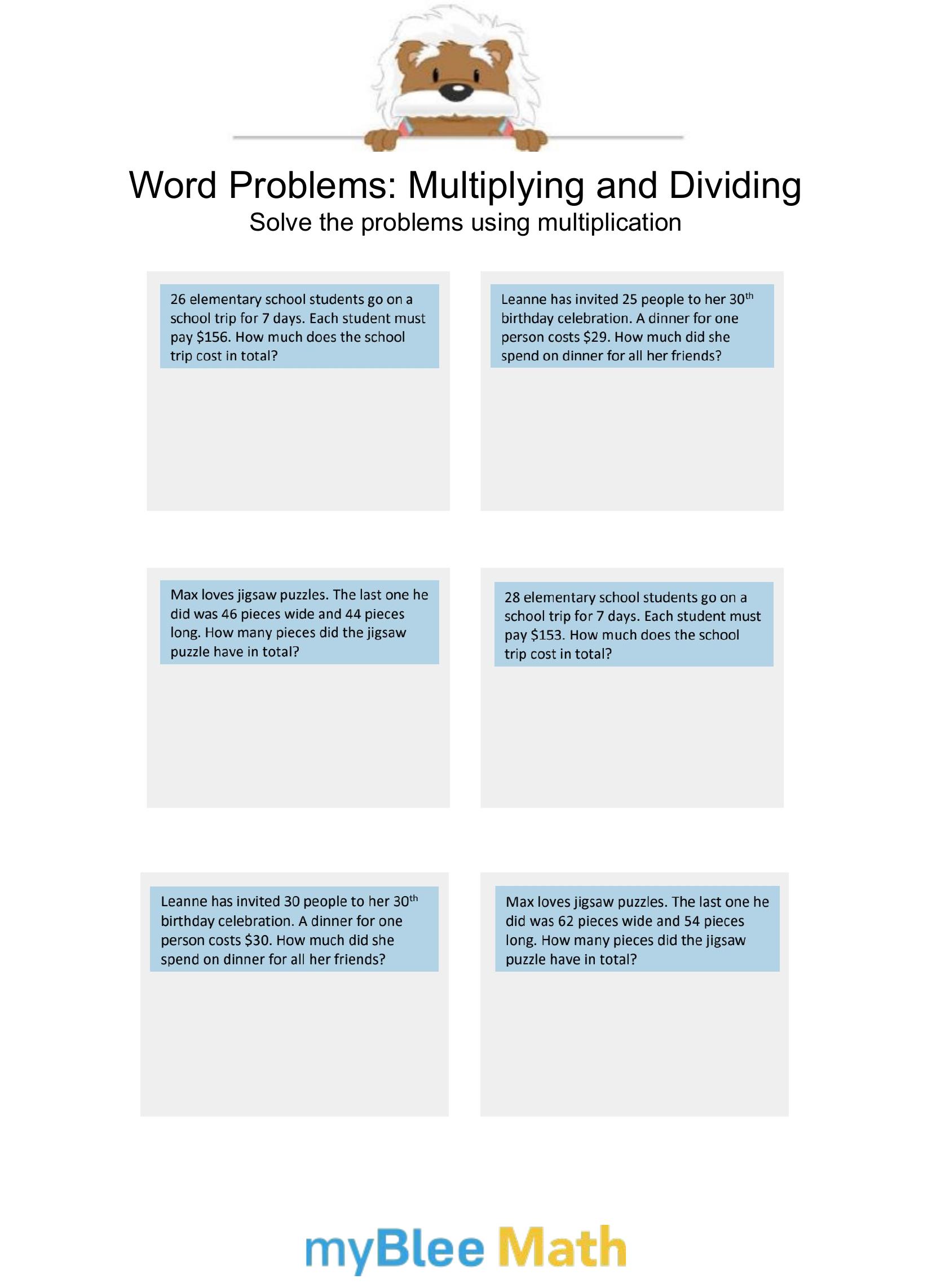
Problems using multiplications and divisions teach how to understand grouping, sharing or enlarging a quantity. The following exercises will help quickly recognize when to multiply or divide. They train students to structure reasoning and apply the correct operation methodically and accurately.
Word Problems: Multiplying and Dividing
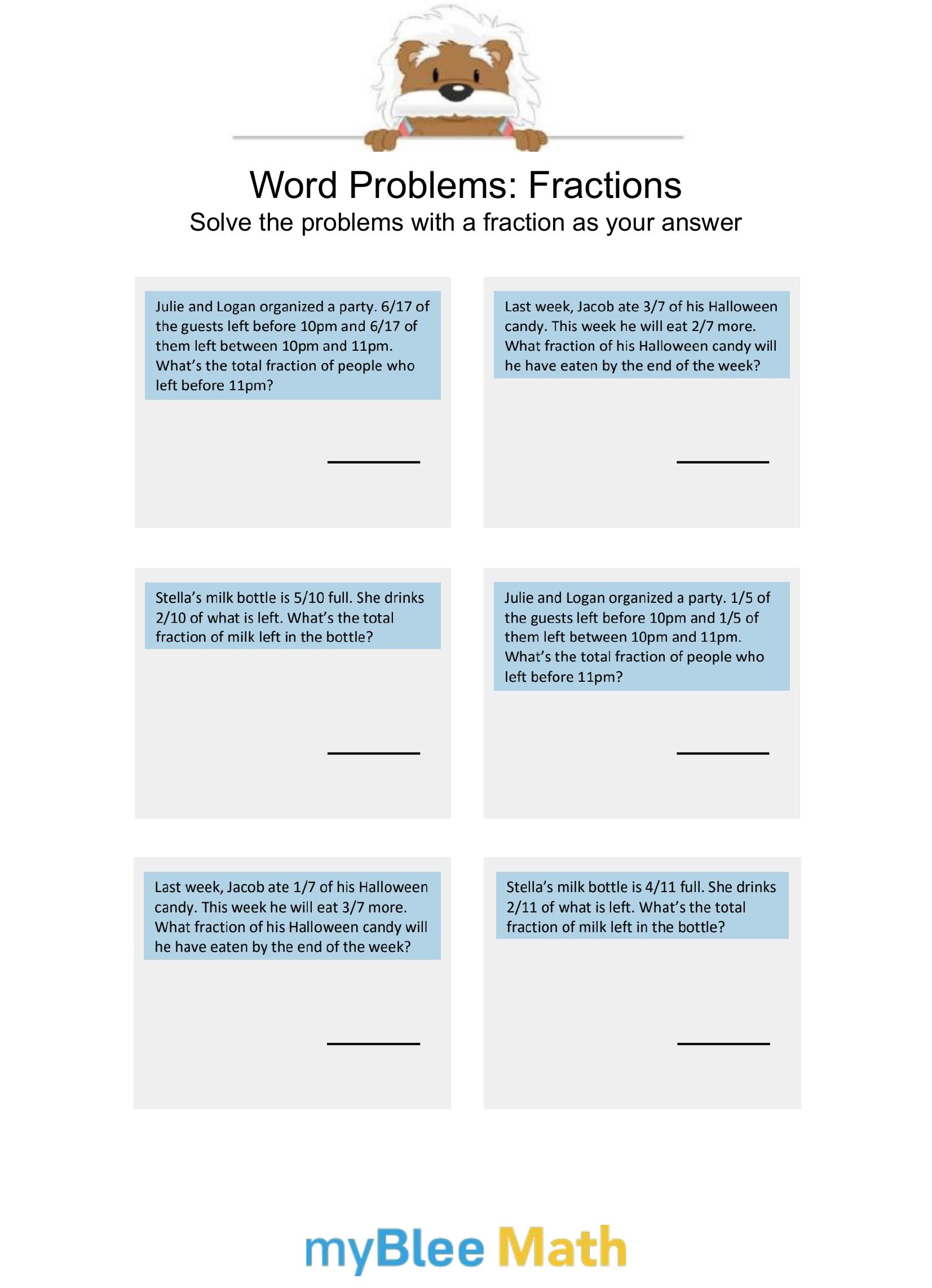
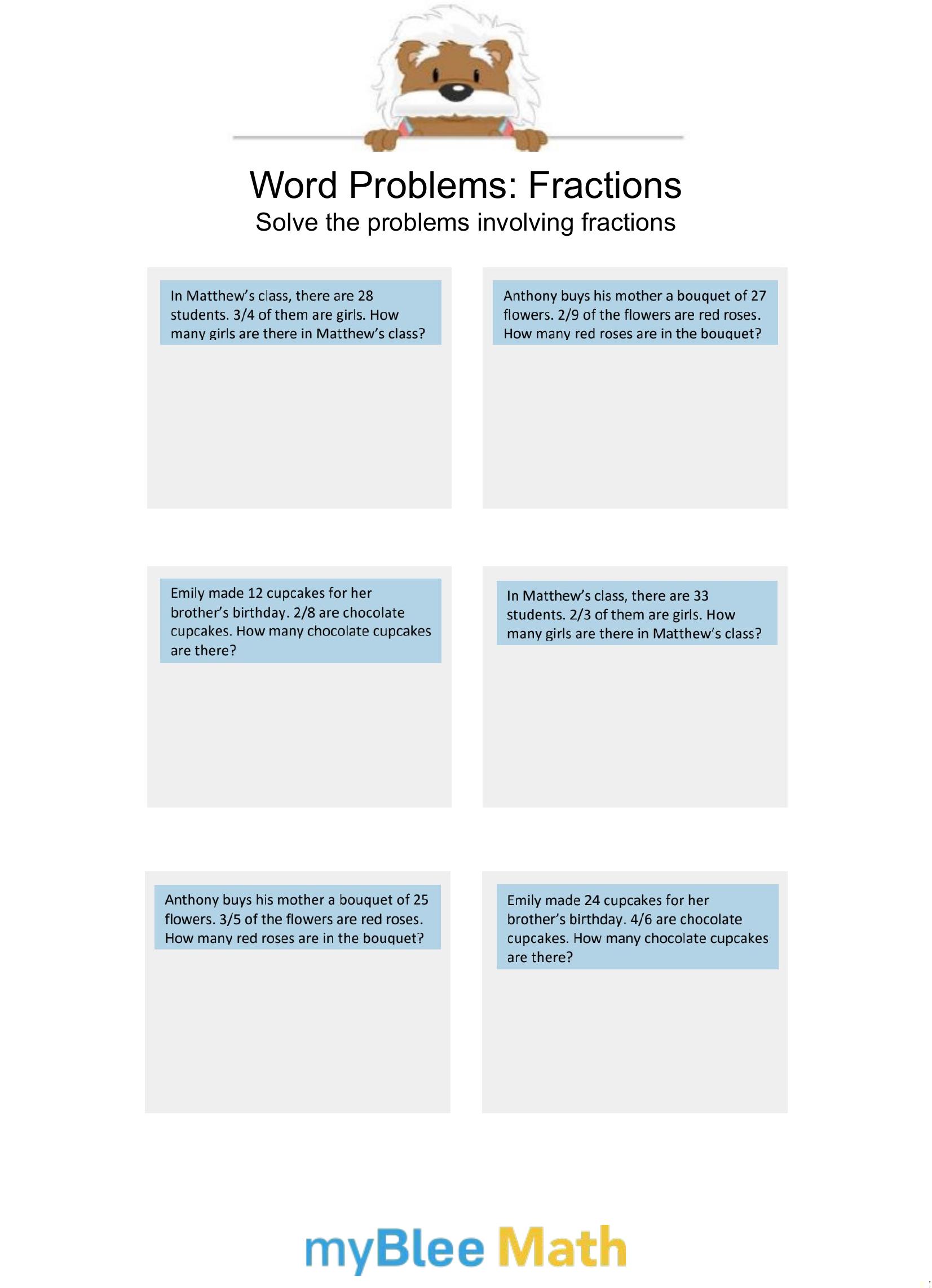
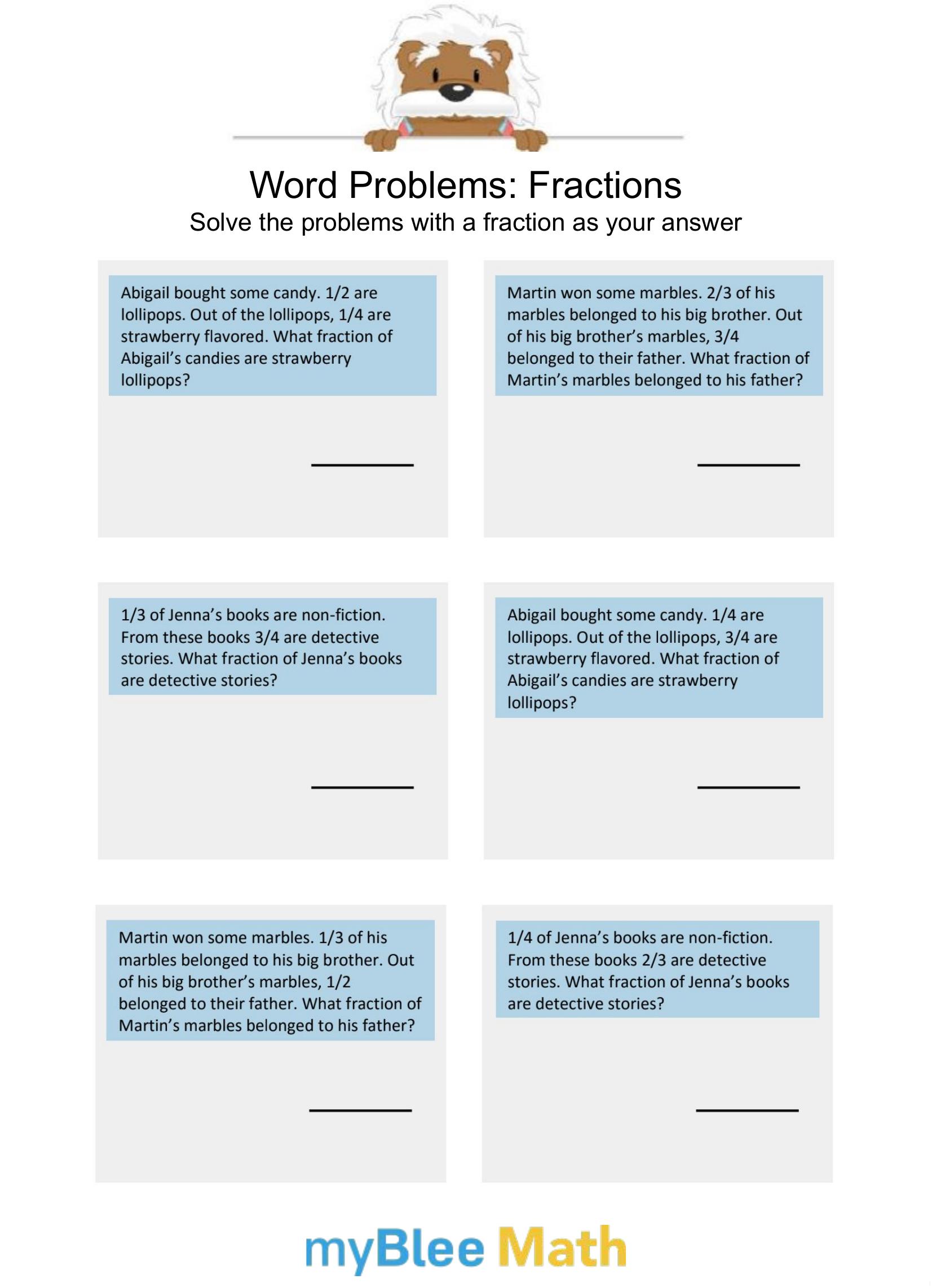
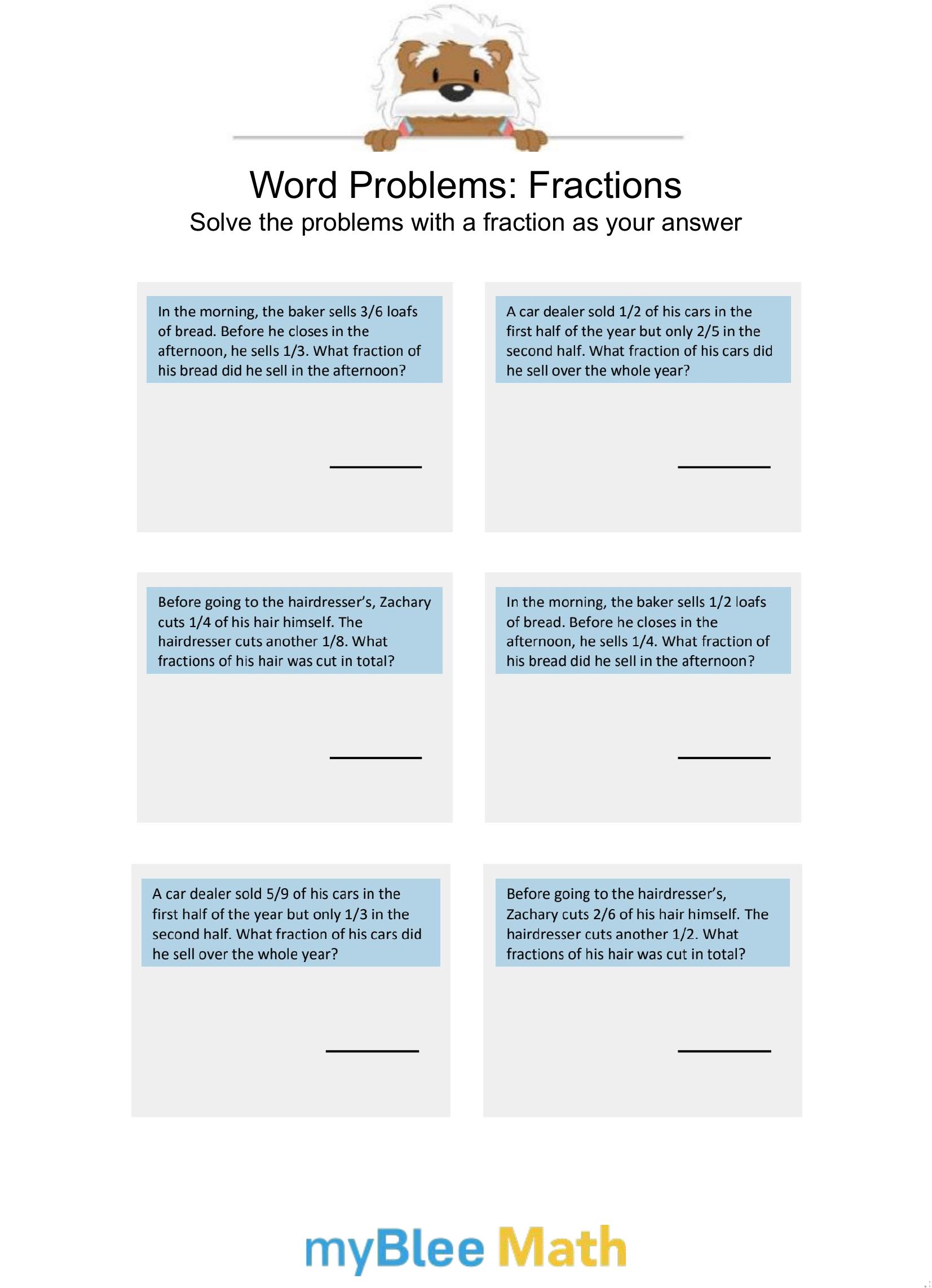
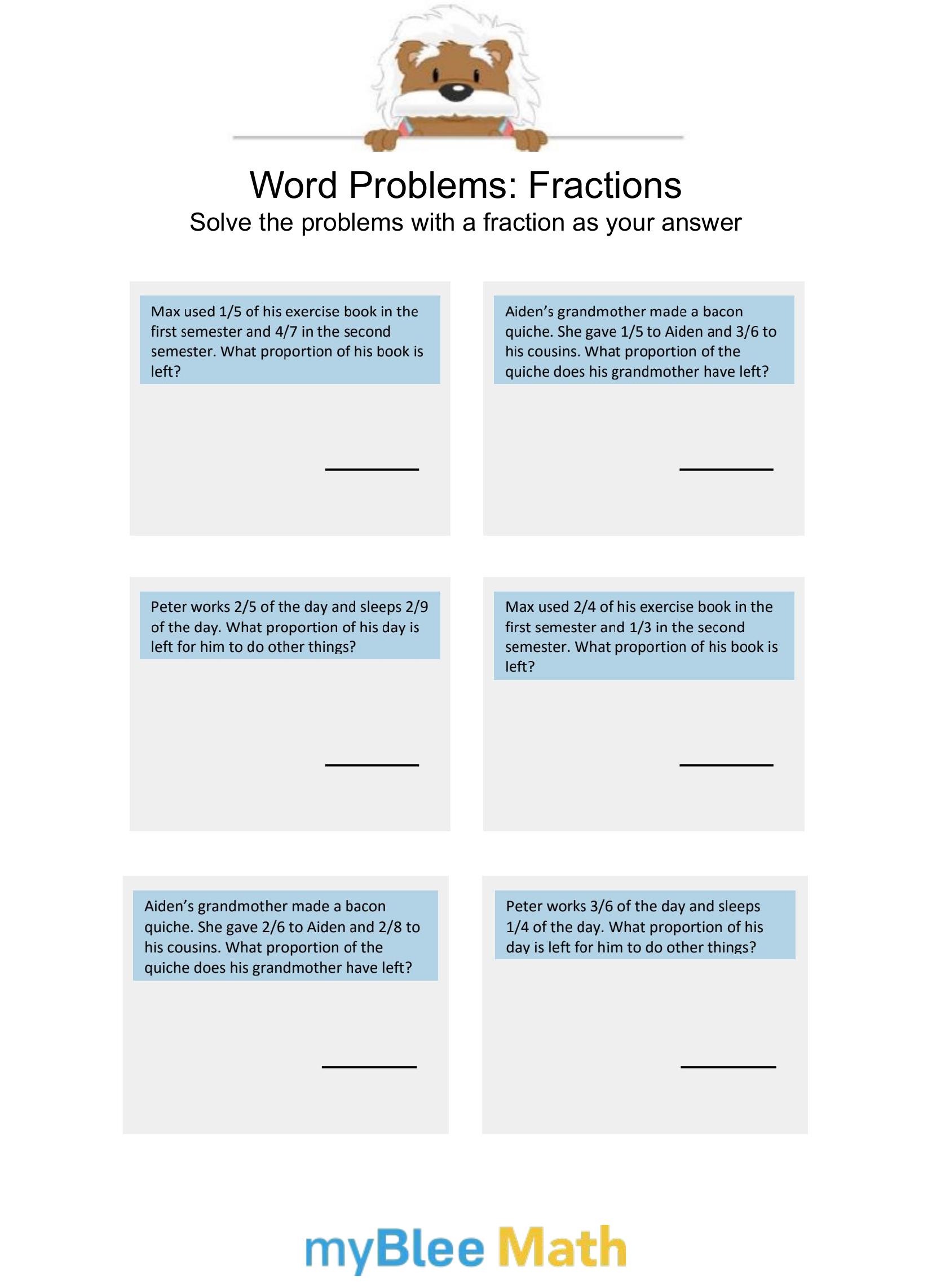
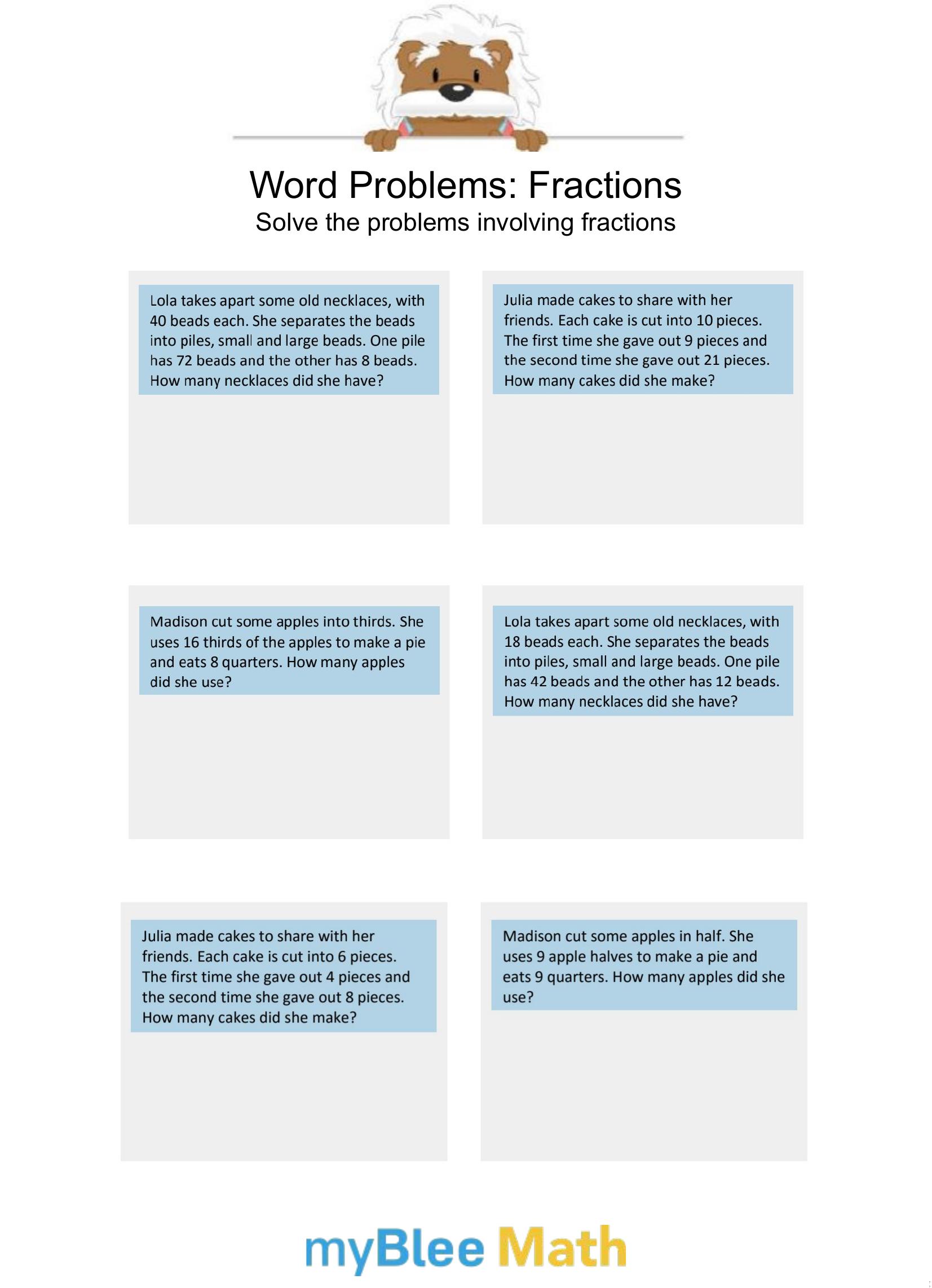
Problems with fractions
Problems with fractions teach how to handle parts of units and understand situations where quantities are not whole. The following exercises will help compare, add or share fractions in real contexts. They help visualize relationships between parts and develop strong mastery of these numbers.
Word Problems: Fractions
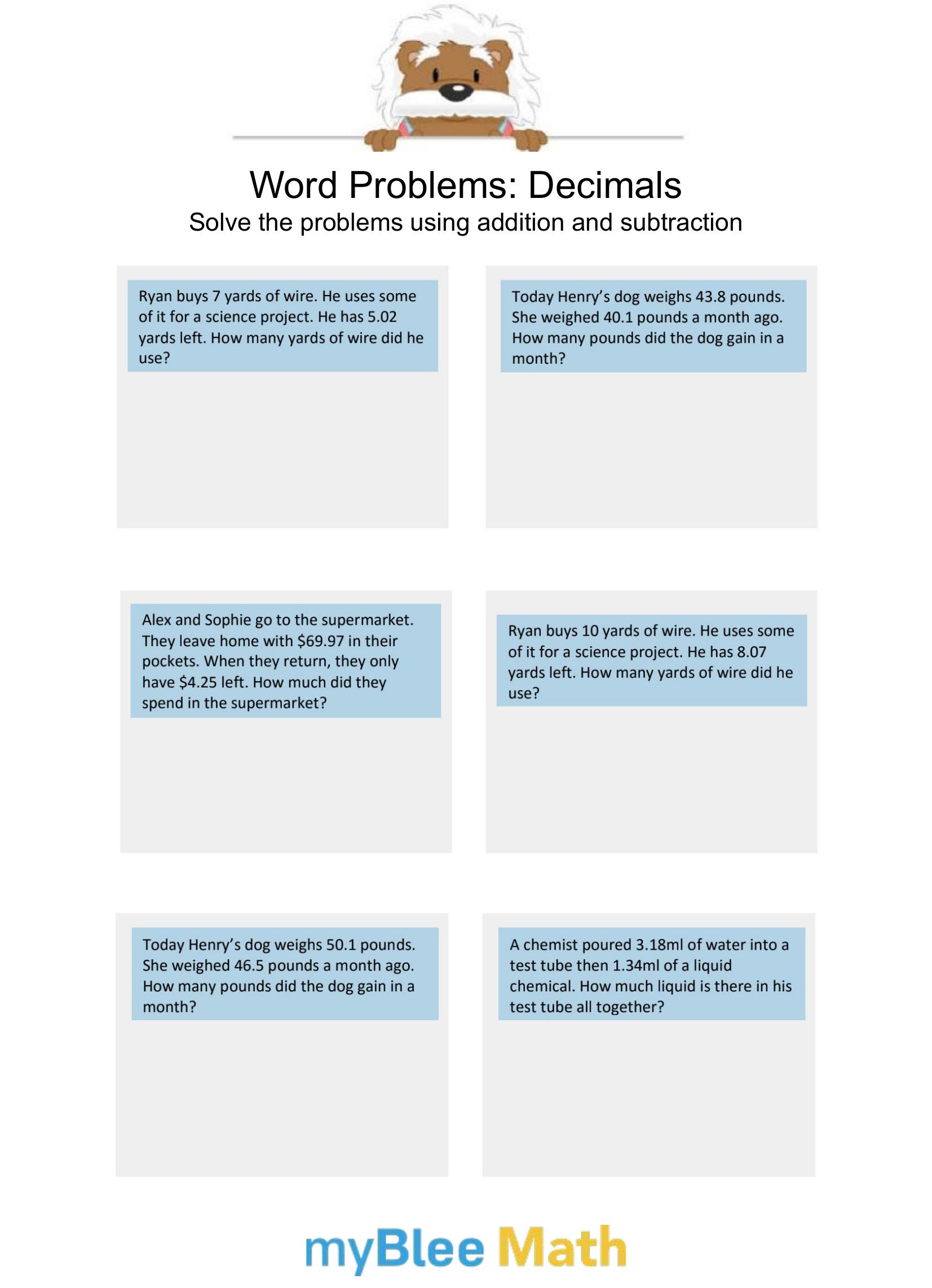
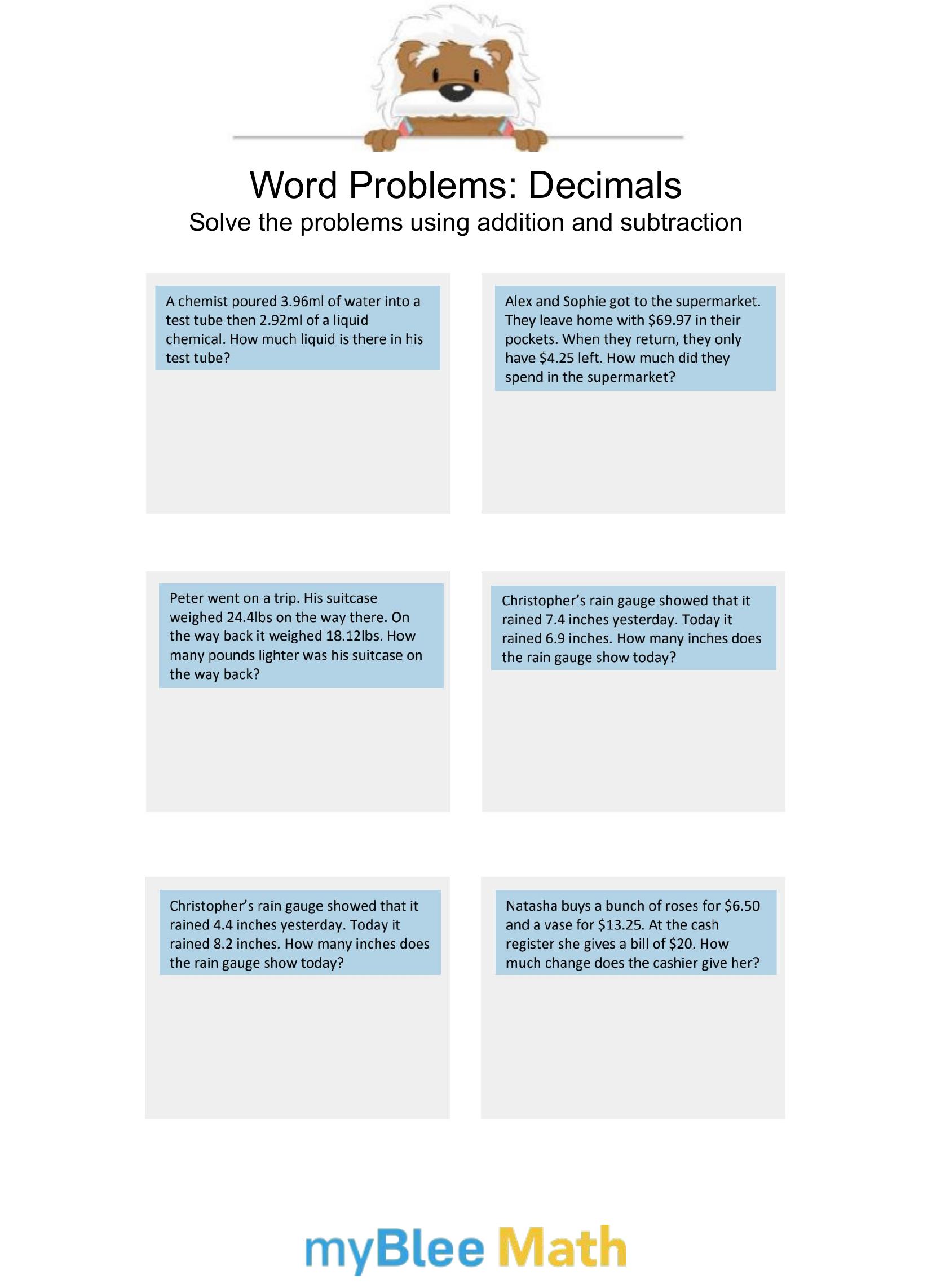
Problems with decimal numbers
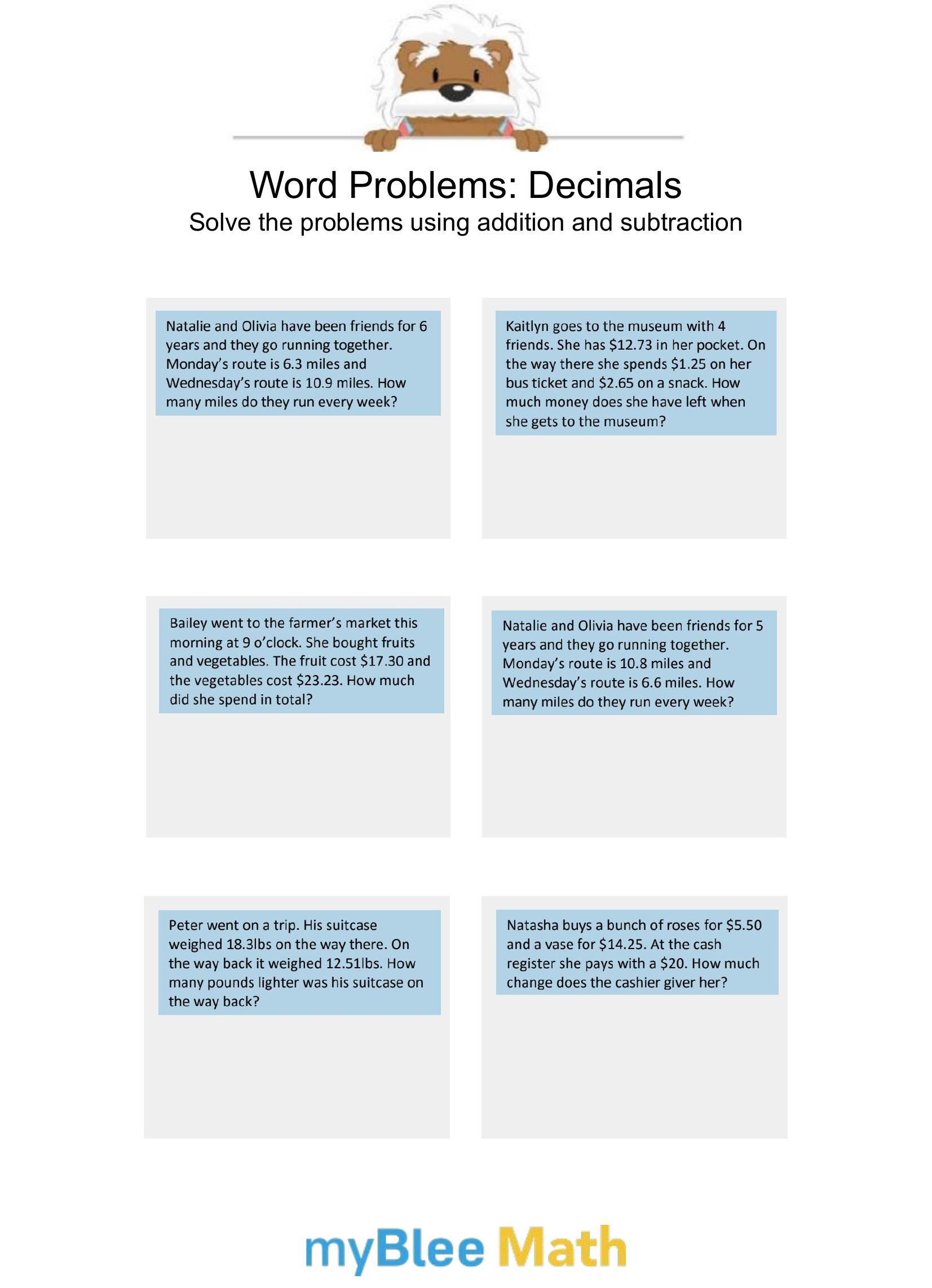
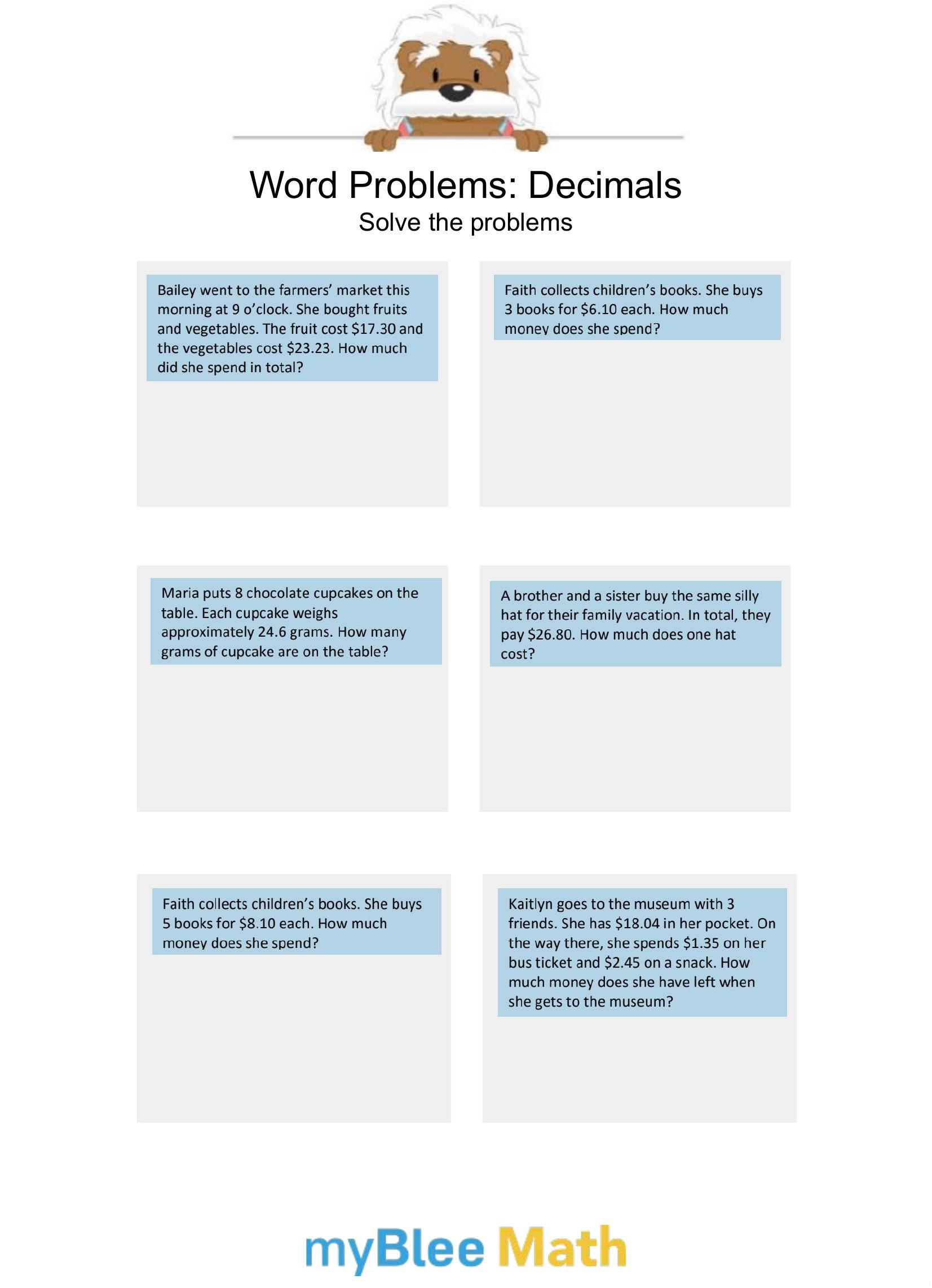
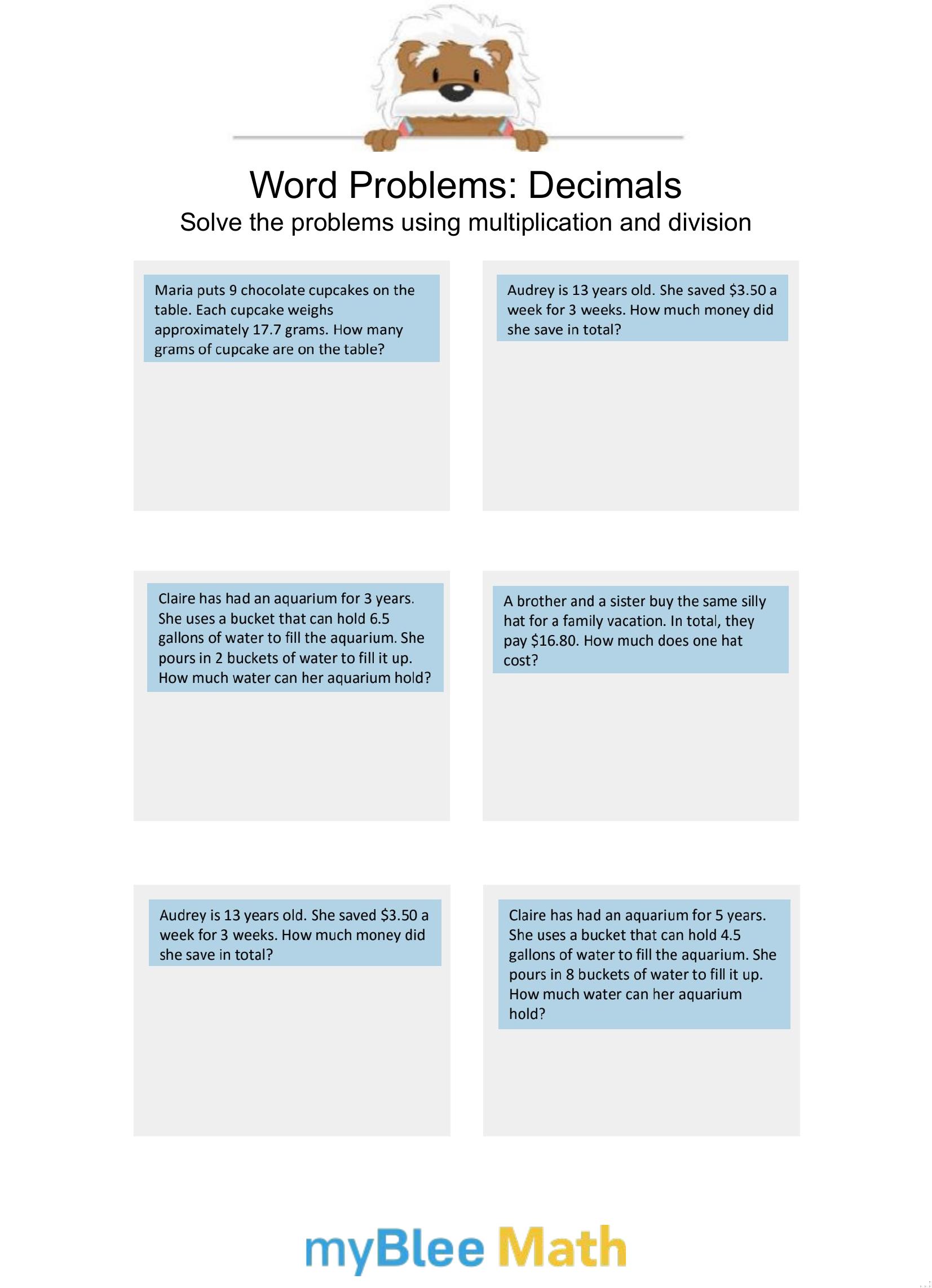
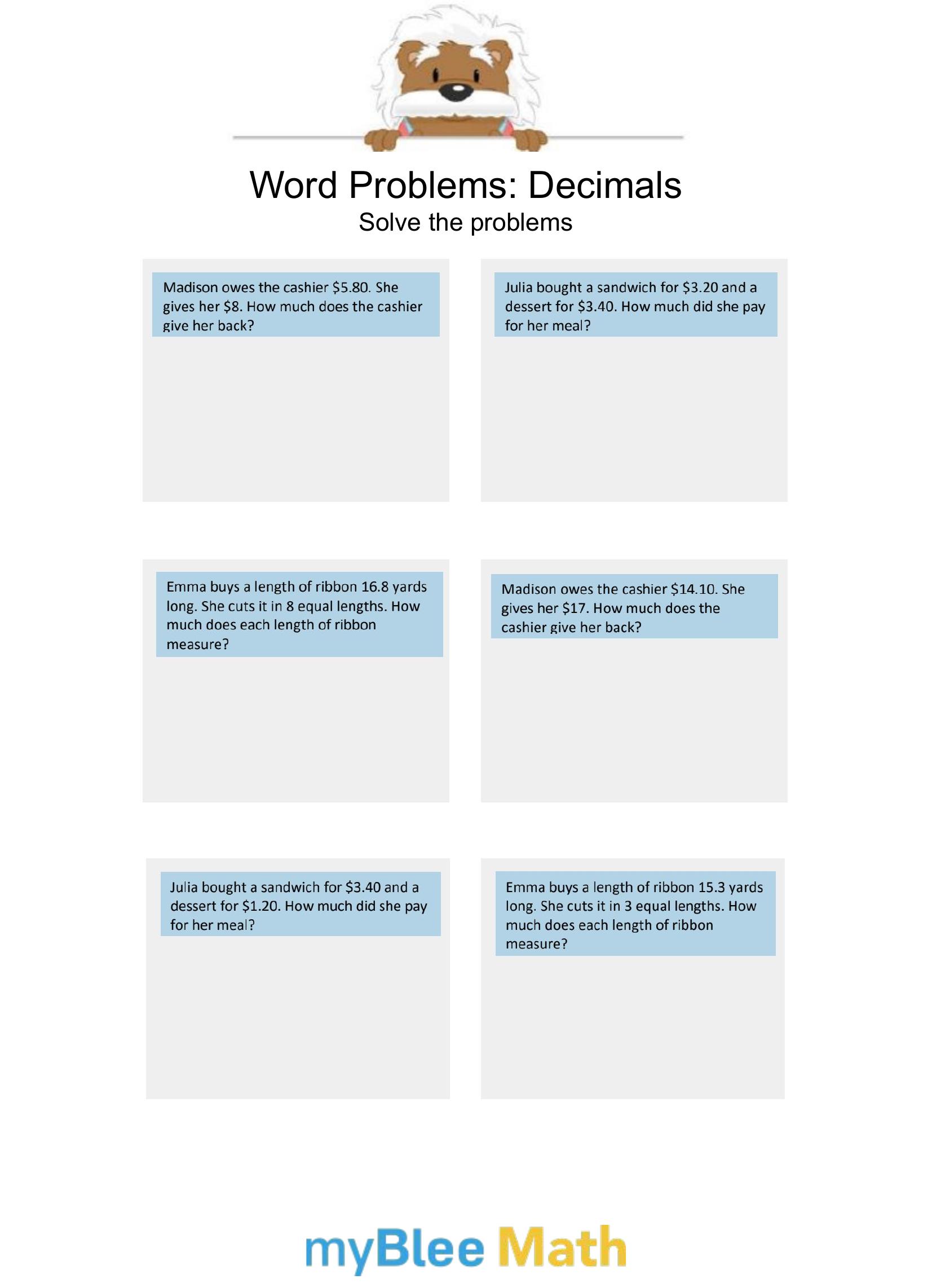
Problems with decimals train students to handle situations involving measurements, prices, distances or durations. The following exercises help set out calculations correctly, compare decimal values and choose the right operation. They strengthen precision and ease in working with numbers with decimals.
Word Problems: Decimals
Math videos to better understand problems
Videos offer another way to approach math problems, visualizing each situation step by step.
They show how to analyze a wording, find important data and choose the right strategy through real examples. Explanations are short, clear and ideal for reviewing a method several times. This format helps overcome difficulties and strengthen automatisms.
MyBlee videos thus become support material to progress at your own pace, along with printed exercises.